

Introduction to a Marketing Revolution
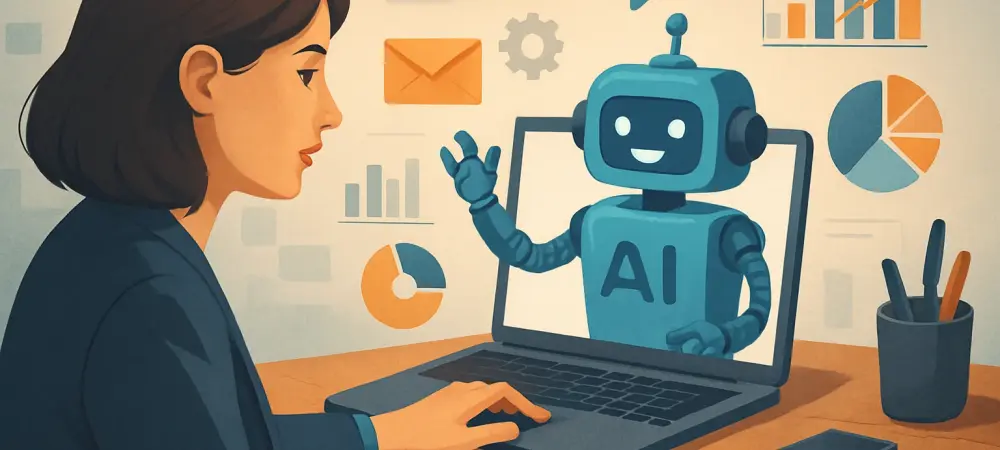
In an era where data drives decisions, the integration of artificial intelligence (AI) into marketing has emerged as a transformative force, enabling campaigns to become not just reactive but predictive and intuitive, redefining efficiency in a fast-paced business landscape. This seismic shift toward autonomous marketing—where AI automates and optimizes tasks with minimal human intervention—has become a game-changer. The significance of this trend lies in its ability to process vast datasets instantly, delivering insights that empower marketers to act with precision. This analysis delves into the latest developments in AI-driven marketing, exploring adoption trends, real-world applications, expert perspectives, and the future potential of these technologies, while highlighting key takeaways for industry professionals.
The Surge of AI in Autonomous Marketing
Adoption and Growth Patterns
The adoption of AI in marketing has seen exponential growth, with industry reports indicating that a significant percentage of businesses now leverage AI tools to enhance their strategies. According to recent surveys by leading research firms, over 60% of marketing teams have integrated some form of AI technology into their workflows, a trend projected to rise sharply from this year to 2027. This surge is fueled by the promise of scalability, as autonomous marketing platforms reduce manual workloads and enable teams to focus on strategic priorities. The impact is clear: companies using AI report up to 30% improvements in campaign efficiency, underscoring the technology’s role in modern business operations.
Beyond sheer numbers, the growth of autonomous marketing tools reflects a broader shift toward data-driven decision-making. Platforms equipped with AI capabilities are no longer niche; they have become essential for businesses aiming to stay competitive in saturated markets. This widespread embrace of technology highlights a critical pivot point where automation is not just an option but a necessity for handling complex customer interactions at scale, setting the stage for deeper integrations and innovations.
Case Study: ActiveCampaign and Claude Collaboration
A standout example of this trend is the pioneering integration between ActiveCampaign, a leading autonomous marketing platform, and Anthropic’s Claude, marking a significant milestone with the launch of the first autonomous marketing connector in Claude’s directory. This collaboration allows marketers to interact seamlessly with marketing data directly within an AI workspace, using natural language to perform complex tasks. From retrieving detailed campaign performance metrics to updating CRM records, this tool streamlines operations by eliminating the need to toggle between platforms.
Specific applications of this integration demonstrate its practical value. Marketers can issue commands like querying last week’s email campaign results or triggering a follow-up automation for a specific contact, all through conversational inputs within Claude’s interface. For instance, a simple request to start a “thank you” automation for a client is executed instantly, saving time and reducing operational friction. Such capabilities illustrate how AI can transform routine tasks into fluid, efficient processes.
This integration’s design also prioritizes user experience by embedding marketing actions into familiar AI environments. By allowing professionals to brainstorm campaign ideas or initiate automations without leaving their workspace, the connector fosters a cohesive workflow. This real-world implementation serves as a benchmark for how AI can bridge the gap between data access and actionable outcomes, pushing the boundaries of what autonomous marketing can achieve.
Expert Insights on AI-Driven Marketing
Transformative Potential from Industry Leaders
Industry leaders have been vocal about the game-changing nature of AI integrations in marketing. Jason VandeBoom, CEO of ActiveCampaign, has emphasized the profound impact of making billions of marketing data points accessible within AI platforms like Claude. His perspective highlights how such integrations empower users by meeting them in their preferred digital spaces, fundamentally altering how marketing strategies are conceived and executed. This view points to a future where AI becomes an indispensable partner in crafting data-informed campaigns.
Broader Trends and Accessibility
Beyond individual platforms, experts across the field recognize the growing role of conversational AI tools in enhancing accessibility and accelerating decision-making. These tools democratize complex data analysis, allowing even non-technical marketers to extract insights through intuitive interfaces. The trend signifies a move toward inclusivity in marketing technology, where speed and ease of use are paramount. As AI continues to evolve, its ability to simplify intricate processes is expected to drive further adoption across diverse business sizes and sectors.
Addressing Challenges and Safeguards
Despite the enthusiasm, concerns around user adoption and data security remain critical points of discussion. Integrating AI into marketing workflows requires careful onboarding to ensure teams can fully leverage these tools without resistance. Additionally, protecting sensitive data is non-negotiable, and frameworks like the MCP server used in the ActiveCampaign-Claude integration are cited as essential safeguards. These measures reassure users that their information remains secure while interacting with AI environments, addressing a key barrier to widespread acceptance.
Future Horizons for Autonomous Marketing with AI
Advancements on the Horizon
Looking ahead, the potential for AI in marketing appears boundless, with advancements poised to deliver even more personalized campaigns through refined algorithms. Predictive analytics, powered by machine learning, could anticipate customer behaviors with unprecedented accuracy, enabling proactive rather than reactive strategies. Such developments promise to elevate marketing from a tactical function to a strategic cornerstone, where every interaction is tailored to individual preferences based on real-time data.
Balancing Benefits and Challenges
The benefits of these innovations are manifold, including enhanced workflow efficiency and deeper strategic insights through AI-generated recommendations. Imagine a system suggesting follow-up campaigns based on subtle shifts in engagement metrics—an advantage that could redefine competitive edges. However, challenges like ensuring data privacy and mitigating over-reliance on automation must be navigated carefully. Striking a balance between technological dependence and human oversight will be crucial to maximizing the value of autonomous marketing.
Industry-Wide Implications
Across industries, the ripple effects of autonomous marketing with AI integration could reshape productivity standards. Sectors beyond traditional marketing, such as retail and hospitality, might adopt these tools to enhance customer experiences through hyper-targeted communications. This broader application suggests a future where data utilization becomes a universal benchmark for success, prompting organizations to rethink how they harness information. The trajectory indicates a paradigm shift, positioning AI as a catalyst for cross-industry transformation.
Reflecting on the AI Marketing Evolution
Looking back, the rapid adoption of AI in marketing stood as a defining moment, reshaping how businesses approached efficiency and decision-making in the digital landscape. The practical example of ActiveCampaign’s connector with Claude underscored the tangible benefits of seamless data interaction, while expert insights illuminated the strategic importance of these tools. As challenges like data security were addressed through robust frameworks, the path was cleared for broader acceptance. The journey revealed a critical lesson: embracing AI integration was not merely an option but a vital step for staying relevant in a data-centric world. Moving forward, marketers were encouraged to explore these technologies, leveraging their capabilities to uncover new opportunities. The focus shifted to continuous learning and adaptation, ensuring that the potential of autonomous marketing was fully realized in driving innovation and growth across diverse fields.