

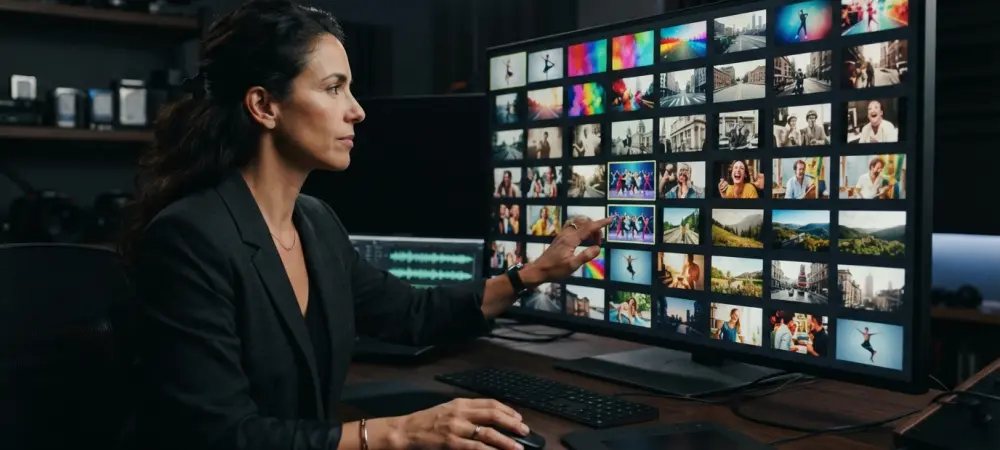
The conventional marketing barrier that once required weeks of manual labor to process a single event recording has been permanently dismantled by sophisticated automation frameworks now operating at massive scale across global enterprise sectors. For years, the primary constraint on event success was the finite capacity of creative teams to transcribe, edit, and repurpose session footage into usable marketing collateral. However, as organizations navigate the current landscape of 2026, the bottleneck has shifted from the physical act of creation to the intellectual challenge of strategic distribution. The arrival of hyper-efficient generative engines has turned every hour of live video into a potential fountain of hundreds of social clips, blog posts, and technical white papers.
The Shift from Production Scarcity to Strategic Abundance
The transition from manual asset creation to automated scaling represents one of the most significant pivots in the history of corporate communication. In the previous era, a marketing team might have spent an entire month producing a single high-quality recap video or a series of pull-quotes from a keynote. Today, that same team utilizes integrated AI suites to perform those tasks in a matter of seconds, effectively eliminating the scarcity that once governed content calendars. This abundance allows for a level of presence across multiple platforms that was previously reserved for only the largest media conglomerates.
Market Adoption and the AI Content Explosion
Current industry data highlights a staggering acceleration in the adoption of these technologies, with research indicating that from 2026 to 2029, the volume of event-driven digital assets will increase by nearly 600 percent. The primary driver of this trend is the democratization of high-end production tools that allow small teams to act as comprehensive content houses. Adoption statistics show that over 80 percent of mid-to-large enterprises have now implemented some form of automated video synthesis to handle post-event workflows. This shift is not merely about speed; it is about the ability to maintain a continuous brand narrative that persists long after the physical or virtual event has concluded.
Moreover, the market has moved toward a model where content is no longer a static byproduct but a dynamic, evolving resource. The growth of AI in this sector is reflected in the rising budgets allocated specifically for “intelligent repurposing” rather than traditional event logistics. As manual processes are phased out, the focus has shifted toward building resilient infrastructures that can ingest raw data and output polished, platform-specific content instantly. This evolution ensures that the momentum of a live session is captured and amplified while the audience’s interest remains at its peak.
Real-World Applications of AI-Enhanced Event Lifecycles
Concrete examples of this transformation are visible in how forward-thinking companies now handle the lifecycle of a standard webinar. Instead of simply hosting a video on a landing page, organizations are using AI to instantly fragment that video into dozens of “micro-learning” modules tailored for different social media algorithms. Notable platforms in the space have pioneered features that automatically generate comprehensive playbooks and technical guides based on the verbal insights shared by speakers during a panel. These assets are then instantly populated onto customized landing pages that are live before the speaker has even left the stage.
Furthermore, the application of automated video clipping has revolutionized the way sales teams engage with prospects after a high-value demonstration. Instead of sending a generic “thank you” email, representatives now deploy AI-curated highlight reels that focus specifically on the pain points discussed during the session. This level of personalization, once impossible to achieve at scale, has become the standard for maintaining relevance in a crowded digital marketplace. The ability to transform a single hour of live interaction into a multi-channel asset library ensures that no valuable insight is ever lost to the archives.
Expert Perspectives on Curation and Human Oversight
Despite the undeniable benefits of automated production, industry thought leaders warn of a growing “Paradox of Content Abundance.” The core of this challenge lies in the risk of saturating the market with high-volume, low-value noise that fails to resonate with the intended audience. Experts suggest that as the cost of creation drops toward zero, the value of human-led curation and subject matter expertise (SME) increases exponentially. Without a human architect to guide the machine, there is a significant danger that the sheer volume of content will obscure the core message and alienate potential customers.
The emerging consensus among strategists is that “Audience Intelligence” must be the primary filter for all AI outputs. This means that instead of allowing an algorithm to decide what is important based solely on keyword frequency, human experts must define the narrative pillars that align with the organization’s broader goals. Curation acts as the essential bridge between raw automated labor and strategic quality. By involving product experts and internal thought leaders in the review process, companies can ensure that every AI-generated clip or summary maintains the nuance and technical accuracy required to build trust with a sophisticated audience.
The Future of Purpose-Driven Event Ecosystems
Reflecting on the trajectory of this trend, the focus is moving toward the creation of “No Dead Ends” content policies. This strategy ensures that every piece of automated content serves as a gateway to the next stage of the customer journey, rather than existing as an isolated digital artifact. In the coming years, we will see the rise of integrated asset loops where AI not only creates the content but also optimizes its placement within a hyper-personalized on-demand experience. This approach transforms the traditional event from a point-in-time occurrence into a self-sustaining, evergreen ecosystem that provides long-term utility for both the brand and the consumer.
The broader implications for cross-functional collaboration are profound, as marketing, sales, and customer success teams increasingly rely on a shared pool of AI-optimized assets. When an event is treated as a foundational data source rather than a one-off performance, it creates a unified content stream that supports the entire buyer’s journey. However, this future also brings challenges, particularly the risk of “orphaned” content and internal digital clutter if strategies are not carefully managed. The success of these ecosystems will depend on the ability of organizations to maintain internal alignment and ensure that every automated output has a clear, predefined destination and a measurable purpose.
Conclusion: Balancing Automation with Architectural Intent
The transition from a production-focused mindset to a strategy-led framework marked a turning point in how organizations approached digital engagement. It became clear that while machines could handle the heavy lifting of asset generation, the human element remained indispensable for providing the architectural intent that transformed noise into meaning. Successful teams recognized that the true value of AI lay not in the quantity of content produced, but in the precision with which that content was directed toward specific customer needs. This shift in perspective allowed marketers to move away from the chaos of overproduction and toward the creation of intentional, high-impact digital destinations.
Strategic quality was maintained only when human judgment acted as the final arbiter of AI labor, ensuring that every automated summary and social clip resonated with authentic expertise. The realization that content required a purpose-driven destination before it was even conceived revolutionized the internal collaboration between marketing and sales departments. This alignment ensured that every webinar and conference served as a catalyst for a deeper, more meaningful customer relationship. Ultimately, the industry learned that the most effective use of technology was to empower human creativity, allowing strategists to focus on the “why” of their message while automation perfected the “how” of its delivery.