

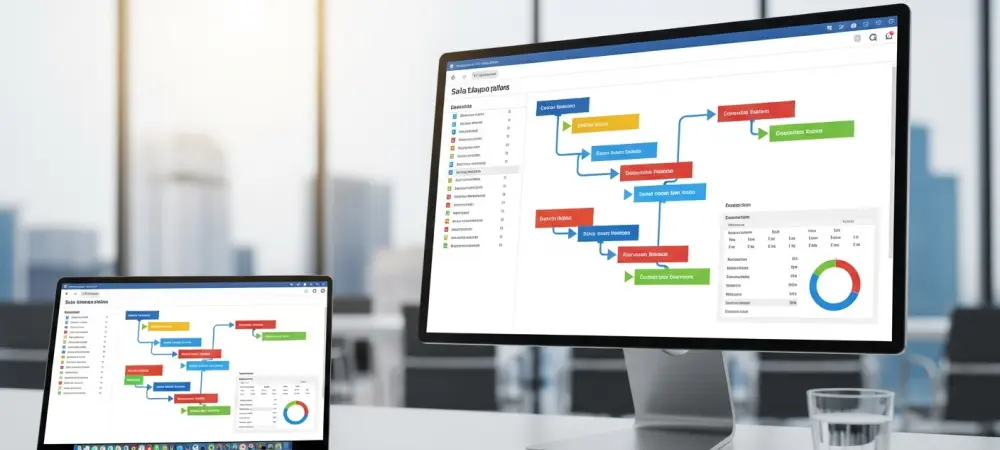
In a global marketplace where response times are measured in seconds rather than days, the ability to centralize and interpret customer data has shifted from a competitive advantage to a fundamental requirement for operational survival. Modern enterprises no longer view Sales Customer Relationship Management systems as mere digital filing cabinets but as the central nervous system of their entire commercial apparatus. By consolidating every interaction, from the first marketing touchpoint to the final contract signature, these platforms eliminate the destructive fragmentation that occurs when critical information is trapped in personal spreadsheets or isolated email inboxes. This evolution toward a single, unified source of truth enables organizations to maintain a high level of professionalism and consistency that was previously impossible for rapidly scaling teams.
The integration of advanced data aggregation tools allows for a sophisticated understanding of the buyer’s journey, which in turn fosters more meaningful and personalized engagement. When a sales representative can see the exact history of a lead’s interactions with the brand, the resulting conversation is naturally more relevant and less intrusive. Furthermore, the strategic implementation of these systems significantly alleviates the administrative burden that historically plagued sales professionals, freeing them from the drudgery of manual data entry. For small and medium-sized businesses, the transition to a robust CRM framework serves as a bridge between disparate departments, ensuring that marketing, sales, and customer success are all operating from the same playbooks and real-time insights.
Core Functionalities: Driving Sales Efficiency
The foundational architecture of a high-performing sales environment relies on the seamless flow of information between internal teams and external prospects. Without a structured way to capture and categorize the constant stream of data generated by modern business activities, even the most talented sales teams will eventually succumb to inefficiency and missed opportunities. By establishing a digital infrastructure that prioritizes visibility and accessibility, organizations can transform their sales process from a series of disconnected events into a continuous, measurable, and highly predictable revenue engine that scales alongside the company’s ambitions.
Information Management: The Digital Foundation
Centralizing customer data is the most fundamental function of any effective sales tool, yet its impact on daily operations is profound and far-reaching. It involves much more than simply maintaining an updated list of contact details; it creates a comprehensive, chronological record of every email, phone call, and social media interaction associated with a specific lead or account. This deep historical context allows team members to step into any account with full knowledge of previous discussions, preventing the embarrassment of asking redundant questions and demonstrating a high level of respect for the client’s time. By categorizing leads based on their specific behaviors and engagement levels, teams can focus their energy on the prospects most likely to convert, rather than wasting resources on low-intent inquiries.
Moreover, the quality of this data directly influences the accuracy of every other department’s output, from marketing segmentation to product development. When information is updated in real-time across a shared platform, it creates a feedback loop where sales insights can inform marketing campaigns, and marketing engagement data can alert sales to a “hot” prospect. This level of synchronization ensures that the organization presents a unified front to the market, building trust through reliability. As the volume of data grows, the system serves as a historical repository that protects the company’s institutional knowledge, ensuring that even if a key team member departs, the relationships they built remain documented and manageable for their successor.
Visual Pipelines: Navigating the Sales Lifecycle
The introduction of visual progress tools has revolutionized how sales managers and representatives monitor the health of their deals. Modern CRM designs utilize drag-and-drop interfaces, often organized as Kanban-style boards, which provide a bird’s-eye view of the entire sales operation at any given moment. These visual pipelines allow users to see exactly where every prospect sits within the buying cycle, from the initial discovery call to the final negotiation phase. By visualizing the movement of deals, teams can quickly identify where the sales process is stalling and take corrective action before a potential client loses interest. This transparency fosters a culture of accountability and helps prioritize the day’s activities based on which deals are closest to the finish line.
Beyond mere visualization, these digital pipelines act as a diagnostic tool for the entire sales strategy. When a manager notices a significant number of leads dropping off at a specific stage, it signals a need for better training or a change in messaging for that particular part of the cycle. This data-driven approach to pipeline management replaces gut feelings with empirical evidence, allowing for more precise coaching and strategic adjustments. Furthermore, the ability to customize these stages to reflect the unique nuances of a company’s specific industry ensures that the CRM remains a flexible tool rather than a rigid constraint, adapting as the business model evolves to meet new market demands or internal shifts.
Workflow Automation: Maximizing Human Productivity
Productivity within a sales team is largely a function of how much time representatives spend talking to customers versus how much time they spend on clerical tasks. Automation within a CRM aims to eliminate the repetitive, low-value activities that often consume up to half of a salesperson’s day. High-end systems can automatically capture new leads from web forms, trigger immediate follow-up emails, and assign tasks to the most appropriate team member based on pre-defined criteria. This level of automation ensures that no lead is ever left to languish in an inbox and that every prospect receives a timely response, which is often the deciding factor in who wins the business in a competitive environment. The real power of automation lies in its ability to maintain consistency across a large volume of leads without sacrificing the quality of the interaction. For instance, a sequence of nurturing emails can be personalized with a lead’s name and industry, then scheduled to send at optimal times based on historical engagement patterns. This “set it and forget it” mentality for routine follow-ups allows the sales team to focus their cognitive energy on complex negotiations and relationship building. As these automated workflows run in the background, they create a steady cadence of outreach that keeps the brand top-of-mind for the prospect, effectively shortening the sales cycle and increasing the overall velocity of the revenue pipeline.
Predictive Intelligence: The AI-Driven Edge
The integration of Artificial Intelligence into sales platforms has added a layer of strategic intelligence that was previously reserved for data scientists. Advanced CRM tools now possess the capability to “score” leads by analyzing vast amounts of historical data to identify patterns that correlate with successful conversions. By looking at factors such as company size, industry, and previous engagement behaviors, the AI can rank prospects from most to least likely to close. This predictive scoring allows sales representatives to work smarter, not harder, by dedicating their most intensive efforts to high-priority opportunities that have a statistically higher chance of resulting in a signed contract.
Artificial intelligence also serves as a proactive assistant by providing smart reminders and “next-best-action” suggestions. These systems can analyze the tone of a client’s email or the length of time since the last contact to advise the salesperson on exactly when and how to reach out next. For example, the system might suggest a phone call on a Tuesday morning because data shows that a specific client is most responsive at that time. These small, data-backed optimizations accumulate over the course of a year, leading to significantly higher win rates and a more streamlined approach to account management. This evolution from a reactive database to a proactive advisor marks the current frontier of sales technology in the modern era.
Market Landscape: Evaluating Industry Leaders
The current market for sales technology is characterized by a diverse range of solutions designed to meet the specific needs of different business sizes and industries. Selecting the right platform requires a deep understanding of how various tools handle data, user experience, and integration with the broader software ecosystem. From lightweight applications focused on speed to massive enterprise systems that manage every aspect of the corporate lifecycle, the choice of a CRM often dictates the technological trajectory of the company for years to come. Understanding the strengths and weaknesses of these market leaders is essential for any leadership team looking to optimize their commercial operations.
User-Centric Solutions: Speed and Accessibility
For many growing teams, the primary hurdles to CRM adoption are complexity and cost, leading to a demand for platforms that prioritize a low barrier to entry. HubSpot has emerged as a dominant force in this space by offering a user-friendly interface combined with a powerful “freemium” model that allows companies to start small and scale as they grow. Its strength lies in its seamless integration of marketing and sales tools, providing a cohesive environment where leads transition smoothly from one department to another. The intuitive nature of the platform reduces the need for extensive training, allowing teams to become productive almost immediately after implementation, which is a critical factor for startups and small businesses.
Pipedrive represents another philosophy in the user-centric market, focusing almost entirely on the needs of the individual salesperson. By centering the experience around the visual sales pipeline, Pipedrive encourages a high volume of activity and helps representatives stay focused on their daily goals. The platform avoids the feature bloat that often plagues larger systems, offering instead a clean, focused toolset that excels at managing outreach and deal progression. This focus on “sales velocity” makes it an ideal choice for teams that operate in high-turnover environments where the speed of the transaction is more important than complex multi-year account management.
High-Velocity Growth: Flexibility and Integration
Zoho and Freshsales have carved out significant market share by providing enterprise-level features at a price point that is accessible to the mid-market. Zoho is frequently praised for its extreme flexibility, allowing organizations to customize almost every aspect of the interface and underlying database logic to suit unique business processes. This modularity means a company can start with basic contact management and eventually add modules for inventory, finance, and human resources, creating a comprehensive business management suite. For organizations that operate across multiple industries or have unconventional sales cycles, this level of customization is often the deciding factor in their technology choice.
Freshsales, part of the broader Freshworks ecosystem, differentiates itself through its built-in communication capabilities. By integrating phone, email, and chat directly into the CRM interface, it eliminates the need for third-party communication tools and ensures that every interaction is automatically logged without manual effort. This “all-in-one” approach is particularly beneficial for outbound sales teams that handle a high volume of calls and messages, as it reduces the friction of switching between different applications. The platform’s built-in AI assistant also provides valuable insights into lead behavior, helping growing companies adopt sophisticated data strategies without the need for a dedicated IT department to manage the setup.
Enterprise Powerhouses: Complexity and Customization
When an organization reaches a certain scale or complexity, the requirements for data management and process automation often exceed the capabilities of general-market tools. Salesforce continues to be the industry standard for these large-scale operations, offering an unparalleled level of customization and a vast ecosystem of third-party integrations through its AppExchange. The platform is capable of managing complex, multi-year sales cycles involving dozens of stakeholders across different global regions. While the learning curve is admittedly steeper than its competitors, the power of its Einstein AI engine and its deep reporting capabilities provide large enterprises with the granular insights they need to manage billion-dollar revenue streams with precision.
Specialized platforms like Insightly and Copper offer alternative approaches for businesses that have specific technical or operational needs. Insightly bridges the gap between sales and post-sale delivery by combining CRM functionality with project management tools, ensuring that the promises made during the sales process are effectively executed once the deal is closed. This is particularly useful for service-based industries like architecture, consulting, or software implementation. Conversely, Copper is designed specifically for organizations that are deeply entrenched in the Google Workspace ecosystem. By living directly inside Gmail and Google Calendar, it provides a “zero-entry” experience that appeals to teams looking for the least possible disruption to their existing workflows.
Strategic Implementation: Best Practices and Future Proofing
Deploying a new CRM is as much a cultural challenge as it is a technical one, requiring a clear roadmap and the buy-in of the people who will use it every day. Even the most advanced software will fail to deliver results if the data entered is inaccurate or if the sales team views the system as a burden rather than a benefit. Successful implementation begins with a rigorous evaluation phase that aligns the software’s capabilities with the specific strategic goals of the business, followed by a commitment to long-term data integrity and continuous user training. As technology continues to evolve, staying ahead of the curve means looking beyond immediate needs toward a more integrated and secure future.
Evaluation Framework: Aligning Tools with Strategy
The first step in any successful CRM rollout was always the identification of specific business pain points that the technology was intended to solve. Organizations must take a critical look at where their current process is failing—whether it is a lack of visibility into the sales pipeline, poor communication between departments, or inaccurate revenue forecasting. By defining these gaps early, leadership can select a tool that addresses their highest-priority needs rather than being distracted by flashy features that may not offer real utility. This alignment ensures that the investment in technology is directly tied to measurable improvements in performance and efficiency, providing a clear path to a positive return on investment.
Budgetary considerations and technical interoperability must also be factored into the decision-making process from the very beginning. The total cost of ownership extends far beyond the monthly subscription fee, encompassing the time required for employee training, the cost of data migration, and potential fees for advanced API access or storage upgrades. It is also vital to ensure that the chosen CRM can “talk” to the existing tech stack, such as accounting software, marketing automation tools, and internal communication platforms. A CRM that exists in a vacuum is of limited value; its true power is realized when it acts as a central hub where data flows freely and accurately across the entire organization, reducing the risk of human error.
Data Security: Protecting the Modern Enterprise
As the regulatory environment regarding data privacy continues to tighten globally, security and compliance have moved to the forefront of CRM strategy. In 2026, a reputable platform must offer robust encryption for data at rest and in transit, as well as granular, role-based access controls that ensure employees only see the information necessary for their specific job functions. Adhering to standards like GDPR, CCPA, and various industry-specific regulations is no longer optional; it is a critical component of risk management. A breach of customer data can lead to catastrophic legal consequences and irreparable damage to a company’s reputation, making the security features of a CRM a primary concern for any technology buyer.
Beyond basic compliance, organizations must also prioritize the internal integrity of their data through regular audits and standardized entry protocols. == “Dirty data”—such as duplicate records, outdated contact information, or missing lead sources—can quickly render the most expensive CRM useless by providing inaccurate reports and leading to embarrassing communication errors.== Implementing automated data cleaning tools and establishing clear guidelines for how information should be entered into the system are essential steps for maintaining a high-quality database. By treating data as a valuable corporate asset that requires constant upkeep, businesses can ensure that their CRM remains a reliable foundation for strategic decision-making and long-term growth.
Future Considerations: Agility and Scaling
The shift toward “no-code” and “low-code” environments has fundamentally changed how businesses approach software customization, allowing managers to adjust workflows without waiting for IT intervention. This newfound agility means that as market conditions shift or internal processes change, the CRM can be modified in real-time to reflect the new reality. This flexibility is essential for staying competitive in a fast-moving economy where the ability to pivot can be the difference between success and failure. Organizations that embrace these modular tools find themselves better equipped to experiment with new sales models or enter new markets without being held back by rigid legacy systems.
Looking toward the coming years, the trend of breaking down silos between sales, marketing, and customer service will only accelerate, leading to a more holistic “Customer Experience” (CX) approach. The goal is to create a seamless journey for the buyer that feels consistent regardless of which department they are interacting with at any given moment. By choosing a CRM that supports this cross-functional collaboration, companies can build a proactive culture that focuses on long-term loyalty rather than just short-term transactions. This strategic alignment, supported by clean data and robust automation, provides the necessary platform for a business to scale its revenue and reputation simultaneously, ensuring a resilient future in an increasingly digital world.
In the preceding sections, the foundational role of CRM technology in modern business was established through an analysis of its core functionalities and market-leading solutions. The discussion detailed how visual pipelines, automated workflows, and predictive analytics have collectively transformed the sales process from a manual, reactive effort into a streamlined, data-driven operation. By examining the diverse landscape of available tools—from user-friendly platforms like HubSpot to enterprise powerhouses like Salesforce—it became clear that the most effective implementations were those that aligned perfectly with an organization’s unique operational needs and long-term growth objectives. The transition from fragmented data to a unified source of truth was highlighted as the critical factor in driving both efficiency and professional consistency across scaling teams.
The move toward more agile, no-code customization and the increasing importance of data security underscored the necessity of a forward-thinking technological strategy. Organizations that prioritized data integrity and cross-departmental alignment were found to be better positioned to capitalize on the next wave of sales innovation. To move forward, leaders should conduct a comprehensive audit of their current sales friction points and evaluate whether their existing tech stack supports a seamless customer journey. Investing in continuous user training and establishing rigorous data entry standards will remain the most effective ways to ensure the longevity and accuracy of these systems. As the digital landscape continues to evolve through 2027 and 2028, the ability to adapt these tools to new market realities will define the winners in a hyper-competitive global economy.