

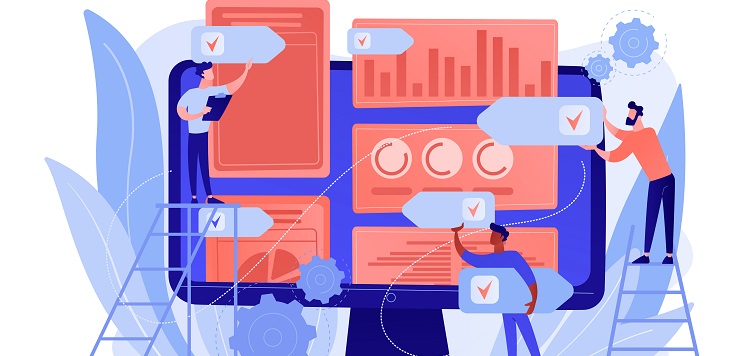
In today’s fast-paced business world, it has become increasingly important to increase productivity, reduce errors, save costs, and ultimately scale up your business. One of the most efficient ways to achieve all of these objectives is by implementing business and marketing automation software. In this article, we will look at the importance of automation software for businesses and marketing, the benefits of marketing automation software, the automation of every step in a marketing campaign, utilizing CRM to augment the customer service team, the significance of easy-to-access customer data, and automating social media tasks.
The Importance of Business Automation Software
Implementing business automation software has the power to streamline time-consuming tasks, reduce errors, increase efficiency, save costs, and ultimately scale up your business. By automating repetitive and manual tasks, automation software allows employees to focus on more critical tasks and projects that require human interaction. As a result, this increased productivity can lead to the growth and scaling of a business.
The Importance of Marketing Automation Software
Good marketing today involves almost constant dissemination of information and targeted, relevant messages through various channels to specific audiences. As manual and repetitive tasks can consume a lot of time and resources, implementing marketing automation software can automate these necessary tasks. Marketing automation software can enable your team to concentrate on more important tasks such as creating targeted content, analysis, and developing effective strategies.
Benefits of Marketing Automation Software
– Saves time and increases efficiency by automating repetitive marketing tasks
– Enables personalized and targeted communication with customers
– Provides valuable insights and analytics to inform marketing strategies
– Streamlines lead generation and nurturing
– Improves collaboration and communication between marketing and sales teams
– Increases conversions and revenue by delivering the right message to the right customer at the right time.
Marketing automation software has many benefits, including increasing your chances of generating new leads, making sales, and boosting your ROI. By utilizing automation for repetitive tasks such as email campaigns, automated responses, and social media posts, your team can devote more time to building relationships and closing deals.
Automation of every step in a marketing campaign
Every step of a marketing campaign, from the initial kickoff and throughout the entire customer journey, can be automated. Consider every process involved in sharing your message, boosting your brand, selling your product, and tracking and analyzing results. By automating your marketing tasks, you can save a significant amount of time, increase productivity, and achieve better results.
Utilizing CRM to Augment the Customer Service Team
Your CRM can also be used to augment your customer service team by automating customer service processes. By automating tasks such as support ticket management, chatbots, and communication flows, your team can provide better customer service and support. This can lead to better customer retention rates and increased satisfaction.
Significance of Easy-to-Access Customer Data
An easy-to-access space for all of your relevant customer data is crucial for any business. By implementing automation software, you can collect and store data that helps you make informed decisions and create a more personalized experience. By understanding customer behavior and preferences, you can tailor your marketing efforts accordingly.
Automating social media tasks
Social media automation tools are critical for businesses that want to stay ahead of the competition. These tools can automate tasks such as publishing your posts, scheduling posts, monitoring and responding to comments, and analyzing social media metrics. By automating these manual tasks, your team can focus on creating content and engaging with followers.
In conclusion, implementing business and marketing automation software can save significant amounts of time, reduce errors, increase efficiency, save costs, and ultimately scale your business. With the help of automation software, you can streamline every step of your marketing campaign, augment your customer service team, collect and store customer data, and automate social media tasks. By outsourcing these repetitive and manual tasks to automation software, your team can devote more time to creative and strategic tasks that will help grow your business.