

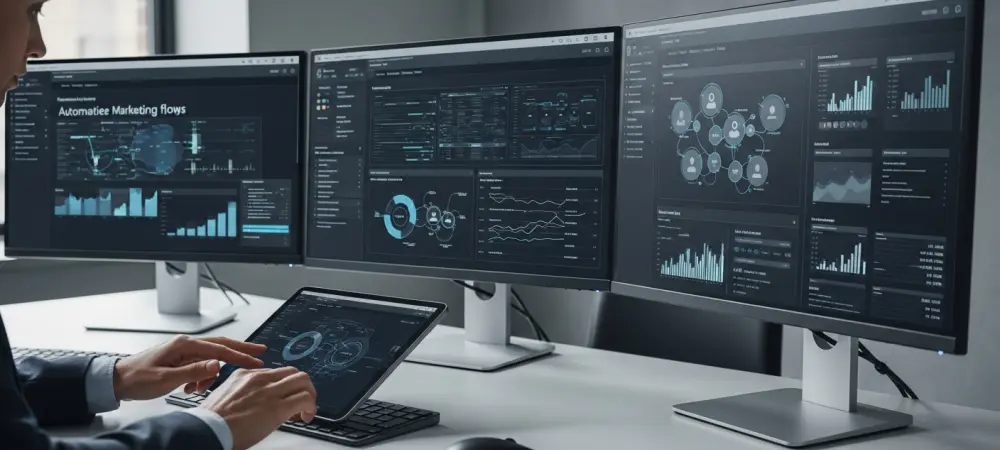
The transition from rudimentary blast emails to hyper-personalized digital experiences represents the most significant shift in retail history, effectively ending the era of mass-market noise. Modern shoppers no longer tolerate the generic interruptions that characterized early digital marketing; instead, they demand a seamless journey where every touchpoint feels specifically curated for their needs. This evolution has forced retailers to move beyond basic list management and into the realm of sophisticated Ecommerce Marketing Automation (EMA), which serves as the indispensable bridge between massive datasets and individual relevance. By synthesizing real-time demographic information, purchase history, and intricate browsing patterns, these automated systems allow brands to speak to millions of people simultaneously while maintaining the intimacy of a one-on-one conversation. The result is a dynamic ecosystem where marketing actions are no longer static or scheduled but are instead reactive, triggered by the specific behaviors of a customer as they move through the digital storefront.
This transformation is fueled by a comprehensive understanding of the modern consumer, who expects a brand to recognize their preferences across multiple devices and platforms instantly. Rather than just replacing human effort with software, EMA streamlines complex workflows to ensure that the right message reaches the right person at the exact moment they are most likely to engage. For the retailer, this means moving away from the “spray and pray” methodology and toward a data-driven strategy that prioritizes high-value interactions. By leveraging automation, businesses can create a holistic view of the consumer, turning passive browsing into a structured and intentional path toward conversion. As the digital marketplace becomes increasingly crowded, the ability to deliver these tailored experiences has become the primary differentiator between brands that thrive and those that fade into the background.
Mastering Strategic Automation
Dynamic Communication and Retargeting
Advanced email and SMS marketing frameworks now operate on a foundation of behavioral triggers that respond to the unique actions of every individual visitor. When a customer spends a significant amount of time on a specific product page or leaves an item in their shopping cart without completing the purchase, the automation engine identifies this intent and initiates a pre-programmed response. This is not merely a reminder but a strategic nudge that can include personalized incentives, such as limited-time discounts or free shipping offers, tailored to the user’s specific history with the brand. SMS marketing has become particularly influential in this regard, providing a direct and immediate channel for time-sensitive alerts and post-purchase follow-ups that boast significantly higher open rates than traditional media. By integrating these automated touchpoints, retailers maintain a consistent presence in the consumer’s mind, ensuring that the brand remains the first choice when the shopper is ready to finalize their decision.
Retargeting strategies have also undergone a massive evolution, working in tandem with direct communication channels to recapture traffic that might otherwise have been lost to the vastness of the internet. Since the majority of first-time visitors do not complete a transaction during their initial visit, tracking pixels and advanced data synchronization are used to maintain visibility as users move across social media platforms and external websites. These automated ads do not just display a generic logo; they showcase the specific products the user was previously viewing, often paired with complementary items that the system predicts they might also enjoy. This creates a loop of engagement that keeps the customer within the brand’s orbit, significantly increasing the probability of a return visit. By automating this process, retailers can scale their advertising efforts across thousands of individual products and millions of customers without requiring a manual update for every campaign, ensuring that the marketing engine runs efficiently at all hours.
Personalization through AI and Segmentation
Segmentation has evolved from basic categorization into a highly granular science that allows businesses to divide their audience into hyper-specific cohorts based on evolving behaviors. Automation tools now analyze vast streams of data to identify patterns such as spending frequency, average order value, and even the time of day a user is most likely to click an ad. This level of detail enables retailers to deliver entirely different sets of content to a first-time browser versus a high-spending loyalist, ensuring that every interaction is appropriate for the customer’s current lifecycle stage. For example, a loyal customer might receive exclusive early access to a new collection, while a price-sensitive shopper is targeted with clearance items or bundle deals. This nuanced approach prevents the “marketing fatigue” that occurs when customers are bombarded with irrelevant information, thereby strengthening the relationship between the brand and the individual over the long term.
The integration of Artificial Intelligence and sophisticated chatbots represents a new frontier in reducing friction within the buying process while maintaining high levels of service. These AI-driven assistants are no longer limited to simple, scripted responses but can now interpret complex natural language queries to provide accurate information about product specifications, sizing, and inventory levels. Beyond basic support, these tools act as automated sales associates, guiding users through the selection process based on their stated preferences and previous interactions. By providing instantaneous answers to common questions, AI reduces the likelihood of a customer abandoning their cart due to uncertainty. Furthermore, because these systems are automated, they offer a consistent level of service twenty-four hours a day, allowing brands to cater to a global audience without the overhead of a massive, around-the-clock support team. This blend of intelligence and accessibility creates a shopping environment that feels both high-tech and deeply personal.
The Evolution of the Ecommerce Tech Stack
Platforms for Scalability and CRM
Selecting the appropriate technological foundation is critical for any business looking to harness the power of automation, and platforms like Shopify have responded by offering robust, native automation features. For enterprises that require a more data-intensive approach, specialized platforms like Klaviyo have become the industry standard for centralizing information from diverse sources to build comprehensive customer profiles. These platforms utilize predictive analytics to forecast future behaviors, such as identifying which customers are most likely to churn or predicting the next logical purchase for a specific individual. By providing detailed attribution models, these tools allow retailers to see exactly which automated workflows are driving revenue, enabling them to refine their strategies based on concrete performance metrics rather than guesswork.
Other essential components of the modern tech stack, such as HubSpot and Gorgias, focus on bridging the gap between marketing, sales, and customer service through automated workflows. HubSpot utilizes its powerful Customer Relationship Management (CRM) infrastructure to score leads based on their interaction levels, ensuring that the most promising prospects are prioritized for personalized outreach. Meanwhile, Gorgias has revolutionized the post-purchase experience by automating repetitive support tasks, such as tracking requests and simple refund inquiries. This level of automation allows customers to find the information they need through self-service portals, which simultaneously builds trust and frees up human agents to handle more complex or sensitive issues. The synergy between a strong CRM and an automated support system ensures that the customer feels supported throughout their entire journey, from the initial discovery of a product to the final delivery and beyond.
For brands operating across multiple digital channels, tools such as ActiveCampaign and Drip offer the granular control necessary to maintain a unified brand voice. ActiveCampaign excels at tracking engagement across social media, live chat, and email, creating a single source of truth for all customer interactions. This allows for highly sophisticated campaigns where a customer’s action on one platform can trigger a specific response on another, ensuring a continuous and logical flow of information. Drip provides specialized automation for social retargeting, allowing retailers to sync their customer segments directly with major advertising platforms to ensure that ad spend is focused on the most relevant audiences. These tools are designed to handle the complexity of modern omnichannel retail, providing the infrastructure needed to deliver a consistent and engaging experience regardless of where the customer chooses to interact with the brand.
The Future of Omnichannel Synergy
The overarching movement in the industry is toward a total synergy of omnichannel efforts where the distinction between different marketing platforms becomes virtually invisible to the consumer. By automating the routine aspects of digital commerce—from lead nurturing to order updates—businesses are finding themselves with more resources to dedicate to high-level strategy and creative storytelling. This shift is not just about efficiency; it is about creating a sophisticated marketing engine that grows more intelligent with every transaction. As automation handles the technical heavy lifting, brands are able to focus on building emotional connections with their audience, using the data provided by these systems to inform their creative direction. This leads to a virtuous cycle where better data leads to more effective automation, which in turn leads to higher customer satisfaction and increased loyalty. The ultimate goal of this technological evolution is to create a shopping experience that is entirely friction-free and deeply intuitive. In this environment, the automated systems anticipate the needs of the consumer before the consumer even realizes them, offering product suggestions and support at the exact moment they are required. This level of proactive engagement transforms the relationship between the retailer and the buyer from one of simple transactions to one of ongoing partnership. By leveraging the full spectrum of automation tools, from AI-driven chatbots to sophisticated CRM systems, businesses can ensure that they are meeting the demands of the modern marketplace. This approach not only maximizes the immediate conversion rates but also secures the long-term viability of the brand in an increasingly competitive and fast-paced digital economy where the only constant is the need for relevance.
The rapid adoption of integrated marketing automation throughout 2025 reshaped how retailers approached growth and customer retention. Organizations that prioritized the deployment of predictive analytics and behavioral triggers successfully navigated the transition from reactive selling to proactive engagement. The focus shifted away from manual campaign management toward the refinement of automated logic, which allowed teams to focus on creative strategy rather than technical execution. Retailers discovered that the most effective way to scale was to build a foundation where data flowed seamlessly between CRM platforms, help desks, and advertising tools. This historical shift proved that the winners in the digital marketplace were those who treated automation not as a replacement for human connection, but as the essential tool for delivering it at scale. Moving forward, the emphasis remains on auditing existing workflows to identify where AI can further reduce customer friction and enhance the overall lifetime value of each user. Past performance demonstrated that brands failing to automate their core communications were quickly outpaced by those who utilized these technologies to provide constant, personalized value to their audiences.