

Aisha Amaira is a distinguished MarTech expert whose career is defined by the seamless integration of high-level technology with strategic marketing initiatives. With extensive experience in CRM technology and customer data platforms, she specializes in transforming complex data into actionable customer insights that drive business growth. Aisha’s approach focuses on the intersection of innovation and human connection, helping brands navigate the evolving digital landscape with precision and purpose.
The following discussion explores the strategic expansion of B2B marketing through professional creator partnerships and advanced video distribution. Aisha details how brands are evolving from simple social posts to integrated editorial sponsorships, the shifting dynamics of Connected TV (CTV) in the sales funnel, and the critical role trusted voices play in finalizing high-stakes deals. She also addresses the technical advancements in self-serve campaign management and automated payment systems that are currently redefining operational efficiency for global marketing teams.
Brands are moving beyond simple social posts to integrate creator content into editorial shows and live event appearances. How do you select the right mix of professional voices for these multi-touch campaigns, and what specific metrics determine if these deeper partnerships are actually influencing high-level decision-makers?
Selection starts by identifying voices that resonate across different professional subcultures, such as bridging the gap between tech-focused creators like Aishwarya Srinivasan and lifestyle-business crossover figures like Corporate Natalie. We look for creators who can carry a narrative from an exclusive editorial show into co-branded posts and physical industry event appearances without losing authenticity. To measure influence on high-level decision-makers, we look beyond vanity metrics toward the 82% of marketers who report measurable ROI from these specific influencer streams. We analyze how these “Top Voices 360” integrations impact brand sentiment and whether the association with a trusted professional voice shortens the consideration phase for executive-level prospects.
Video is increasingly viewed as a tool for shortening sales cycles and converting leads faster than traditional formats. When expanding video reach to Connected TV platforms, what creative shifts are necessary to maintain engagement, and how should marketers balance direct purchasing with programmatic buying through external desks?
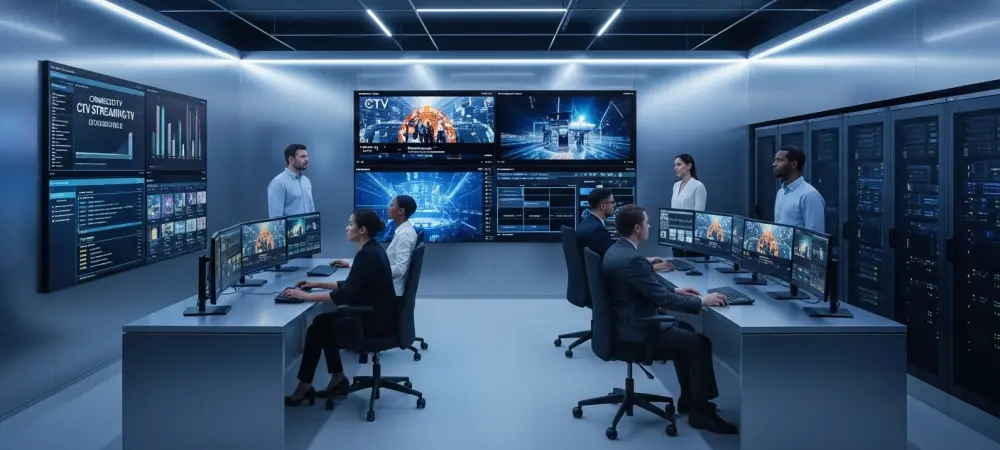
With 81% of B2B CMOs reporting that video accelerates sales cycles, the creative must pivot from the “scroll-past” mentality of mobile to the “lean-back” immersive experience of a large screen. On Connected TV, the storytelling needs to be more cinematic and authoritative to match the premium environment of streaming content while maintaining a clear B2B value proposition. Marketers now have the flexibility to buy directly through Campaign Manager for tighter control or programmatically via platforms like The Trade Desk to leverage Microsoft Monetize data. This balance allows teams to hit specific high-intent audiences on their TV screens while utilizing programmatic scale to follow those same buyers across their entire digital journey.
Bundling digital ads with high-profile live publisher events allows for a more sustained brand presence. What logistical hurdles arise when syncing digital pre-roll video with global physical events, and how can teams ensure their messaging remains consistent across diverse international outlets like Reuters, TIME, or Axel Springer?
The primary logistical hurdle is timing the digital activation so it amplifies the physical momentum of events like the Forbes Under 30 Summit or the WSJ Future of Everything. By bundling pre-roll video ads with Event Ads into a single sponsorship, we create a unified front that prevents the brand message from becoming fragmented across different regions. Consistency is maintained by leveraging centralized hubs like BrandLink, which allow us to distribute standardized high-quality assets across a network of over 40 media outlets. This ensures that whether a buyer is reading Reuters in Japan or Axel Springer in Germany, the brand experience feels like a singular, global conversation rather than a series of disconnected local ads.
More than half of B2B buyers now rely on trusted external voices during the final stages of a purchase to confirm their recommendations. If a company scales back its creator budget, what are the immediate risks to the revenue pipeline, and how can teams better communicate this impact?
Scaling back on creator budgets is no longer a minor adjustment; it is a direct risk to the bottom line, as 81% of marketers believe pulling back means leaving significant revenue on the table. Since 56% of buyers rely on these trusted voices to confirm their final purchase decisions, removing that voice at the end of the funnel can lead to immediate drops in lead conversion. Teams need to communicate this by showing that creators are not just for “awareness” but are vital “closers” in the 2026 marketing outlook. If the trusted voice disappears at the moment of truth, the buyer’s confidence wavers, and the sales cycle, which 79% of CMOs say is currently accelerated by video and creator content, begins to stall.
Moving toward self-serve campaign setups and automated payment systems significantly changes how marketing departments operate. In what ways does reducing this administrative friction impact the speed of campaign execution, and what trade-offs in manual control might occur when transitioning to these more streamlined, automated workflows?
Integrating self-serve options in Campaign Manager and automating payouts through Stripe removes the traditional “paperwork bottleneck” that often delays creator launches by weeks. This speed allows brands to react to market trends in real-time, setting up sponsorships and publisher-aligned campaigns with a few clicks rather than a mountain of manual contracts. The trade-off is a shift from granular, hands-on administrative control to a trust-based model governed by pre-set parameters and automated logic. While teams lose the ability to manually “touch” every payment or setup step, they gain the ability to scale their reach across global markets without a proportional increase in headcount or administrative overhead.
What is your forecast for B2B creator marketing?
I predict that the line between B2B and B2C creator strategies will virtually vanish as the “professional creator” becomes the primary bridge between brands and decision-makers. We are moving toward a 2026 landscape where creator sponsorships are not just line items but the foundational architecture of the sales funnel, especially since 82% of marketers already see them as essential for ROI. Expect to see more “always-on” creator partnerships where influencers are integrated into the product development and live event lifecycle, rather than just being used for one-off promotions. This shift will force B2B brands to become media entities in their own right, managing portfolios of talent to maintain the trust and speed required to close deals in an increasingly skeptical market.