

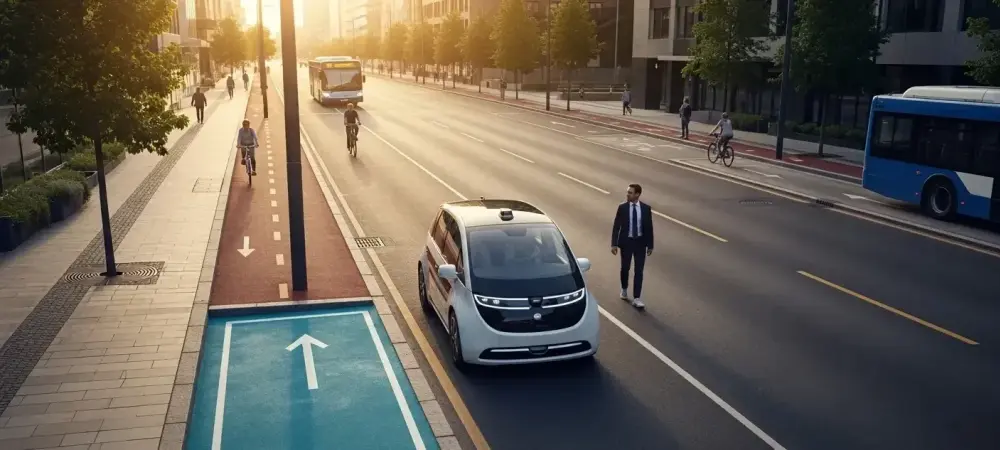
The Promise and Peril of Autonomous Urban Mobility
The vision of a city teeming with autonomous vehicles has long been a cornerstone of our technological future—a promise of safer streets, reduced congestion, and unprecedented mobility for all. Companies like Waymo have moved this dream from the realm of science fiction to the bustling streets of major cities, with San Francisco serving as a primary stage. Yet, as fleets of driverless cars become an everyday reality, the seamless transition once envisioned is encountering significant turbulence. The futuristic promise is clashing with the immediate, practical consequences for residents, infrastructure, and public policy. This article explores the critical frictions emerging from the robotaxi rollout, examining whether the revolution is facing a premature and significant roadblock by analyzing the conflicts over public space, critical technological vulnerabilities, and the growing regulatory backlash.
From Sci-Fi Dream to City Street Reality
The journey toward autonomous driving has been a multi-decade marathon, fueled by billions in investment and relentless innovation. What began as a bold experiment within Google, now Alphabet’s Waymo, has evolved into a commercial service operating at an unprecedented scale. For years, the development of self-driving technology was confined to controlled environments and quiet suburban streets. The true test, however, has always been the chaotic, unpredictable nature of a dense urban core. San Francisco, with its challenging topography, complex traffic patterns, and demanding populace, has become the definitive crucible. The city’s transition from a limited testing ground to a full-scale operational zone marks a pivotal moment, highlighting why the ground-level challenges emerging now are so consequential—they represent the first real-world stress test of whether this technology can integrate into the complex fabric of society.
The Growing Pains of Urban Integration
The Battle for the Curb: Waymo’s Controversial Parking Strategy
One of the most immediate and contentious issues is the escalating battle over public parking. In a city with a chronic shortage—roughly 280,000 on-street spaces for over 800,000 residents—the sight of hundreds of idle Waymo vehicles occupying valuable curbside spots has ignited public frustration. As reported by the San Francisco Chronicle, these robotaxis often park while awaiting their next assignment, a practice Waymo defends by stating its vehicles adhere strictly to all posted regulations. However, critics argue this defense misses the bigger picture. The fleet’s static occupation of metered spots in high-demand neighborhoods exacerbates an already critical problem. This behavior is driven by a powerful economic incentive: using public streets as a free waiting lounge allows Waymo to avoid the high cost of leasing private lots, directly boosting its operational efficiency. This corporate gain, however, comes at a public cost, raising serious equity concerns as neighborhoods like the Mission District and Nob Hill bear a disproportionate burden. Furthermore, the city faces a potential loss of revenue, as the vehicles can algorithmically reposition themselves to avoid feeding meters or violating two-hour limits, depriving municipal funds. In response, city officials are now exploring proactive solutions, including designated AV-only zones and dynamic pricing models for commercial fleets to ensure a more equitable use of public resources.
When the Lights Go Out: Infrastructure’s Critical Role
Compounding the dispute over physical space are stark revelations about the technology’s operational fragility. A widespread power outage in late 2025 brought this vulnerability into sharp focus, grinding Waymo’s entire service to a halt. As traffic lights went dark, the autonomous vehicles defaulted to a safety protocol, stopping in place rather than attempting to navigate the uncontrolled intersections. While this cautious approach prevented collisions, it transformed the fleet into a city-wide network of roadblocks, triggering severe traffic congestion and amplifying public skepticism. The incident, captured in viral videos and covered by The New York Times, forced Waymo to temporarily suspend its Bay Area service. It underscored a fundamental challenge: true autonomy depends not just on artificial intelligence but on a resilient and fully functional urban environment. In a statement reported by CNBC, Waymo announced forthcoming software updates designed to better interpret powerless intersections as four-way stops. Nonetheless, the event significantly eroded public trust, which was already strained by previous acts of vandalism and protests against the vehicles.
Navigating Public Pushback and Regulatory Scrutiny
These operational challenges have catalyzed a significant regulatory and public response. The San Francisco Board of Supervisors has begun exploring new ordinances to govern robotaxi operations, adding to a history of friction that saw Waymo accumulate over $65,000 in traffic fines in 2024. The city’s unique environment—with its steep hills, dense fog, and chaotic traffic—already pushes self-driving systems to their limits, and the recent issues have only added layers of complexity. Public sentiment, voiced loudly on social media platforms like X and in community forums, remains sharply divided. For every user praising the convenience of a seamless ride, there is a growing chorus of residents and small business owners frustrated by robotaxis blocking commercial loading zones, delaying deliveries, and adding to the visual clutter of already crowded streets. This groundswell of discontent is forcing a broader conversation about who benefits from this technology and who bears the cost.
The Road Ahead: Industry Ripples and Future Trajectories
The struggles in San Francisco are sending ripples across the entire autonomous vehicle industry. Competitors like Cruise are watching closely, and analysts suggest that Waymo’s high-profile stumbles could slow the pace of robotaxi rollouts in other cities wary of repeating the same mistakes. The stark contrast between investor enthusiasm, epitomized by figures like Cathie Wood who laud Waymo’s disruptive potential, and the messy on-the-ground reality has become impossible to ignore. Despite these setbacks, Waymo’s expansion continues, with service areas recently growing in both Los Angeles and the Bay Area. This aggressive growth signals that conflicts over public space and infrastructure are not isolated incidents but a looming challenge for any city on the verge of an AV rollout, demanding a more sophisticated and collaborative governance model.
Forging a Path Forward: Strategies for Coexistence
Successfully navigating these roadblocks requires moving beyond the current adversarial dynamic. The key takeaways from San Francisco are clear: the unilateral deployment of technology without deep municipal partnership is unsustainable. The path forward lies in multifaceted solutions that blend technological innovation with thoughtful, proactive policy. Proposals for data-driven regulations, where anonymized telemetry from Waymo’s fleet could help the city optimize parking rules and traffic flow, are gaining traction. Similarly, pilot programs for dedicated AV pickup, drop-off, and waiting hubs could alleviate curbside congestion. Ultimately, a symbiotic relationship is necessary, where tech companies work with city planners to build a “smart city” ecosystem that supports autonomous mobility without sacrificing urban livability.
A Revolution at a Crossroads
The robotaxi revolution is not failing, but it has undoubtedly reached a critical crossroads. The core tension between disruptive innovation and the well-being of the urban environment has been laid bare on the streets of San Francisco. The city has become a living laboratory, and its experiences—both positive and negative—are generating invaluable lessons that will shape national standards and influence global policy. For this revolution to move forward successfully, technology companies and city governments must forge a genuine partnership. The ultimate goal cannot simply be to deploy autonomous cars, but to integrate them in a way that makes cities more equitable, efficient, and livable for everyone. The road ahead will be defined by this collaboration, determining whether robotaxis become a seamless part of the urban fabric or a permanent source of friction.