

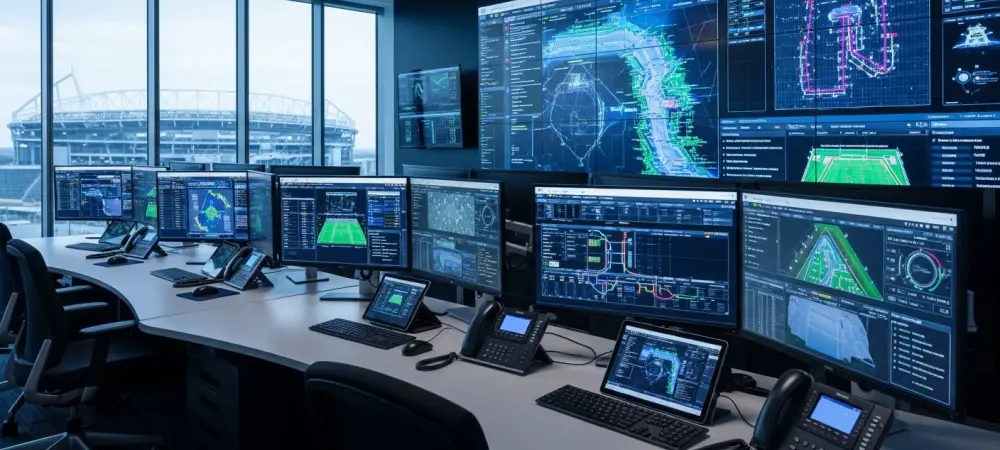
The sheer scale of global sporting events has transformed from mere athletic competitions into complex, high-stakes operational masterpieces where success is defined by customer experience rather than the final score. As the world turns its attention toward the massive infrastructure requirements of the FIFA World Cup 2026 and the subsequent Los Angeles Olympics in 2028, the traditional view of the stadium as an isolated destination has been replaced by a more sophisticated model of an interconnected ecosystem. In this environment, every fan journey is treated as a series of logistical and emotional touchpoints that begin long before they ever reach the turnstiles. This paradigm shift acknowledges that a single failure in transit or communication can overshadow even the most thrilling on-field performance. Organizers are now required to act as master orchestrators, balancing the cold logic of crowd flow with the warm necessity of human engagement. By viewing the spectator as a high-value customer with evolving expectations, these mega-events have moved beyond sports into the realm of premium service delivery, where the true product is the seamless integration of technology, movement, and collective celebration across entire metropolitan regions. This evolution necessitates a deep understanding of human behavior, as the emotional energy of a crowd can either be a catalyst for joy or a source of volatility depending on how well the environment is managed.
Mastering the Extended Communication Loop: The Journey Begins at Home
The backbone of a successful fan experience is consistent and unified communication that effectively starts months before the actual whistle blows. It is no longer sufficient to provide information only at the venue gates; instead, the journey begins the moment a fan considers purchasing a ticket. By addressing logistical questions early in the planning phase, organizers can significantly reduce the cognitive load on fans, preventing the mental fatigue that often leads to frustration during large-scale gatherings. When a fan understands the entirety of their itinerary, including the granular details of local transit and security protocols, they are far more likely to remain calm and cooperative throughout the event. This proactive strategy involves a multi-channel approach where digital platforms, social media, and direct messaging serve as a continuous guide, ensuring that every participant feels empowered and informed. The goal is to eliminate the “fear of the unknown,” which is the primary driver of anxiety in crowded environments, thereby allowing the fan to focus on the entertainment rather than the logistics of survival.
Pre-arrival communication must tackle three critical concerns: transit logistics, the adoption of new technologies, and the safety of the return trip. For instance, introducing advanced mobility options like autonomous shuttles or air taxis requires building public trust through absolute transparency regarding safety and reliability. When fans know exactly how they will reach the venue and, more importantly, how they will get home after a late-night match, their anxiety drops and their confidence in the event organizers grows. This confidence is a vital prerequisite for a positive atmosphere, as it transitions the crowd from a state of hyper-vigilance to one of relaxed enjoyment. Effective communication guides fans through four psychological modes: completing necessary tasks, discovering new sights, enjoying the core entertainment, and connecting with the event’s deeper aspirations. When trust is established through clear and empathetic messaging, fans remain in a state of calm confidence, which is vital not just for safety and crowd control, but also for encouraging fans to engage more deeply with the event’s various commercial offerings and side attractions.
Adapting Aviation Principles: Stadium Logistics in High-Traffic Hubs
Large-scale sporting events are increasingly adopting design principles from the aviation industry, particularly regarding how people move through high-traffic hubs with maximum efficiency and minimal friction. Airports like JFK Terminal 5 offer a sophisticated blueprint for managing the ebb and flow of thousands of people, treating the terminal not just as a building but as a dynamic machine for movement. The focus here is on the arrival and departure dynamic, which is often the most stressful part of the fan experience due to the high density of individuals occupying the same space simultaneously. By studying how passengers navigate security checkpoints and gate lounges, stadium designers can implement similar flow-control mechanisms that prevent bottlenecks and maintain a steady pace of movement. This cross-industry knowledge transfer allows event planners to anticipate problematic congestion points and deploy technology-driven solutions, such as biometric entry and real-time density sensors, to keep the crowd moving smoothly toward their final destination.
A key insight from these comparisons is the inherent asymmetry of crowd movement, which requires two distinct strategies for arrival and departure. Arrival is typically staggered as fans trickle into the precinct over several hours, which naturally thins out the pressure on transit systems and allows for a more leisurely exploration of the venue. Departure, however, is a fixed and abrupt event where tens of thousands of people exit the stadium simultaneously, often under the influence of strong emotions following a win or a loss. This creates a potential “perfect storm” of chaos that requires rigorous design and strategic intervention to prevent a negative final impression from ruining the entire day. To manage this mass exodus effectively, designers rely on four specific pillars: intuitive wayfinding that does not require language proficiency, predictable and well-lit exit routes, real-time digital updates via mobile apps, and the strategic placement of frontline experience ambassadors. These ambassadors act as empathetic guides at key decision points, helping to steer crowds toward transit hubs while maintaining a positive and helpful presence that diffuses tension.
Quantifying the Value: The Financial Impact of Fan Happiness
There is a direct and measurable link between a fan’s emotional state and the revenue they generate for the event and its stakeholders. Data derived from the airport and hospitality industries suggests that seamless journeys are the primary drivers of discretionary spending, as people are more inclined to spend money when they are not preoccupied with logistical stress. When a fan feels safe, relaxed, and well-guided, they are far more likely to wait in line for premium concessions, explore the official fan zones, or purchase high-margin souvenirs. Conversely, a fan who has struggled with transportation or felt confused by unclear signage will likely seek the quickest exit, bypassing commercial opportunities in favor of reaching a familiar environment. Therefore, the investment in customer experience is not merely a service enhancement but a fundamental revenue strategy that maximizes the lifetime value of the attendee. By optimizing the physical and digital environment, organizers create a “spending-friendly” atmosphere that benefits sponsors, vendors, and the local economy alike.
The financial difference between a satisfied fan and a delighted one is substantial and can dictate the overall profitability of a mega-event. Studies have shown that passengers who have what they describe as a “perfect” experience spend significantly more—up to 64% more in some specific cases—than those who find the experience merely adequate or functional. In the context of a global event like the World Cup, this translates to millions of dollars in potential revenue that hinges entirely on the quality and fluidity of the customer journey. This economic reality has led to the rise of sophisticated data analytics platforms that track fan sentiment and spending patterns in real-time, allowing organizers to adjust their operations on the fly. For example, if a particular transit hub is experiencing delays, digital signage can redirect fans to a nearby fan zone with food and entertainment, turning a potential frustration into an additional revenue-generating touchpoint. This level of responsiveness ensures that the fan remains in a positive state of mind, which is the most valuable asset any event organizer can possess.
Collaborative Infrastructure: A Blueprint for Regional Operational Success
Managing the unprecedented scale of events like the 2026 World Cup requires a level of inter-agency collaboration that transcends traditional municipal boundaries. A prime example of this is the comprehensive New York and New Jersey mobility plan, which integrates multiple transit authorities, law enforcement agencies, and private contractors into a single, unified strategy for MetLife Stadium and its surrounding areas. This approach creates a “transportation signature” for the event, ensuring that different systems work together as a cohesive unit rather than in isolated silos that compete for resources or space. By synchronizing schedules, unifying ticketing platforms, and sharing real-time data across agencies, the region can handle the massive influx of international visitors without paralyzing the local infrastructure. This collaborative model also extends to the digital realm, where shared platforms provide a single source of truth for fans, reducing the confusion that often arises when multiple organizations provide conflicting information.
Ultimately, the success of these global celebrations depends on a human-centric design philosophy that extends far beyond the physical walls of the stadium. By prioritizing mobility, clear communication, and emotional management, organizers can turn daunting logistical challenges into significant commercial and social opportunities. In this new era of event management, the business of sports is inextricably linked to the business of experience, where every minor detail—from the brightness of a wayfinding sign to the friendliness of a transit worker—contributes to a successful and profitable event. This holistic view of the event ecosystem ensures that the legacy of the mega-event is not just a collection of new buildings, but a more resilient and efficient regional infrastructure that benefits the local population long after the final trophy has been hoisted. The integration of advanced technology with traditional hospitality creates a robust framework for managing the complexities of the modern world, proving that when the customer is at the center of the plan, everyone wins.
Future Considerations: Lessons From the Evolution of Fan Engagement
The evolution of the fan experience reached a tipping point where logistical precision became the primary determinant of commercial success for global sporting bodies. Organizers proved that by treating the stadium as a node within a larger network, they could mitigate the inherent risks of mass gatherings while simultaneously unlocking new streams of revenue. The shift toward a service-oriented model demonstrated that the most effective way to manage a crowd was through empathy and clarity rather than mere restriction and surveillance. These events established a new standard for urban mobility and digital integration, showing that regional collaboration could overcome the friction of traditional jurisdictional boundaries. As these strategies were refined, the industry moved away from reactive management and toward a predictive approach that used data to anticipate needs before they became problems. This transition ensured that the spectator journey remained a priority, cementing the idea that the business of mega-events was always, at its core, the business of human connection and seamless experience. Moving forward, the industry must prioritize the permanent integration of these temporary event solutions into the long-term urban fabric to ensure lasting value. Future projects should focus on the development of “liquid” infrastructure that can scale up for major events and scale down for daily use without losing efficiency or aesthetic appeal. The successful implementation of biometric systems and real-time communication tools during recent championships provided a clear roadmap for how cities can handle high-density scenarios in the future. Stakeholders should now look toward creating standardized experience protocols that can be shared across different host cities, reducing the learning curve for each new event cycle. By maintaining the rigorous standards of communication and movement established during these peak periods, metropolitan areas can improve the quality of life for their residents while remaining ready for the next global showcase. The focus on the emotional state of the user has fundamentally changed how we perceive public space, making the pursuit of a “perfect” journey a standard requirement for any large-scale human endeavor.