

The modern customer experience is increasingly punctuated by a single, often awkward, question: “How much would you like to tip?” What was once a gesture of appreciation reserved for exceptional service in restaurants and salons has metastasized across the economy. Digital payment screens now prompt for gratuities at coffee shops, auto repair centers, and even self-checkout kiosks, transforming a discretionary reward into a source of consumer anxiety and frustration. This phenomenon, often called “tip creep,” is more than a minor annoyance; it’s a critical business challenge that threatens customer loyalty and brand perception. This market analysis explores how the widespread and often coercive nature of modern tipping can harm a business, examining the psychological pressures it creates, the operational complexities it introduces, and the strategic missteps to avoid. By analyzing the underlying issues, a framework emerges for designing a tipping system that enhances, rather than erodes, the customer experience.
The Economic Shift from Gratuity to Wage Subsidy
To understand today’s tipping fatigue, it is essential to recognize the fundamental shift in its purpose. Historically, a tip was a direct, voluntary reward from a satisfied customer to a service worker for a job well done. However, over time, it evolved into an integral component of compensation in many industries, allowing business owners to transfer a portion of their labor costs directly to the consumer. This model offers a clear advantage to businesses: it lowers fixed payroll expenses while allowing them to attract talent with the promise of higher earning potential through gratuities.
This outsourcing of wages, however, is built on the increasingly fragile assumption that customers are both willing and able to accurately judge and reward service. In many modern contexts—especially in technical fields like auto repair or at a quick-service counter—customers are ill-equipped to evaluate performance, turning the tip into a social tax rather than a merit-based incentive. This has created a significant disconnect in the market, where the economic function of tipping no longer aligns with its social perception, leading to widespread friction.
Analyzing the Market Impact of Tipping Fatigue
The Unchecked Expansion of Tip Creep
The proliferation of tipping prompts has reached a scale that is now actively alienating consumers. According to the Pew Research Center, a staggering 72% of U.S. adults report being asked to tip in more situations than just five years ago. This trend is fueled by technology; payment processor Square notes that the percentage of remote transactions including a tip soared from 43% before the pandemic to 75% in the early part of this decade. This isn’t just a perception issue—it has tangible financial consequences, with the average American now spending over $450 annually on tips.
The result is a growing public backlash, creating a tangible market risk for businesses that overuse the practice. A Bankrate survey found that 41% of Americans now believe “tipping culture has gotten out of control,” a significant jump from 30% the previous year. When tipping requests appear in places where they feel unwarranted, such as a self-service kiosk, customers feel less like they are rewarding labor and more like they are being exploited, directly damaging brand trust.
From Gratitude to Guilt and Its Economic Consequences
Modern tipping is often driven less by genuine appreciation and more by social and psychological pressure. The act of an employee swiveling a tablet with pre-selected tip amounts—often starting at 20% or higher—creates an uncomfortable moment of public judgment. This has given rise to “guilt tipping,” a phenomenon where customers leave a gratuity simply to avoid the perceived confrontation or awkwardness of selecting “no tip”. One study found that two-thirds of customers admitted to tipping for this reason alone.
This pressure effectively transforms a legally voluntary payment into a de facto mandatory one, breeding resentment and anxiety. This negative emotional experience becomes associated with the brand, potentially leading to reduced visit frequency and negative word-of-mouth. Furthermore, this dynamic can create an environment ripe for discrimination or harassment, as both customers and workers navigate a transaction clouded by social obligation rather than clear service expectations.
Navigating the No-Tip Movement and Labor Market Complexities
While the problems with tipping are clear, completely eliminating it is not a simple or universally effective solution. The practice has become a deeply entrenched component of worker compensation, and attempts to remove it have produced mixed results. For example, Danny Meyer’s Union Square Hospitality Group, a pioneer of the no-tip model, famously abandoned the policy during the pandemic, with its leadership calling it “inhumane” to deny staff the potential for extra income during a crisis.
Similarly, Uber initially resisted in-app tipping over concerns about potential discrimination, but it reversed its stance to better compete with Lyft in attracting and retaining drivers. These cases highlight a critical reality: for millions of service workers, tips are not a bonus but a vital and expected part of their livelihood. Businesses must therefore navigate this complex labor dynamic carefully rather than pursuing an all-or-nothing approach, as abrupt changes can disrupt their ability to attract and retain talent.
A Strategic Framework for Future Tipping Models
Instead of haphazardly applying tipping prompts to every transaction, businesses must move toward a more thoughtful and customer-centric model. A successful tipping program—one that genuinely enhances the experience—should be built on three core principles: distinctiveness, visibility, and proportionality.
- Distinctiveness: The service being tipped for must be clearly separate from the core product. A proposal to tip video game developers, for instance, fails this test because customers cannot distinguish the “service” of development from the product they are buying. Tipping should reward an optional, value-added effort, not the basic fulfillment of a transaction.
- Visibility: The customer must be able to directly observe the discretionary service they are rewarding. The practice of pre-tipping on food delivery apps like DoorDash violates this principle. When the company piloted a prompt warning that orders without a tip might take longer, it effectively turned the tip from a reward for good service into a bid for basic service, stripping the customer of their agency.
- Proportionality: The system must empower customers to freely reward workers in a way that is directly proportional to their perception of the service quality. This crucial link between individual effort and reward is what gives tipping its meaning, yet it is often severed by modern practices like opaque tip pools and high-pressure prompts.
Actionable Strategies for a Proportional and Pressure-Free System
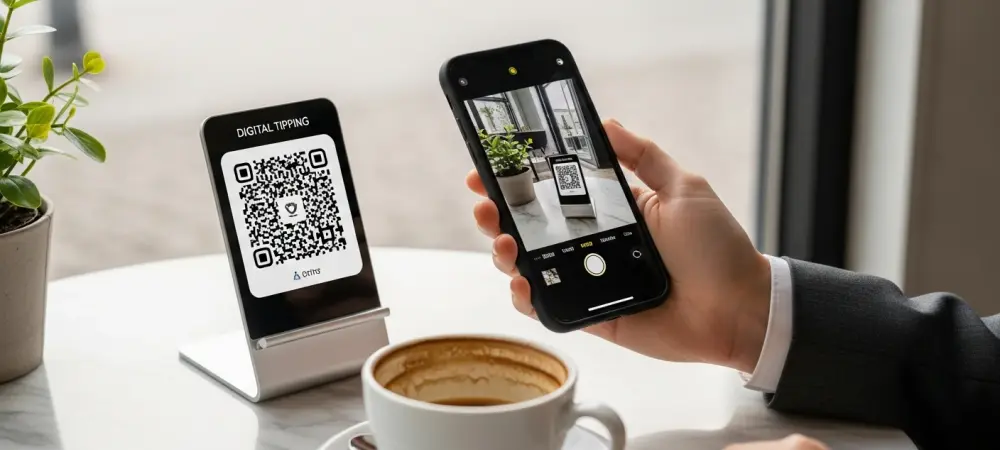
To put these principles into practice and restore proportionality, businesses can implement several actionable strategies. First, the basis for calculating a tip should be logical. A percentage of the bill makes little sense if the service effort doesn’t scale with the cost—delivering a $60 order is not twice the work of delivering a $30 one. Using factors like distance, weather, or urgency can create a more appropriate standard. Second, businesses must reduce social pressure by making the process discreet. Instead of a confrontational screen-flip at the counter, companies like Marriott and Wyndham are using QR codes and apps to allow for private digital tipping.
Third, preset tip suggestions, which nearly twice as many Americans oppose as support, must be balanced; the “no tip” and “custom amount” options should be just as prominent as the suggested percentages. Finally, linking the tip to a qualitative rating—for instance, asking for a star rating before the tip prompt, as Uber does—can help customers align their satisfaction with a monetary value, making the process feel more logical and less stressful. By implementing such changes, businesses can begin to repair the damaged trust caused by over-aggressive tipping prompts.
Tipping as a Tool Not a Tax
In the acclaimed television series The Bear, the protagonist struggled with the “unpleasant” but necessary conversations around the restaurant’s finances, including tipping. This reflected the real-world discourse, which became fraught with frustration as consumers increasingly felt that businesses were exploiting their empathy. The ultimate finding of this analysis was that no one-size-fits-all solution existed for the tipping dilemma. However, by moving away from coercive, poorly designed systems and adopting a thoughtful framework built on distinctiveness, visibility, and proportionality, businesses transformed tipping from a source of friction into a powerful tool. A well-designed system mitigated customer frustration, improved worker morale, and ultimately reinforced a positive brand experience where both employees and customers felt valued.