

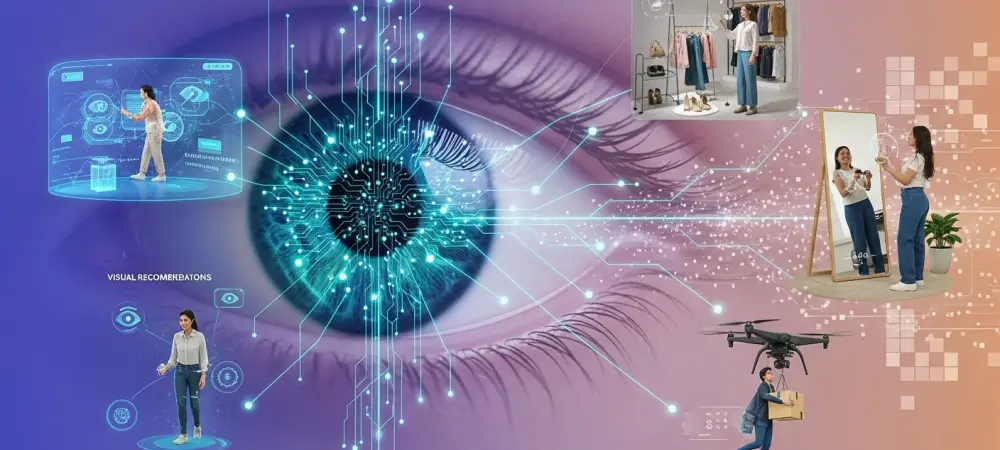
The landscape of corporate consumer engagement underwent a seismic shift recently when Sprinklr announced the strategic acquisition of assets from ViralMoment, a move that fundamentally redefines how large-scale enterprises interpret the massive influx of social data. By integrating specialized social video intelligence into its existing unified platform, the company is spearheading a departure from antiquated, text-heavy analysis toward a sophisticated multimodal approach that encompasses video, images, and audio signals. This transition is not merely a technical upgrade but a strategic maneuver designed to eliminate the persistent blind spots that have long hindered brand visibility in digital spaces. As consumers increasingly favor visual expression over written feedback, the necessity for tools that can parse complex imagery has become undeniable for any global organization seeking to remain competitive. This integration allows for a more holistic understanding of the customer journey, bridging the gap between what brands think is happening and the reality of the digital marketplace.
Bridging the Gap: Textual Data Versus Visual Storytelling
For a significant duration, customer feedback programs have been fundamentally constrained by their reliance on structured text, such as traditional emails, written reviews, and standardized survey responses. While these metrics provided a foundational understanding of consumer sentiment in the past, the modern landscape has moved decisively toward visual-first communication on platforms like TikTok and Instagram. To maintain any semblance of relevance, modern brands must now adopt technology that is capable of decoding the intricate layers of visual narratives found in short-form video content. This medium has rapidly evolved into the primary venue for brand discovery, where consumers use aesthetics and motion to express their opinions more frequently than they use written words. Relying solely on text analysis in such an environment creates a skewed perception of reality, where the most passionate and influential customer voices are essentially ignored by the data processing systems of the enterprise.
Many large-scale enterprises currently struggle with a state of fragmented visibility, where they are able to track high-level metrics like views and likes but fail to grasp the underlying emotional drivers. Without the implementation of multimodal intelligence, internal teams are often the last to realize when a specific product issue has gone viral or when a burgeoning cultural trend has begun to reshape their market. This inherent delay in information processing often results in missed opportunities for meaningful engagement or, more critically, a failure to intercept a public relations crisis before it gains insurmountable momentum. The disparity between surface-level data and deep contextual understanding represents a significant risk for brands that rely on legacy listening tools. By the time a visual trend is transcribed into a text-based report, the cultural moment has often passed, leaving the brand to react to old news rather than lead the conversation in real time.
Technical Mechanics: The Logic of Frame-by-Frame Analysis
Advanced artificial intelligence technology now empowers sophisticated systems to actually perceive content by meticulously analyzing social video on a frame-by-frame basis. This is a profound departure from basic tools that merely transcribe spoken audio into text, as these new systems can identify subtle creative patterns and on-screen text overlays simultaneously. By recognizing specific visual narratives in real time, the technology provides a comprehensive view of the customer journey that was previously inaccessible to automated platforms. This level of granularity helps brands understand not just that a particular video performed exceptionally well according to the algorithm, but exactly which visual elements or stylistic choices resonated with the target audience. Such insights allow creative teams to replicate successful components with surgical precision, moving away from guesswork and toward a data-driven approach to visual content creation and distribution across various social channels.
The integration of frame-by-frame analysis offers several functional advantages, most notably the ability to detect emerging trends in their infancy and provide deeper emotional context. By analyzing visual cues and audio components in tandem, artificial intelligence can interpret nuances such as genuine joy or underlying frustration that text alone would almost certainly fail to capture. These multi-layered insights are then seamlessly woven into the existing workflows for marketing, product development, and customer service, ensuring that every department has access to the same high-fidelity information. This synchronization allows for a more agile organizational response, where data-driven creative strategies are informed by the authentic visual experiences of the consumer. Consequently, the enterprise can align its messaging with the actual visual language of its community, fostering a deeper sense of connection and brand loyalty that transcends the limitations of traditional marketing.
Behavioral Observation: Moving Beyond Traditional Feedback
Industry leaders are increasingly advocating for a shift in perspective, arguing that modern listening requires artificial intelligence systems capable of reasoning across various formats. The ultimate goal is to move from a state of fragmented visibility toward a complete understanding where social intelligence serves as a foundational component of broader business intelligence. This evolution suggests a paradigm where AI acts much like a human analyst, possessing the ability to see and reason at the massive scale required by global corporations. Instead of looking at data points in isolation, these systems connect the dots between visual trends and tangible business outcomes, providing a level of context that was once the exclusive domain of manual research teams. As these systems become more integrated, they allow companies to observe the real-world application of their products through the lens of the consumer, offering a raw and unfiltered perspective on brand performance. There is a broader, more significant trend within the industry moving away from explicitly asking for feedback and toward the spontaneous observation of authentic consumer behavior. While many modern consumers have developed a tendency to ignore or skim through automated email surveys, they frequently share their authentic experiences through video within the creator economy. The brands that are poised to succeed in the coming years will be those that can successfully capture these visual signals and act upon them before the fleeting cultural moment dissipates. This transition from reactive questioning to proactive observation allows for a much more accurate assessment of brand health and customer satisfaction. By meeting the consumer where they are—on video-centric social platforms—enterprises can gather insights that are far more representative of the actual user experience than any structured questionnaire could ever hope to provide in the current digital climate.
Strategic Integration: Practical Applications and Implementation Challenges
The practical applications of visual intelligence now span across every major department within a modern organization, creating a unified flow of information. Product development teams can gain invaluable insights by seeing exactly how people interact with their goods in real-world settings, while customer service teams can identify and address complaints hidden within creator-led videos. For a large organization, the primary challenge no longer lies in the collection of data but in how effectively these visual insights are woven into existing workflows for advertising and social media management. As visual narratives continue to dominate the digital age, the ability to decode these signals at scale has become a mandatory requirement for maintaining long-term customer loyalty. Companies that failed to integrate these capabilities found themselves increasingly disconnected from the fast-paced reality of the modern consumer, highlighting the critical nature of this technological transition. Successful enterprises recognized that visual intelligence was not just a luxury for marketing teams but a foundational requirement for modern business operations. They shifted their focus toward building internal capabilities that could process multimodal data streams at the speed of social media trends. This proactive stance allowed organizations to move from a reactive mode of crisis management to a predictive model of customer delight. Leaders emphasized the importance of breaking down data silos to ensure that visual insights from creator-led content informed everything from supply chain adjustments to product design. By prioritizing these advanced analytical tools, companies managed to secure a significant competitive advantage in an increasingly visual economy. They also established new standards for customer engagement that moved beyond the limitations of text-based feedback. This transition solidified the role of artificial intelligence as an essential partner in human-centric brand building across the digital landscape.