

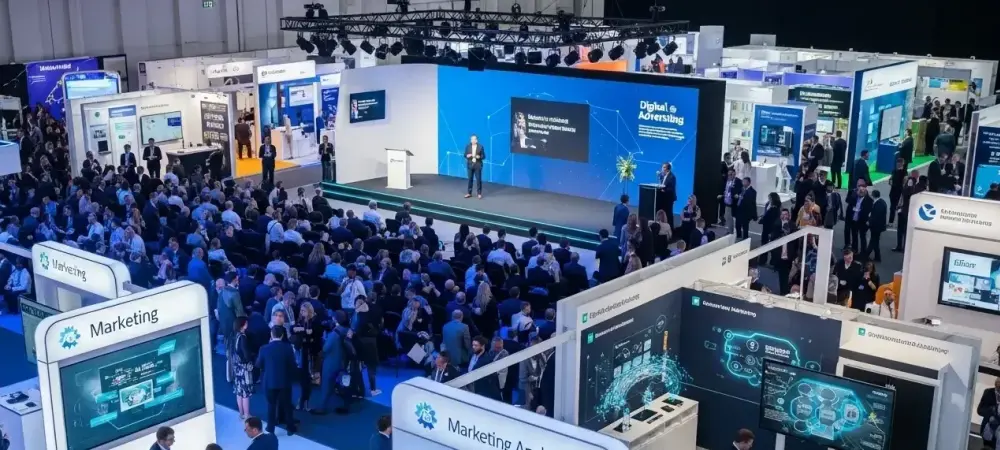
The traditional trade show floor, once a chaotic landscape of business cards and anecdotal success stories, has undergone a metamorphosis into a hyper-calculated arena of data-driven intelligence. This evolution represents a departure from the days when the success of a multi-million-dollar exhibition was measured by the weight of a lead bag or the perceived energy of a keynote crowd. In the current business environment, trade shows and professional conferences have emerged as the most critical touchpoints in a complex sales cycle, reclaiming their status as a $15 billion industry by integrating advanced technological frameworks. This shift is not merely about digitizing a physical space but about fundamentally reimagining how value is captured and distributed across an organization. As digital-native decision-makers become the primary stakeholders in corporate purchasing, the expectation for seamless, data-rich experiences has forced a total recalibration of event strategy. Artificial Intelligence has moved from the periphery of experimental technology to the very center of the marketing department’s toolkit, acting as the primary catalyst for this massive transformation. Rather than being a replacement for the physical experience, these systems serve as a sophisticated layer of connectivity that bridges the gap between a handshake and a closed-won contract. The modern B2B landscape now relies on these tools to solve the age-old problem of attribution, turning ephemeral conversations into permanent, actionable data points. By treating every interaction as a high-signal event, companies are finally able to justify the substantial investments required for major industry gatherings. This new paradigm ensures that the “human touch” remains central while being supported by an invisible, highly efficient infrastructure of predictive analytics and automated engagement.
The End of the “Post-Event Guessing Game” in B2B Sales
For decades, the standard operating procedure after a major industry conference involved a frantic period of manual data entry followed by weeks of chasing cold leads that had already lost interest. Marketers and sales professionals would return to the office with little more than a “gut feeling” about which accounts were actually moving toward a purchase and which were simply browsing the booth for promotional items. This uncertainty created a massive disconnect between the event budget and the actual revenue generated, often leading to friction between marketing teams and executive leadership. The inability to prove direct ROI meant that event spending was frequently the first to be slashed during economic tightening, as the “black box” nature of live interactions made them difficult to defend in a spreadsheet-driven world. Today, that period of ambiguity has been replaced by real-time clarity through the implementation of intelligent tracking and attribution systems. Artificial Intelligence now provides a granular view of attendee behavior, allowing teams to see exactly which content resonated and which stakeholders from a target account were most engaged. Instead of guessing which leads are “hot,” sales representatives receive prioritized lists based on engagement scores that calculate the quality of every interaction. This transformation has turned what was once a guessing game into a precise, data-driven engine where the momentum of a live event is captured immediately. The result is a shortened sales cycle where the follow-up is not a generic “thank you for visiting” email, but a targeted continuation of a specific conversation started on the exhibit floor.
Why the Human-Tech Paradox Defines the Modern B2B Landscape
A fascinating contradiction has emerged in the professional world where digital fatigue is at an all-time high, yet the demand for high-tech efficiency has never been greater. While 84% of professionals express a deep-seated craving for in-person interactions to escape the monotony of video calls, they simultaneously have zero patience for the logistical hurdles and generic messaging of the past. This creates a unique challenge for marketers: the need to provide a deeply human, authentic connection while satisfying the digital-native expectations of a modern buyer. The “human-tech paradox” suggests that the more technology we integrate, the more valuable the genuine human interaction becomes, provided that the technology is used to enhance rather than replace the personal element. Artificial Intelligence serves as the essential bridge in this paradox by acting as a silent, invisible assistant that handles the friction of logistics, allowing participants to focus on building rapport. When an AI-powered concierge manages an attendee’s schedule or provides instant answers to complex navigational questions, the participant is freed from the mental load of event management. This seamless integration allows for “human touch” at scale, where every visitor feels as though the experience was designed specifically for them. As buyer preferences shift toward these consumer-like, friction-free experiences, the organizations that successfully blend sophisticated automation with warm, personal engagement are the ones winning the trust of modern decision-makers.
From Lead Collection to Intelligent Buying Group Engagement
The fundamental metric of event success has shifted from the quantity of individual badge scans to the depth of account-based insights. In the past, a single scan of a junior employee’s badge might have been discarded as a low-quality lead, ignoring the fact that they were part of a larger research team for a major corporation. Modern systems now recognize that a single participant represents a larger buying group, connecting the dots across an entire organization to provide a holistic view of interest. AI-powered tools analyze real-time engagement signals—such as the amount of time spent at a specific product demo, participation in interactive polls, or movement patterns through a booth—to determine the readiness of the entire account.
This shift allows marketing teams to move away from the outdated practice of “collecting names” and toward the more sophisticated strategy of “orchestrating accounts.” By understanding how multiple stakeholders from the same company interact with different elements of an event, marketers can identify internal alignment or potential roadblocks within a target organization. For example, if a technical lead spends thirty minutes at a specialized workshop while their procurement officer attends a session on cost-efficiency, the AI system flags this as a high-intent buying group. This level of intelligence ensures that every live interaction feeds directly into a broader go-to-market strategy, allowing for hyper-relevant follow-ups that address the specific concerns of every member of the decision-making unit.
Evidence of the AI-Driven ROI Revolution
Recent industry data provides a compelling argument for the economic superiority of events that prioritize interactivity and intelligent engagement. Research indicates that interactive exhibits are 52% more likely to attract and retain attendees compared to static, traditional displays that rely solely on brochures and posters. Furthermore, the inclusion of gamified elements—such as AI-driven challenges or VR simulators—has been shown to boost booth foot traffic by 40% and achieve a staggering lead capture rate of 85%. This is a monumental improvement over the 10% conversion rate typically associated with traditional booths where conversations are often fleeting and unrecorded. These statistics prove that when technology is used to create an immersive experience, the quality and quantity of data capture skyrocket.
Beyond the initial attraction, the use of generative technology for post-event content has redefined the “lifespan” of a single conference. Organizations utilizing automated systems to repurpose live session recordings into targeted blog posts, social snippets, and executive summaries have reported a 2.4X increase in asset volume without increasing their headcount. This strategy has resulted in a 118% spike in click-through rates, as the content delivered to stakeholders is directly tied to the topics they showed interest in during the live event. This evidence suggests that the return on investment for a B2B event is no longer confined to the three days of the show itself but is amplified through a continuous cycle of AI-driven content distribution that keeps the brand top-of-mind for months.
A Framework for Implementing AI-Integrated Event Strategies
To capitalize on these advancements, marketing teams adopted a structured three-phase approach that focused on maximizing both data acquisition and content scalability. The first phase involved replacing manual check-ins and static paper agendas with AI concierges that offered bespoke, real-time schedules based on individual attendee interests and previous engagement history. This ensured that every participant was guided toward the sessions and networking opportunities most relevant to their specific business needs, increasing the overall value of their attendance. By personalizing the journey from the moment of entry, organizations set a high standard for engagement that persisted throughout the duration of the gathering.
The second and third phases of this framework shifted the focus toward long-term impact and systemic integration. Marketing teams utilized “always-on” content hubs that employed generative intelligence to instantly transform every live keynote into a library of derivative assets, ensuring that the insights shared on stage reached the entire buying committee at home. Finally, the most successful organizations integrated this event engagement data directly into their CRM systems to trigger automated, hyper-relevant sales workflows. This final step ensured that the high-intent first-party data captured during live interactions translated directly into an accelerated pipeline. By treating every physical interaction as a source of digital intelligence, these organizations proved that event spending could be one of the most predictable and scalable drivers of corporate growth. The transition toward AI-integrated event marketing successfully dismantled the traditional barriers between physical networking and digital precision. It was observed that organizations which prioritized the collection of deep engagement signals over simple headcounts achieved a much higher level of sales alignment. These teams utilized automated content repurposing to extend the value of their live sessions, ensuring that the momentum generated during the event did not dissipate after the final keynote. By integrating these insights directly into the broader go-to-market engine, marketers shifted their focus from short-term lead generation to long-term account orchestration. This strategic pivot confirmed that the most effective way to navigate the modern B2B landscape was to use technology as a silent facilitator for genuine human connection.
Moving forward, the primary objective for any marketing leader became the cultivation of high-quality first-party data through these interactive experiences. This required a commitment to moving away from generic, one-size-fits-all presentations and toward personalized, immersive environments that respected the attendee’s time and expertise. The successful implementation of these strategies demonstrated that when data and human interaction were aligned, the result was a significant shortening of the sales cycle and a more robust pipeline. Ultimately, the integration of intelligent tools into the event space proved to be the definitive solution for proving the revenue impact of live marketing. This era of transformation established that the future of B2B growth would be built on a foundation of data-driven intimacy and technical rigor.