

In today’s competitive market, leveraging data effectively can be the difference between a successful marketing campaign and a missed opportunity. Conversion data, often associated with the bottom of the marketing funnel, holds untapped potential for enhancing top-of-funnel activities. By understanding and utilizing this data, marketers can optimize their strategies, reduce costs, and drive significant growth.
Understanding the Marketing Funnel
The Concept of a Marketing Funnel
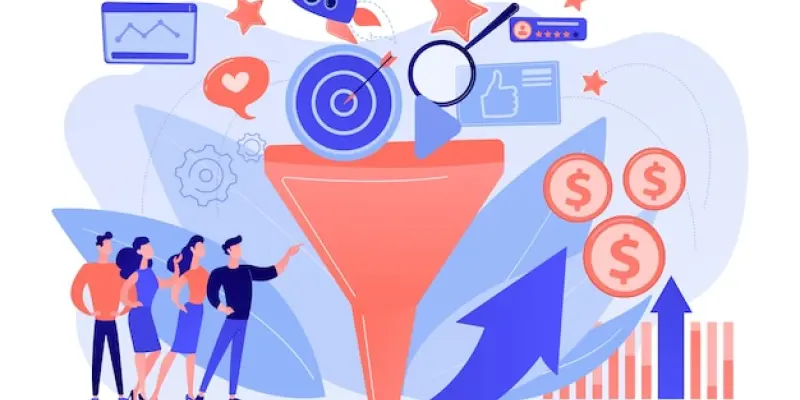
A marketing funnel visualizes a consumer’s journey from the initial brand contact to the final purchase. This model helps marketers track and optimize each stage, ensuring maximum efficiency and conversion at every step. By understanding this journey, marketers can increase website traffic, fine-tune lead generation efforts, and ultimately drive more significant conversions and improved revenue streams. The marketing funnel consists of multiple stages, including awareness, interest, consideration, and conversion. Each phase represents a crucial touchpoint in the consumer’s journey, and successfully navigating through these stages requires a keen understanding of customer behavior and preferences. The goal is not only to move potential customers through the funnel but also to nurture these leads into loyal advocates for the brand.
Viewing the Funnel as a Loop
Traditionally, the marketing funnel is seen as a linear path, with customers moving sequentially from one stage to the next. However, viewing it as a loop allows for the continuous flow and reprocessing of data. This approach ensures that valuable insights from the bottom of the funnel (conversion data) are utilized to enhance top-of-the-funnel activities, such as acquiring new leads and engaging existing customers. By creating a loop, marketers can decrease customer acquisition costs, increase engagement, and provide a better understanding of marketing attribution. This iterative process allows for ongoing optimization, as insights gained from one stage of the funnel are applied to improve performance in other areas, creating a dynamic and responsive marketing strategy.
Data Flow and Enrichment
Gathering Customer Data
The flow of data within the marketing funnel begins with gathering information about new and returning customers through various channels—websites, social media, app registrations, etc. For new customers, the focus is on collecting minimal essential information, while for returning customers, additional data points are gathered for personalized messaging and product recommendations. This initial data collection phase is crucial for building a comprehensive customer profile, which can later be used to tailor marketing efforts and create more relevant and engaging content. The accuracy and completeness of this data are paramount, as it forms the foundation of all subsequent marketing activities.
Enriching and Utilizing Data
Using UTM campaign tracking tags, marketers can collect attribution data from the middle of the funnel, detailing specific actions taken by prospects. This data is then stored in a central directory, where it is enriched and utilized for further marketing activities. Enriched data helps in creating more targeted and effective marketing campaigns, leading to better customer acquisition and retention. By combining information from various sources and refining it, marketers can gain deeper insights into customer behavior and preferences, enabling them to craft more personalized and relevant marketing messages.
Leveraging Customer Conversion Data
Types of Conversion Data
Customer conversion data includes online and offline sales, generated leads, sign-ups, and app usage. Non-conversion data, such as cart abandonment, is also valuable. This data provides insights into customer behavior and preferences, which can be used to refine marketing strategies. Sometimes, conversion data may lag, and in such cases, marketers can use proxy data to maintain the data loop until actual data arrives. Understanding the nuances of different types of conversion data allows marketers to segment their audience more effectively and tailor their messages to resonate with specific customer segments.
Applying Conversion Data to Top-of-Funnel Activities
Once gathered and enriched, conversion data is used to segment audiences for targeted campaigns. This segmentation aids in acquiring new customers and guiding existing ones through the funnel. Mechanisms like retargeting for cart abandonment and creating proprietary algorithms to identify conversion-prone customers in specific channels exemplify this application. By using conversion data at the top of the funnel, marketers can create more personalized and effective marketing strategies. The ability to leverage conversion data in this way can provide a significant competitive advantage in the marketplace.
Practical Applications and Benefits
Targeted Campaigns and Audience Segmentation
One of the primary benefits of using conversion data is the ability to create highly targeted campaigns. By segmenting audiences based on conversion data, marketers can tailor their messages to specific groups, increasing the likelihood of engagement and conversion. This approach not only improves marketing efficiency but also enhances the overall customer experience. By delivering more relevant and personalized content, marketers can build stronger relationships with their audience and foster greater brand loyalty.
Reducing Customer Acquisition Costs
Integrating bottom-of-the-funnel insights into top-of-the-funnel activities can significantly reduce customer acquisition costs. By recycling valuable conversion data, marketers can refine their strategies with precision, leading to improved efficiency and higher ROI. This data-driven approach ensures that marketing efforts are continually informed by real-time insights, driving sustained growth and customer engagement.
Creating a Data-Driven Marketing Ecosystem
Continuous Data Loop
The concept of a continuous data loop is central to creating a data-driven marketing ecosystem. By repeatedly feeding refined data back into the top-of-the-funnel, marketers can continuously attract, engage, and convert customers more effectively. This dynamic approach allows for real-time adjustments and optimizations, ensuring that marketing strategies remain relevant and effective.
Strategic Implications
In today’s fiercely competitive market, the effective use of data can make a crucial difference between a winning marketing campaign and a missed chance. By gaining a deeper understanding and utilizing this conversion data, marketers can fine-tune their strategies, sharpen their focus, and ultimately reduce marketing costs. This refined approach not only ensures a better allocation of resources but also drives substantial growth for the business. The ability to analyze conversion data offers insights that go beyond immediate outcomes, allowing marketers to identify trends, predict customer behavior, and personalize marketing efforts earlier in the funnel. This not only increases the efficiency of reaching potential customers but also ensures that marketing content is more relevant and engaging.