

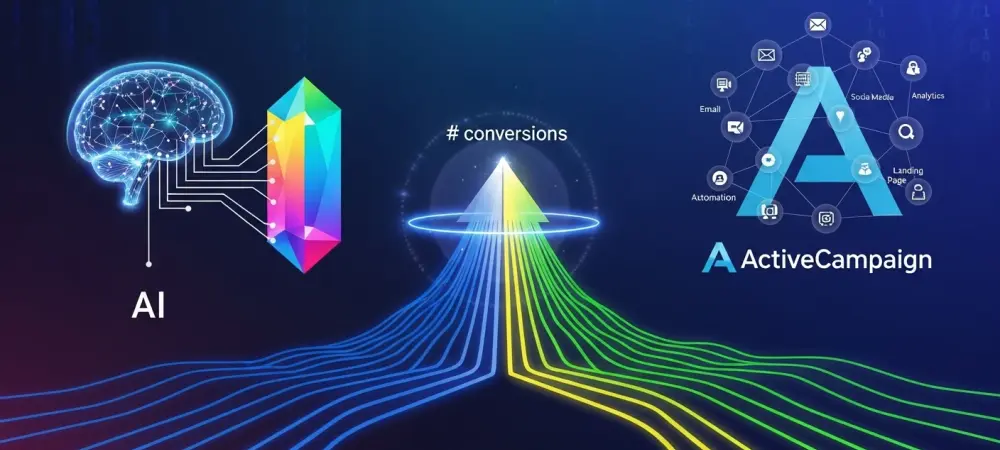
Navigating the complexities of a deregulated energy market often leaves consumers feeling overwhelmed by a constant barrage of jargon-heavy mailers and fluctuating utility rates that seem impossible to track. For businesses operating in this space, the challenge lies in delivering the right message at the exact moment a customer is ready to make a financial decision. Adam Cain, leading growth and marketing efforts at ElectricityRates.com, recognized that traditional manual segmentation could never keep pace with the real-time volatility of energy pricing and individual contract expirations. By the beginning of 2026, the company successfully bridged this gap by implementing an autonomous marketing workflow that utilizes advanced artificial intelligence to synthesize massive datasets into actionable consumer insights. This strategic shift allowed a lean team to manage hundreds of thousands of individual customer journeys with a level of precision that was previously reserved for massive corporations with unlimited resources. The result was a dramatic transformation in how the brand communicates value, moving away from generic broadcasting toward a highly personalized, data-driven conversation that respects the customer’s timeline and local market conditions. The core of this technological evolution is the “Switch Readiness Score,” a proprietary metric designed to identify which users are most likely to transition to a new energy provider based on current market signals. By integrating Google Gemini with ActiveCampaign, the team moved beyond basic demographic filters to embrace a model that prioritizes behavioral intent and economic opportunity. This system does not just look at who a customer is, but rather focuses on when their specific circumstances align with a superior market offer. For instance, if a homeowner in Pennsylvania is nearing the end of a fixed-rate contract just as a local utility announces a price hike, the system flags them as high-priority. This level of automation ensures that marketing efforts are concentrated where they will yield the highest return on investment, effectively eliminating the wasted effort of messaging customers who are currently locked into favorable long-term agreements. The shift to an autonomous model has redefined the role of the modern marketer from a manual campaign executor to a strategic architect of intelligent systems.
1. Pinpoint Your Conversion Indicators
Successful autonomous marketing begins with a deep dive into the specific data points that signal a customer’s intent to take action within a specific timeframe. For an energy marketplace, these indicators include contract expiration dates, historical switching patterns, and the frequency of website visits during peak rate periods. Identifying these “conversion signals” requires a comprehensive audit of every touchpoint a customer has with the brand, from the initial lead capture form to subsequent interactions with educational content. By tracking twelve distinct variables per customer, the marketing team can build a multidimensional profile that reflects both the urgency of the need and the potential value of the transaction. This granular approach ensures that the system is not merely reacting to a single event but is instead interpreting a symphony of behaviors that collectively point toward a high probability of conversion.
Beyond the energy sector, businesses in any industry can apply this logic by determining which internal and external triggers most accurately predict a sale or a renewal. In a software-as-a-service environment, these indicators might include a spike in support tickets related to advanced features or a specific pattern of login activity as a trial period nears its conclusion. In retail, it could be the combination of cart abandonment and a change in local inventory levels for a previously viewed item. The key is to move past surface-level metrics like open rates and focus on data that correlates directly with revenue-generating activities. Once these signals are identified, they form the bedrock of the scoring system, providing the necessary raw material for the AI to analyze and interpret. Without this foundation of high-quality, relevant data, even the most sophisticated machine learning algorithms will fail to produce insights that drive meaningful business growth.
2. Provide Raw Data for a Broad AI Analysis
Once the primary conversion indicators are established, the next phase involves feeding this unfiltered information into an artificial intelligence tool to uncover non-obvious correlations. Rather than starting with a rigid set of instructions, the strategy involves allowing Google Gemini to process the raw dataset and identify its own patterns through open-ended discovery. This method often reveals behavioral nuances that human analysts might overlook, such as specific days of the week when engagement peaks or how small fluctuations in regional pricing impact different demographic segments. By asking the AI to explain why certain customers appear more likely to convert, the marketing team gains a fresh perspective on their audience’s motivations. This stage of the process is about exploration and hypothesis generation, where the AI acts as a digital detective sifting through mountains of data to find the hidden narrative of the customer journey.
The insights generated during this broad analysis serve to validate or challenge existing marketing assumptions, leading to a more refined understanding of the customer lifecycle. In the case of ElectricityRates.com, the AI surfaced the realization that timing was often more important than the magnitude of the savings being offered. It identified that customers were far more responsive to a modest rate improvement if it coincided with a specific window of time before their current contract lapsed. This type of discovery allows the marketing team to shift their focus away from constant heavy discounting and toward a more sophisticated strategy of “right-time” messaging. By utilizing AI as a diagnostic tool first, the organization ensures that its subsequent automated workflows are built on a foundation of empirical evidence rather than gut feeling or outdated industry tropes.
3. Incorporate Specific Business Logic and Constraints
After the AI has identified broad patterns, the system must be tempered with specific business rules to ensure that the automated outputs align with the company’s strategic goals and operational realities. This involves refining the prompts to include strict thresholds, such as only prioritizing customers whose potential savings exceed a certain percentage or those whose contracts end within a specific sixty-day window. These constraints prevent the system from becoming too aggressive and appearing spammy, which is critical for maintaining high deliverability and low unsubscribe rates. By layering business logic over the AI’s findings, the team creates a balanced model that weighs the customer’s readiness against the actual value of the opportunity. This ensures that every automated communication is not only timely but also genuinely beneficial to the recipient, reinforcing the brand’s position as a helpful advisor.
Testing these constraints is an ongoing process that requires constant iteration to find the “sweet spot” where conversion rates are maximized without irritating the customer base. The marketing team can experiment with different combinations of urgency and value, observing how a 7% savings threshold compares to a 10% threshold in terms of actual click-through rates. This iterative approach allows for the creation of a highly nuanced “Switch Readiness Score” that serves as the primary driver for all subsequent marketing actions. By the time these rules are fully integrated, the AI is no longer just making suggestions; it is operating within a structured framework that mirrors the decision-making process of a senior marketing strategist. This blend of machine-driven insight and human-defined logic creates a robust system capable of handling complex scenarios with minimal daily oversight.
4. Integrate the Readiness Metric into Your Marketing Platform
The true power of the “Switch Readiness Score” is realized when it is imported into a robust marketing automation platform like ActiveCampaign as a dynamic custom field. This integration allows the score to act as a universal trigger for a variety of automated sequences, ranging from high-frequency “hot lead” workflows to low-touch educational drip campaigns. For a customer with a high score, the platform might initiate a series of personalized emails sent at optimal times based on their past engagement history. Conversely, a customer with a lower score might receive monthly newsletters that focus on long-term brand building rather than immediate sales pressure. This automated segmentation ensures that the marketing volume is always proportional to the customer’s current level of intent, creating a more harmonious and effective communication strategy.
Utilizing a centralized platform to manage these triggers also provides the marketing team with a single source of truth for all customer interactions across multiple channels. Because ActiveCampaign’s native AI tools can leverage the custom readiness score, features like predictive sending and on-brand content generation become significantly more effective. The platform can automatically adjust the cadence of follow-up emails based on how the score changes in real-time as new data points, such as a website visit or a rate change, are recorded. This creates a self-optimizing ecosystem where the marketing engine is constantly refining its approach for every individual on the list. For a small team, this level of sophisticated, one-to-one marketing would be impossible to achieve through manual efforts, but it becomes a standard operating procedure when AI-driven metrics are deeply embedded in the communication infrastructure.
5. Link External Market Events to Internal Customer Data
The final stage of creating a truly autonomous marketing engine involves connecting external real-time data feeds directly to the internal customer scoring system. When a utility provider announces a significant rate hike, an API connection can immediately trigger the system to scan for all customers in the affected service area who possess a high readiness score. Without any human intervention, the system generates and sends a personalized email that references the specific rate increase and offers a concrete alternative. This capability transforms the marketing department from a reactive unit into a proactive force that can capitalize on market shifts within minutes rather than days. It bridges the gap between what is happening in the world and how the brand can solve a specific problem for the customer at that exact moment.
This seamless connection between the external environment and internal workflows ensures that the brand remains relevant in an ever-changing marketplace. By automating the response to price changes, competitive news, or inventory shifts, the organization can maintain a constant presence in the customer’s inbox without the need for a large staff of copywriters and campaign managers. The content is always accurate because it is pulled directly from verified data sources, eliminating the risk of human error in advertising specific rates or terms. As the system continues to run, it gathers more data on which external triggers are the most effective, allowing for further refinement of the entire marketing strategy. This level of synchronization represents the pinnacle of modern marketing technology, where the line between data analysis and customer communication effectively disappears to create a frictionless experience.
Strategic Future of Marketing Automation
The implementation of autonomous systems has fundamentally changed the performance landscape for ElectricityRates.com, yielding a 200% increase in monthly conversions and a massive surge in email-driven traffic. These results were achieved by a team of one, proving that the strategic application of AI and automation can serve as a massive force multiplier for growing businesses. By mid-2026, the success of this model has highlighted a critical shift in the industry: the most effective marketing is no longer about the quantity of messages sent, but the relevance and timing of those communications. Organizations that continue to rely on manual segmentation and generic scheduling will find it increasingly difficult to compete with those who have built intelligent systems capable of responding to customer needs in real-time. The technology has matured to the point where it can handle the heavy lifting of data analysis and execution, allowing human marketers to focus on the high-level strategy and creative direction that define a brand.
Moving forward, the focus for marketers should be on identifying new sources of data that can further refine their readiness scores and enhance the accuracy of their automated responses. This might involve integrating social listening tools, advanced sentiment analysis, or even localized weather patterns if they influence purchasing behavior in a specific sector. The goal is to make the technology so seamless and invisible that the customer simply feels they are receiving helpful, timely advice from a brand that understands their needs. As businesses look to scale in 2026 and beyond, the adoption of autonomous marketing workflows will likely transition from a competitive advantage to an absolute necessity for survival. The journey toward full automation begins with a single step: trusting the AI to look at existing data and reveal the patterns that are already there, waiting to be utilized for the next breakthrough in conversion performance.