

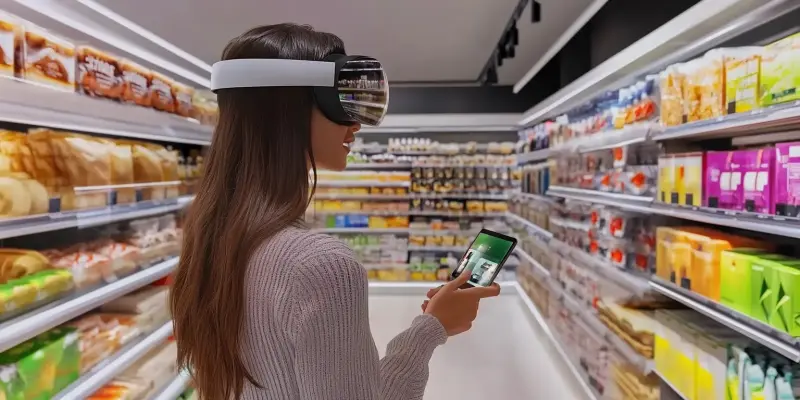
In a retail landscape that is increasingly driven by digital innovation, augmented reality (AR) and virtual reality (VR) are not just buzzwords but game-changing technologies. Retailers are leveraging AR and VR to revolutionize customer experiences, making shopping more interactive and immersive than ever before. These advanced technologies are reimagining how customers engage with products, create brand loyalty, and make purchasing decisions. As digital natives become a larger segment of the consumer base, the demand for AR and VR integrations in retail environments is skyrocketing, paving the way for a fundamental shift in marketing strategies. The transformative impact of AR and VR cannot be overstated, as they offer retailers new avenues to captivate and retain their audience, driving sales and enhancing overall brand value.
Enhancing Customer Experience and Engagement
AR and VR significantly enhance customer experience and engagement, creating a more immersive and interactive shopping environment. With AR, customers can virtually try on clothes, preview furniture in their homes, or see how makeup will look on their faces without physically applying it. This level of personalization not only boosts customer satisfaction but also reduces the uncertainty that often accompanies online shopping. VR, on the other hand, transports customers into entirely different environments, allowing them to explore products and brands in a more experiential manner. The emotional engagement that VR offers can create a stronger connection between the consumer and the brand, ultimately leading to increased loyalty and higher purchase intentions.
A meta-analysis of 111 studies highlights the positive correlations between AR/VR-enhanced experiences and customer behavior. Findings indicate that these technologies significantly impact attitudes toward products, leading to increased engagement, higher purchase intentions, and enhanced customer loyalty. For instance, AR activations in brick-and-mortar stores can attract foot traffic by offering interactive experiences that educate and entertain shoppers. The value of such engagement extends beyond immediate sales, as these memorable interactions foster long-term brand loyalty and advocacy.
Quality and Informativeness of AR/VR Experiences
The effectiveness of AR and VR in retail marketing is heavily influenced by factors such as perceived system quality and informativeness. High-quality AR and VR applications that provide clear, accurate, and useful product information are more likely to gain consumer trust and drive purchase decisions. The better the technology performs, the more credible and reliable it appears, which in turn boosts customer confidence. For example, if an AR app allows users to see products in high resolution and offers detailed descriptions and reviews, customers are more likely to feel assured about their choices and proceed with purchases.
Interestingly, perceived risks associated with AR and VR technologies can also positively impact purchase intentions. Consumers are often drawn to novel and unique experiences, and the perceived risks can enhance the allure and excitement of using these technologies. This phenomenon suggests that retailers should not only focus on minimizing risks but also highlight the innovative aspects of AR and VR experiences. When done correctly, this approach can attract adventurous consumers who are eager to try new technologies, thereby increasing engagement and sales.
Influence of Technology Context and Product Type
The specific context in which AR and VR technologies are used also plays a crucial role in their effectiveness. The type of technology—whether AR or VR—can yield different levels of engagement depending on the product and the retail environment. For example, AR is particularly effective for products that benefit from visualization in a real-world context, such as home decor or fashion items. In contrast, VR is more suited for experiences that require complete immersion, like virtual tours of properties or automotive test drives. Understanding these distinctions allows retailers to deploy the appropriate technology for the right products, maximizing consumer engagement and satisfaction.
Moreover, the nature of the product itself dictates how consumers respond to AR and VR implementations. High-involvement products, which require substantial consumer investment and decision-making effort, often benefit more from AR and VR enhancements. These technologies can provide detailed product information, comparisons, and virtual try-ons, making the decision-making process easier for consumers. On the other hand, low-involvement products may not require such extensive technologies, and simpler AR or VR applications can suffice. Retailers need to carefully assess their product ranges and identify which items will benefit most from AR and VR integrations to optimize their marketing strategies.
Future Considerations and Next Steps
The success of AR and VR in retail marketing hinges largely on factors like perceived system quality and informativeness. High-quality AR and VR applications that deliver clear, accurate, and useful product information are more likely to earn consumer trust and influence buying decisions. When the technology performs well, it appears more credible and reliable, boosting customer confidence. For instance, if an AR app lets users view products in high resolution and offers detailed descriptions and reviews, customers tend to feel more assured about their choices, leading to actual purchases.
Interestingly, perceived risks related to AR and VR technologies can also enhance purchase intentions. Consumers often seek out novel and unique experiences, and the perceived risks can heighten the excitement and allure of using these technologies. This insight suggests that retailers should not only work to minimize risks but also emphasize the innovative aspects of AR and VR experiences. When done effectively, this tactic can attract adventurous consumers keen to explore new technologies, thereby increasing engagement and sales.