

Aisha Amaira is a distinguished MarTech expert with a deep-seated passion for the synergy between technological innovation and strategic marketing. With an extensive background in CRM marketing technology and customer data platforms, she has spent her career helping organizations decode complex consumer behaviors to drive sustainable growth. In an era where digital presence is often confused with brand health, Aisha provides a critical perspective on how businesses can move beyond superficial metrics to build genuine authority and long-term resilience.
The following discussion explores the concept of “brand rot” and its impact on digital performance, moving from diagnostic frameworks to the evolving role of AI in search marketing. We examine why high rankings can sometimes mask a terminal decline, how human-centric signals like trust and expertise are being quantified by algorithms, and why the future of SEO depends more on a company’s reputation than its technical prowess.
How can a company determine if stagnant growth stems from poor search visibility or deep-seated brand decay? What specific internal metrics beyond traditional SEO data should leadership examine to identify this “brand rot,” and what are the first steps to address it?
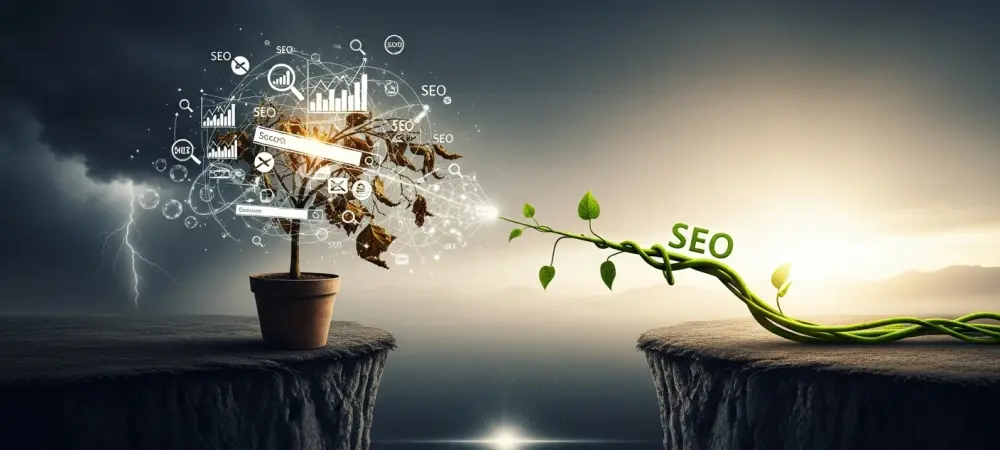
Identifying brand rot requires looking past the “paint job” of search rankings and into the “crumbling foundation” of the business. To diagnose this, leadership must look at internal indicators like Net Promoter Scores (NPS), which measure customer satisfaction, and Glassdoor ratings, which reveal the health of the company culture. If your search team is hitting traffic targets but your employee retention is tanking or social media sentiment is turning toxic, you are facing brand decay. The first step is an honest audit that integrates search data with customer service logs and competitive win/loss analyses to see where the value proposition is failing. Once the rot is identified, the recovery process involves redirecting a portion of the SEO budget away from content production and toward brand repair, such as fixing product flaws or overhauling customer service.
When a brand with a negative reputation manages to rank highly, how do user behavioral signals eventually erode those rankings? Can you share a scenario where driving more organic traffic actually accelerated a company’s decline, and what specific data points signaled that the visibility was becoming a liability?
High visibility for a brand people don’t trust is actually a liability because Google’s systems are now sophisticated enough to interpret negative user patterns. When a user searches for a category, sees a brand they associate with a recent scandal or poor service, and chooses the second or third result instead, that “skip” becomes a data point that signals the brand is no longer relevant. I have seen scenarios where companies invest millions in content to capture top spots, only to see their bounce rates skyrocket as visitors realize the brand behind the content is mediocre. Every bounce or “pogo-sticking” action from a dissatisfied visitor sends a behavioral signal that eventually erodes those hard-won rankings. This creates a paradox where more traffic leads to faster decline because you are essentially broadcasting your brand’s flaws to a wider audience, which Google then uses to justify lowering your authority.
Search engines increasingly prioritize signals related to experience, expertise, and trustworthiness. How can a business leverage PR and customer service to influence these organic signals, and how do you measure the long-term impact of these non-technical efforts?
PR and customer service are the new “technical” SEO because they directly influence the E-E-A-T (Experience, Expertise, Authoritativeness, Trustworthiness) signals that Google prioritizes. By using PR to address negative coverage and customer service to turn detractors into advocates, a brand builds a footprint of genuine authority across the web. You measure the impact of these non-technical efforts by tracking direct traffic—people typing your URL specifically—and the volume of organic mentions and social proof. These are not vanity metrics; they are indicators that your brand is becoming a trusted source that users actually want to engage with. When you see your repeat visitor rate increase and your branded search volume stabilize, you have concrete proof that your investment in reputation is paying off more than a thousand optimized title tags ever could.
If branded search volume is dropping while the cost-per-click for your own company name is rising, what does this indicate about customer loyalty? What strategies should a marketing team use to regain salience without simply producing more low-value content, and how do you track that recovery?
When branded search volume drops, it’s a “canary in the coal mine” signaling that your brand is losing its salience and becoming forgettable. If your own CPC is rising, it means competitors are bidding on your name and winning, which proves that your customers aren’t loyal enough to distinguish you from a cheaper alternative. To regain salience, you must abandon the “content treadmill” of producing low-value volume and focus on building genuine equity through high-impact, brand-building exercises. This involves creating content that people care about—like the approach seen by brands like Patagonia—rather than just checking keyword boxes. You track this recovery by monitoring the ratio of branded versus non-branded traffic and watching for a decrease in the cost required to defend your brand name in paid auctions.
With AI-driven search tools synthesizing information directly, why is genuine brand authority now more critical than technical optimization? How can brands ensure they remain cited as trusted sources in automated overviews, and what role does social proof play in surviving these algorithm shifts?
AI-driven tools like Google’s AI Overviews and ChatGPT compress the digital real estate available, meaning only the most authoritative sources get cited. In this environment, technical optimization takes a back seat to genuine brand authority because AI systems prioritize sentiment and factual reliability across the entire web. To remain a cited source, a brand must ensure it has strong social proof, such as high-quality backlinks, positive reviews, and a consistent presence as a thought leader in its niche. These signals tell the AI that your information is not just optimized, but correct and trusted by humans. Brands that lack this real-world authority will find themselves excluded from AI summaries, regardless of how many “SEO-friendly” pages they publish.
What is your forecast for the future of search marketing as brand reputation and AI-driven results become increasingly intertwined?
I forecast that the traditional silo between SEO and brand strategy will completely disappear, as search engines move toward becoming “reputation engines.” In the next few years, the highest-performing companies will be those where the SEO team has a seat at the table during product development and customer experience design, rather than just being called in to “optimize” at the end. We will see a shift where technical SEO becomes a baseline commodity, and the real competitive advantage will lie in a brand’s ability to generate organic, non-technical signals of trust. My advice for readers is to stop treating search as a distribution channel and start treating it as a reflection of your brand’s integrity; if you focus on being a brand worth searching for, the algorithms will naturally follow your lead.