

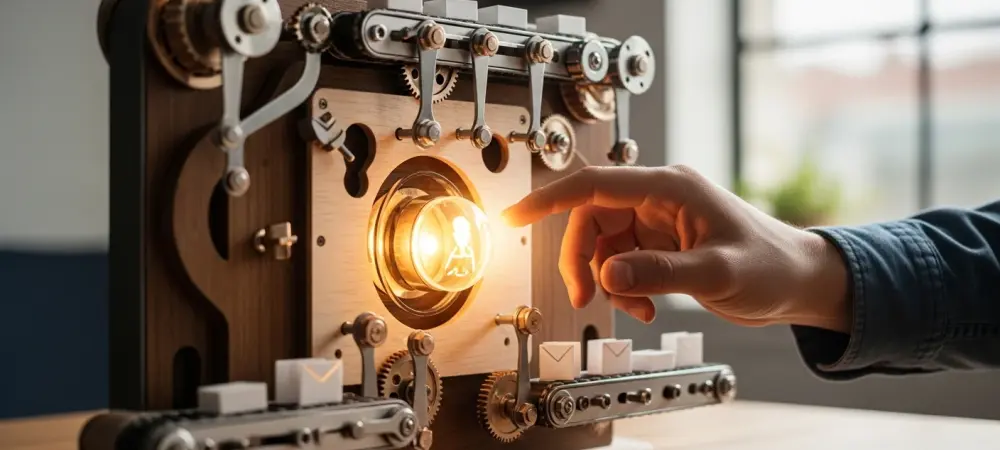
The psychological impact of receiving a tangible, handwritten letter in an era dominated by transient digital notifications cannot be overstated by modern marketing experts who are constantly battling for customer attention. On July 3, 2026, the marketing landscape witnessed a significant shift with the launch of the Handwrytten for HubSpot application, a tool designed to bridge the widening chasm between automated efficiency and genuine human connection. As digital inboxes grow increasingly cluttered and spam filters become more aggressive, businesses have found that traditional methods of communication, when augmented by sophisticated robotics, offer a unique competitive advantage. This integration allows sales, marketing, and customer success teams to send physical, robot-written cards directly from their CRM, effectively blending the speed of software with the warmth of a personal note. The primary challenge for modern organizations is no longer just reaching a prospect, but doing so in a way that feels intentional rather than industrial. By leveraging physical mail, which remains a premium space in the consumer’s daily routine, companies are successfully bypassing the digital noise that often renders electronic communication invisible. This approach does not represent a retreat from technology, but rather an evolution in how technology is utilized to facilitate more meaningful interactions in a saturated marketplace.
The Mechanics of Automated Personalization
Bridging the Digital Engagement Gap
Digital marketing has reached a point of diminishing returns where the cost of acquiring attention continues to rise while the quality of engagement often declines. In the current climate of 2026, prospects are frequently overwhelmed by automated sequences that lack a personal touch, leading to high bounce rates and a general skepticism toward electronic outreach. Physical mail, specifically handwritten notes, offers a distinct psychological trigger that signifies importance and care, qualities that are often lost in the volume of standard B2B communications. Research into consumer behavior indicates that the physical act of opening an envelope creates a sensory experience that anchors a brand in the recipient’s memory far more effectively than a fleeting social media advertisement or a standard email notification. By occupying a physical space on a desk or a kitchen counter, these communications maintain a longevity that digital messages cannot replicate, ensuring that the brand remains top-of-mind long after the initial interaction has occurred.
The historical barrier to implementing handwritten outreach at scale was the immense logistical burden and the prohibitive amount of time required to produce high-quality personal notes. In the past, a marketing team would have to manually write, stamp, and mail each individual piece, making the strategy nearly impossible for large-scale enterprise operations. However, the introduction of automated physical outreach has fundamentally altered this dynamic by transforming a manual chore into a scalable workflow action. Automation now allows brands to maintain the high-impact feel of a personal note without taxing internal resources or sacrificing the consistency of their core messaging. This transition from manual labor to automated execution enables companies to deploy personalized physical touchpoints across their entire customer base, ensuring that every high-value prospect receives a consistent and elevated experience that reflects the brand’s commitment to quality and individual attention.
Seamless Integration and Workflow Management
The functionality of the Handwrytten application within the HubSpot ecosystem is designed to be a native experience, allowing users to trigger card sends based on specific CRM events without ever leaving their primary workspace. When a deal is moved to a specific stage, such as “Closed-Won,” or when a customer hits a significant milestone like a one-year anniversary, the system can automatically initiate the production of a physical card. This level of automation ensures that no opportunity for connection is missed due to human oversight or administrative delays. All mailing activity is automatically logged onto the contact’s timeline, providing a comprehensive view of the customer journey that includes both digital and physical interactions. This holistic data approach allows teams to see exactly when a card was sent and received, enabling sales representatives to time their follow-up calls more effectively to coincide with the arrival of the physical touchpoint.
Beyond the basic transmission of messages, the integration provides advanced administrative features that allow managers to maintain strict control over their outreach budget and strategy. Administrators can set specific permissions for different team members, establish spending limits, and even curate a library of approved templates to ensure that all communication remains professional and aligned with brand guidelines. For companies looking to add an extra layer of value, the system allows for the inclusion of physical inserts, such as coffee packets or customized gift cards from major retailers like Amazon or Starbucks. This ability to combine a personal message with a tangible gift turns a simple outreach attempt into a memorable event for the recipient. By centralizing these complex logistical tasks within the CRM, organizations can manage large-scale direct mail campaigns with the same level of precision and oversight that they previously applied only to their digital advertising spends.
The Technology and Economics of Physical Outreach
High-Tech Robots and Authentic Writing
The technical foundation of this physical automation lies in specialized robotic hardware that utilizes actual pens rather than standard ink-jet or laser printing technology. Unlike traditional printers that produce a flat and uniform image, these robots are engineered to replicate the specific nuances of human handwriting, including the subtle variations in pressure, the natural flow of ink, and the slight imperfections that signify a human hand. The system employs advanced algorithms to ensure that no two characters look exactly identical, avoiding the “uncanny valley” of digital fonts that often appear too perfect to be authentic. With dozens of handwriting styles ranging from casual and looped to formal and precise, businesses can choose a script that perfectly matches their brand persona. This focus on mechanical authenticity is what allows physical automation to truly humanize outreach rather than appearing as a transparent attempt at mass-produced imitation. For organizations that require an even higher level of personalization, the service offers the capability to digitize the actual handwriting and signature of a specific employee or executive. This feature ensures that the automated cards remain entirely authentic to the individual’s unique style, making it virtually impossible for the recipient to distinguish the robot-written note from one produced manually by the sender. By capturing the unique slant, spacing, and character formation of a real person, the technology allows a CEO or a top-performing account executive to “write” thousands of notes simultaneously. This level of technological sophistication addresses the core paradox of modern marketing: the use of advanced robotics to create a more human connection. The resulting product is a high-quality, ink-on-paper communication that commands respect and attention, providing a tactile bridge between the digital data of the CRM and the physical reality of the customer.
Scaling the Strategy for Business Growth
The economic structure of physical automation has been carefully designed to accommodate a diverse range of users, from small independent agencies to global enterprise corporations. Through various business plans and the use of prepaid credit options, the cost per unit decreases as the volume of outreach increases, making the strategy financially viable even for high-frequency campaigns. These tiered pricing models often include essential value-added services such as automated address standardization and verification, which minimizes waste by ensuring that mail is only sent to valid, deliverable locations. Furthermore, priority mailing options and dedicated strategy sessions help businesses optimize their campaign performance and maximize the return on their investment. This shift toward a subscription-based or credit-based model reflects the growing trend of treating direct mail as a professional, recurring marketing channel rather than a sporadic or emergency expense.
By offering enterprise-grade features such as high system uptime, robust security protocols, and bulk upload capabilities, the integration is positioned as a reliable component of a modern revenue operations stack. The ability to forecast and budget for direct mail with the same degree of accuracy as digital ad spend allows companies to integrate physical outreach into their broader financial planning. This professionalization of direct mail means that it is no longer viewed as a “one-off” tactic, but as a strategic asset that can be tracked and optimized over time. As businesses continue to search for ways to differentiate themselves in a competitive market, the ability to scale personalized physical communication becomes a key driver of growth. The investment in physical automation is justified not only by the high open rates of the mail itself but by the increased lifetime value of customers who feel a deeper, more personal connection to the brands they choose to support.
The Evolution of Integrated Marketing Operations
Physical Mail in the Era of Data-Driven Attribution
One of the most transformative aspects of integrating physical mail with a platform like HubSpot is the ability to subject offline tactics to the same rigorous attribution models that govern digital advertising. When every card sent is recorded as a specific activity within the CRM, marketing teams can finally measure the direct impact of their physical outreach on the overall sales cycle and deal velocity. By analyzing the data, organizations can determine exactly which touchpoints in the customer journey are most effective when delivered via physical mail versus email or social media. This data-driven approach removes the guesswork from direct mail, allowing for the calculation of specific metrics such as cost-per-acquisition and the long-term ROI of a handwritten note. This transition from an isolated, untrackable tactic to a fully integrated and measurable channel marks a significant milestone in the evolution of modern customer relationship management.
The strategic value of this integration becomes even more apparent when considering the role of timing in customer engagement. By utilizing real-time data from the CRM, businesses can ensure that their physical outreach is not only personal but also incredibly timely. For instance, sending a “thank you” card immediately after a successful onboarding session or a “welcome” note the moment a contract is signed creates a powerful positive reinforcement for the customer. This level of responsiveness was previously difficult to achieve with traditional direct mail due to the lag between the triggering event and the manual execution of the mailing. Now, with the central CRM acting as the “brain” of the operation, the physical mailbox has become an essential territory for meaningful, data-backed engagement. This approach suggests that the future of marketing lies in the clever use of sophisticated automation to facilitate the most human connections possible at exactly the right moment.
Strategic Realization: The Path Forward for Customer Loyalty
The shift toward automated physical outreach successfully redefined how businesses approached high-value prospect engagement in the latter half of the decade. Companies that adopted these integrated systems early observed a marked improvement in their customer retention rates and a significant decrease in the digital fatigue typically associated with enterprise sales cycles. By treating a physical card not as a novelty but as a data-driven touchpoint, organizations finally managed to bridge the gap between industrial efficiency and authentic human connection. The implementation of these robotic systems allowed for a level of consistency that was previously unattainable, ensuring that the brand’s voice remained intact across thousands of individual interactions. This strategic evolution proved that even in an increasingly virtual world, the physical remains a powerful medium for building trust and establishing long-term loyalty with a sophisticated audience.
The successful integration of tools like Handwrytten into the HubSpot ecosystem established a new standard for what it meant to be a customer-centric organization. Leaders in the field recognized that the most effective marketing strategies were those that respected the recipient’s time and provided a sense of genuine value. As the marketplace continued to evolve, the organizations that thrived were those that utilized technology to enhance, rather than replace, the human element of their business relationships. The transition to a hybrid model of communication, where digital speed was balanced by physical presence, became the hallmark of a mature and thoughtful brand strategy. Ultimately, the adoption of robotic handwriting technology did not dehumanize the process; instead, it liberated teams to focus on strategy and creativity while the machines handled the heavy lifting of maintaining a personal touch at scale.