

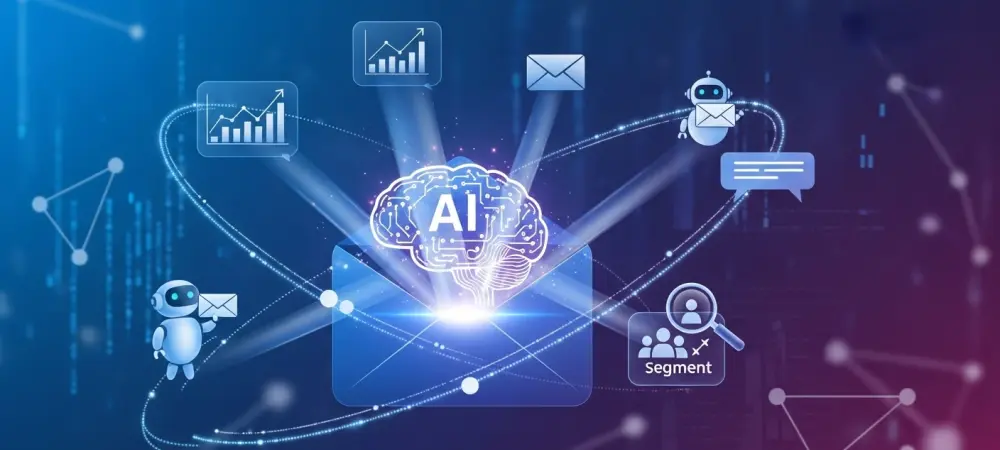
The once-simple email inbox has transformed into a sophisticated battleground for consumer attention, where success is no longer measured in sends but in intelligent, AI-driven connections that resonate with individual recipients. The adoption of Artificial Intelligence represents a significant advancement in the digital marketing sector. This review will explore the evolution of AI in email marketing, its key features, a comparative analysis of leading platforms, and the impact it has had on driving sales and customer engagement. The purpose of this review is to provide a thorough understanding of the technology, its current capabilities, and its indispensable role in the future of personalized communication.
The Evolution from Mass Emailing to Intelligent Communication
Email marketing has undergone a profound transformation, moving decisively away from the era of one-size-fits-all campaigns. The fundamental shift is driven by AI, which uses machine learning and sophisticated data analysis to graduate from generic email blasts to automated, one-to-one conversations at scale. This evolution is not merely a technological upgrade but a strategic necessity. In a digital landscape where consumer inboxes are perpetually crowded, personalization has become the key differentiator for brands seeking to capture attention and build lasting relationships.
The core principle behind this change is the ability to understand and act on customer data in real time. AI engines analyze behavioral signals—clicks, opens, purchases, and browsing history—to build a dynamic profile of each subscriber. This intelligence enables marketers to deliver messages that are not only relevant but also contextually aware of the customer’s current position in their journey. Consequently, what was once a broadcast medium has become a powerful tool for nurturing individual leads, fostering loyalty, and driving conversions with unprecedented precision.
Core Capabilities and AI-Driven Features
Hyper-Personalization at Scale
The most celebrated capability of AI in email marketing is its power to deliver hyper-personalization to massive audiences. AI algorithms process vast user data sets, including browsing history, purchase patterns, and demographics, to dynamically tailor every aspect of an email. This goes far beyond simply inserting a first name; it involves customizing subject lines, curating unique product recommendations, and altering calls-to-action to match each individual subscriber’s inferred interests and intent.
This level of detail fosters a stronger, more authentic customer connection. When an email feels as if it were crafted specifically for the recipient, it breaks through the noise of generic promotions. The technology makes it possible for a brand with millions of subscribers to create millions of unique email variations, ensuring that each communication is maximally relevant. This not only improves engagement metrics but also builds brand affinity by demonstrating a deep understanding of customer needs.
Predictive Send-Time and Content Optimization
AI has effectively solved the long-standing marketing puzzle of when and what to send. Advanced algorithms analyze individual user engagement patterns to determine the optimal delivery time for every single contact on a list, moving far beyond generalized “best practices.” By scheduling sends for the moment a user is most likely to be active in their inbox, platforms can dramatically increase open rates without sending more emails.
Moreover, AI automates the process of campaign optimization through continuous, large-scale A/B testing. It can experiment with countless variations of subject lines, headlines, images, and body copy simultaneously. The system then analyzes performance in real time and automatically allocates more traffic to the best-performing variants. This constant cycle of testing and refinement ensures that every campaign element is fine-tuned to achieve maximum open and click-through rates.
Automated and Responsive Customer Journeys
A defining feature of modern email marketing is AI’s role in orchestrating complex, behavior-triggered workflows. These systems monitor user actions and automate entire communication sequences based on specific triggers. Common examples include sophisticated abandoned cart reminders that might offer a discount after a set period, post-purchase follow-ups that provide product tips or solicit reviews, and re-engagement campaigns designed to win back inactive subscribers with compelling offers. This automation ensures that communication is not only timely but also contextually relevant throughout the customer lifecycle. From a personalized welcome series for new subscribers to targeted nurturing sequences for high-value leads, AI allows marketers to build intricate journeys that adapt to customer behavior. This hands-off approach frees up marketing teams to focus on strategy while the AI engine executes flawlessly, guiding customers seamlessly toward conversion.
Predictive Analytics for Strategic Decision-Making
Beyond campaign execution, AI models provide marketers with powerful forecasting capabilities that enable smarter, more strategic decisions. These predictive analytics engines process historical and real-time data to forecast key metrics such as a customer’s lifetime value (LTV), their immediate purchase intent, and their likelihood to churn. This foresight is a game-changer for resource allocation and audience segmentation.
With these insights, marketers can identify and prioritize high-value customer segments, proactively address churn risks with targeted retention offers, and tailor campaigns to users exhibiting strong purchase signals. For example, a user identified as having high purchase intent might receive a more aggressive offer than a casual browser. This strategic layer of intelligence transforms email marketing from a reactive channel into a proactive driver of business growth.
A Comparative Review of Leading AI Platforms
Solutions for E-commerce and DTC Brands
For e-commerce and direct-to-consumer (DTC) brands, platforms like Klaviyo and Omnisend have become indispensable. These tools offer deep, native integrations with e-commerce systems such as Shopify and BigCommerce, allowing them to harness rich purchase and browsing data. Klaviyo, a dominant force in this space, uses AI to deliver hyper-personalized product recommendations, power sophisticated abandoned cart flows, and provide predictive analytics focused on metrics like customer lifetime value and future purchase dates.
Omnisend specializes in optimizing multi-channel campaigns that seamlessly blend email with SMS and push notifications. Its AI capabilities focus on creating cohesive workflows that engage customers across their preferred channels, while its robust revenue attribution tracking helps marketers understand the precise impact of their efforts. Both platforms are designed to convert customer data directly into measurable revenue, making them ideal for businesses where sales are the primary goal.
All-in-One Platforms for Growing Businesses
Growing businesses often require solutions that integrate email marketing into a broader ecosystem of sales and customer relationship management. HubSpot and ActiveCampaign excel in this area, embedding AI-driven email marketing within a comprehensive CRM framework. HubSpot leverages its vast repository of customer data—from website visits to sales calls—to create highly personalized email campaigns and automated nurturing sequences that align marketing and sales efforts.
ActiveCampaign is tailored for businesses with longer sales cycles that rely on relationship-driven marketing. Its AI engine excels at analyzing behavioral patterns to trigger timely and deeply personal interactions, making it a powerful tool for lead scoring and creating sophisticated customer journeys. For businesses seeking scalability, Brevo and Salesforce Marketing Cloud offer enterprise-level capabilities, with Salesforce’s proprietary Einstein AI providing predictive engagement scoring and real-time personalization on a massive scale.
Specialized Tools for Startups and SaaS
Startups and SaaS companies often have unique marketing needs centered on user engagement and conversion funnels. Mailmodo addresses this by specializing in high-impact interactive AMP emails, which allow users to complete forms, book meetings, or browse products directly within their inbox. Its AI Agents further simplify campaign planning and journey building, making advanced automation accessible to smaller teams.
GetResponse, another strong contender in this category, is built for marketers focused on end-to-end conversion funnels. Its AI can help build entire funnels, from landing pages to automated email sequences, optimizing the path from lead generation to sale. Meanwhile, platforms like Mailchimp and Campaign Monitor cater to businesses that prioritize ease of use and elegant design, integrating generative AI for content creation and smart targeting features to improve campaign performance without a steep learning curve.
Real-World Impact Across Key Industries
Transforming the Retail and E-commerce Customer Experience
In the highly competitive retail and e-commerce sector, AI email marketing has become a primary driver of revenue. Online stores leverage AI to significantly reduce cart abandonment rates by sending timely, personalized reminders, often with dynamically inserted product images. Furthermore, AI-powered product recommendation engines analyze past purchases and browsing behavior to execute smart cross-selling and upselling strategies, which measurably increase average order value.
Beyond the initial sale, AI is instrumental in building customer loyalty. Automated post-purchase communication, such as shipping updates, product usage tips, and requests for reviews, creates a cohesive and supportive customer experience. This ongoing, personalized engagement fosters a stronger brand relationship, encouraging repeat purchases and transforming one-time buyers into loyal advocates. The result is a cycle of data-driven communication that leads directly to tangible revenue growth.
Nurturing Complex Leads in B2B and SaaS
For B2B and SaaS businesses characterized by long and complex sales cycles, AI email marketing serves as a critical tool for lead nurturing and qualification. AI algorithms analyze engagement with marketing content—such as whitepaper downloads, webinar attendance, and website page views—to score leads based on their level of interest and readiness to buy. This allows sales teams to focus their efforts on the most promising prospects, dramatically improving efficiency.
AI also automates the intricate process of nurturing these leads over time. It can deploy sophisticated email sequences that deliver relevant content, case studies, and testimonials at each specific stage of the buyer’s journey. By providing the right information at the right time, these automated campaigns keep the brand top-of-mind and guide prospects toward a purchasing decision, ultimately improving conversion rates and shortening the sales cycle.
Implementation Challenges and Market Obstacles
Data Integration and Quality Management
One of the most significant technical hurdles in implementing AI email marketing is the challenge of unifying customer data. To function effectively, AI algorithms require a comprehensive, 360-degree view of the customer, which often means consolidating data from disparate sources like a CRM, website analytics, point-of-sale systems, and social media platforms. Achieving this seamless integration can be complex and resource-intensive.
Furthermore, the adage “garbage in, garbage out” is especially true for AI. The accuracy of personalization and predictive analytics is directly dependent on the quality of the underlying data. Businesses must invest in robust data hygiene practices to ensure their information is clean, accurate, and up-to-date. Inaccurate or incomplete data can lead to flawed predictions and poorly targeted campaigns that undermine customer trust and campaign effectiveness.
Balancing Automation with Authentic Engagement
While AI-driven automation offers immense efficiency, it also carries the risk of creating communication that feels impersonal or robotic. Over-reliance on automation without strategic human oversight can lead to campaigns that lack the empathy and authenticity necessary to build genuine customer relationships. A message that is perfectly timed and technically personalized can still fall flat if its tone is misaligned with the brand’s voice or the customer’s emotional context.
The strategic challenge lies in finding the right balance. Marketers must use AI as a tool to enhance, not replace, human connection. This requires careful planning of campaign logic, thoughtful copywriting, and regular review of automated journeys to ensure they remain relevant and aligned with brand values. The goal is to leverage automation for scale while preserving the authentic, human touch that fosters loyalty.
Cost, Complexity, and Scalability Concerns
For many businesses, particularly small and medium-sized ones, the adoption of advanced AI email marketing platforms presents market obstacles. The financial investment required for top-tier platforms can be substantial, and realizing a return on that investment demands a clear strategy. Beyond the cost of the software, there is a need for skilled personnel who can manage complex AI-driven strategies, interpret analytics, and oversee campaign execution.
The perceived complexity of these systems can also be a barrier to entry. However, vendors are actively working to address these issues. Many platforms are introducing more scalable, tiered pricing models to make AI accessible to a broader range of businesses. Additionally, the development of user-friendly interfaces, AI-powered campaign assistants, and comprehensive educational resources is helping to lower the technical barrier, empowering more marketers to harness the power of AI effectively.
The Future Trajectory of AI in Email Marketing
The evolution of AI in email marketing is far from over, with emerging trends pointing toward even more sophisticated and integrated capabilities. The rise of generative AI is already transforming content creation, with platforms now able to draft subject lines, write email copy, and even design layouts based on simple prompts. This will continue to accelerate campaign production and enable hyper-personalized content on an unprecedented scale.
Looking ahead, the next frontier is deeper integration with other marketing channels and the move toward truly anticipatory personalization. Future AI systems will not only react to customer behavior but predict their future needs before they are even expressed. By analyzing subtle patterns across all touchpoints, from social media engagement to in-store visits, AI will be able to orchestrate real-time, omnichannel experiences that are seamlessly tailored to an individual’s immediate context and future intent, making marketing feel less like a promotion and more like a helpful service.
Conclusion The Non-Negotiable Role of AI in Modern Marketing
The review of AI-powered email marketing has made it clear that this technology has fundamentally redefined the standards for success. The analysis showed that the core value of AI lay not just in automation but in its capacity to process vast data sets to deliver truly personalized and timely communications. Platforms tailored for e-commerce, B2B, and startups each demonstrated a unique ability to translate data into tangible outcomes, from increased revenue to more efficient lead nurturing. Success was no longer defined by the volume of sends but by the intelligence, personalization, and efficiency of each communication. Ultimately, this review concluded that adopting AI was no longer an option but a critical competitive necessity for any business aiming for significant and sustainable growth.