

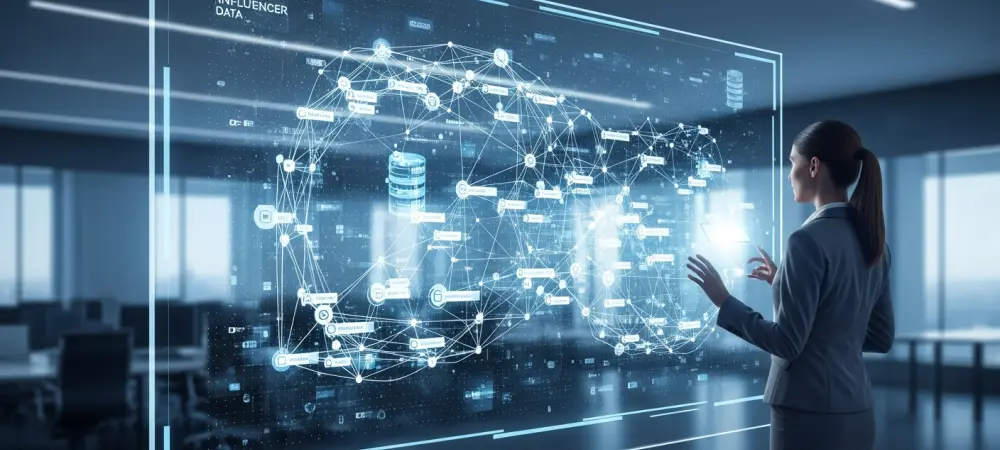
Aisha Amaira is a distinguished MarTech specialist who has dedicated her career to the seamless integration of technology into the marketing ecosystem. With her extensive background in CRM and customer data platforms, she has a front-row seat to the transformation of how businesses derive value from customer insights through automation. In this conversation, we explore the tectonic shift in influencer marketing as it moves away from manual, spreadsheet-heavy workflows toward a fully automated AI orchestration layer. Aisha breaks down the significance of recent strategic investments in this space, the technical nuances of graph databases that connect brands with over seven million creators, and how a new generation of AI agents is enabling brands to execute complex campaigns with the precision of a software engine rather than relying on subjective intuition.
Traditional influencer marketing relies heavily on manual spreadsheets and subjective judgment. How does an AI orchestration layer fundamentally change the workflow for brands in this space?
The shift from manual labor to an AI orchestration layer is like moving from a hand-drawn map to a real-time GPS system. For years, marketing teams have been bogged down by the operational layer, spending countless hours identifying creators, managing tedious outreach, and negotiating terms one by one. This new approach replaces that entire workflow with an autonomous system that handles the complete campaign lifecycle, from discovery through performance tracking. Instead of a human teammate clicking through rows of a spreadsheet, the AI directs a network of specialized agents to execute these tasks with incredible speed. It allows a brand to move away from “experience-based judgment” and toward a system where every action is backed by data and improved through constant feedback.
Could you explain the technical advantage of using a graph database and specialized AI agents over the standard data dashboards that most marketers are used to?
Standard dashboards are often just static windows into data that still require a human to take the final action, but this infrastructure is built to act on its own. By utilizing a graph database, the system can structure complex relationships between creators, content, brands, and audiences in a way that surfaces a much deeper “fit” than simple follower counts or keywords. This database draws on more than seven million global creator profiles to ensure that the match is authentic and likely to perform. These specialized AI agents then take that information and run the campaign autonomously, learning from past results to improve their accuracy over time. It creates a sensory-rich marketing environment where the software feels less like a tool and more like an intelligent engine that understands the nuances of the brand.
With the recent seed funding from investors like Amorepacific and Hustle Fund, what does this signal for the future expansion of D2C beauty and lifestyle brands in the U.S. market?
Securing strategic investment from a global beauty giant like Amorepacific is a massive validation of the need for precision in the creator marketing landscape. These brands are looking for a structural advantage in both cost and speed as they try to scale in the competitive U.S. market. The capital will be used to advance the AI agent infrastructure and grow a B2B customer base, particularly focusing on beauty and lifestyle sectors that thrive on creator engagement. With the platform going live on July 15 at the Google for Startups Accelerator: Korea Demo Day, we are seeing the beginning of an era where global D2C brands can treat creator marketing with the same repeatability as any other software-driven channel. This level of automation is essential for any brand that wants to maintain a consistent presence across diverse audiences without ballooning their internal headcounts.
What is your forecast for the creator marketing landscape?
I believe we are entering a phase where the “marketing operations layer” as we know it will become entirely invisible. Within the next few years, the reliance on manual outreach and subjective creator selection will feel as outdated as buying print ads by hand. Brands that adopt AI-powered execution early will gain a structural advantage that allows them to run ten times as many campaigns with a fraction of the traditional overhead. As these AI agents become more sophisticated at learning from marketer feedback, the precision of creator-brand matching will reach a point where every partnership feels organic and data-validated simultaneously. Ultimately, creator marketing will transition from a “risky” experimental spend into a core, high-precision performance channel for every major D2C brand in the world.