

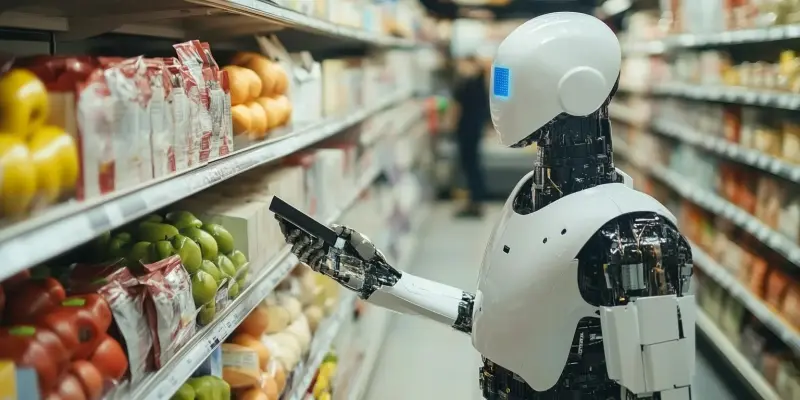
Today, customers demand seamless, personalized experiences blending the physical and digital worlds. Retail executives are eager to meet these expectations, with a significant majority planning to adopt AI-driven automation.Nearly nine out of ten customers have reported positive impacts from Generative AI (GenAI) in their shopping experiences. The key challenge lies in crafting a cohesive, adaptive AI vision that leverages industry strengths while addressing the limitations of current processes and technologies.
The Emergence of Connected Experiences
Bridging Digital and Physical Retail Spaces
The concept of “Connected Experience” represents a pivotal development in the retail industry’s evolution. The traditional boundaries between digital and physical retail environments have become increasingly blurred. Retailers are now focusing on delivering sophisticated and valuable customer experiences that seamlessly merge these two dimensions. A prime example of this transformative approach is Resulticks’ AI-powered solution named “SHOP.”
SHOP leverages AI to convert customer data from numerous touchpoints into actionable insights, driving immediate growth and engagement. Powered by Resulticks’ AI agent Genie, SHOP creates what is known as “phygital” experiences. This approach seamlessly merges physical and digital interfaces, boosting both engagement and revenue.By connecting online and offline consumer touchpoints in real-time, retailers can offer more personalized and cohesive shopping journeys.
Integration with Next-Generation IoT Channels
SHOP effectively bridges existing retail systems with next-generation Internet of Things (IoT) channels such as beacons, facial recognition, and smart home devices. Retail engagement is thus optimized across various stages of the customer lifecycle using consolidated data.This integration facilitates a more personalized and efficient shopping experience, as retailers can leverage real-time insights to tailor interactions and offers based on individual customer behavior and preferences.
Resulticks’ emphasis on transforming customer data into individualized, measurable engagement sets a new standard for retail experiences. Genie accelerates the integration and activation of data, streamlining the process of deriving actionable insights from raw data. This approach bypasses many of the resource-intensive tasks typically associated with data analysis, allowing retailers to focus on delivering personalized customer experiences.
Leveraging AI for Retail Success
AI-Driven Insights for Enhanced Customer Journeys
The benefits of SHOP extend beyond mere data integration. One of the platform’s key advantages is its ability to deliver AI-driven insights about the customer journey, from the moment of discovery through purchase and beyond. These insights enable retailers to accurately attribute ROI and optimize their marketing strategies. By automating and personalizing interactions based on customer behavior, preferences, and propensities, SHOP enhances the overall shopping experience.Moreover, SHOP generates brand and franchise-specific analytics related to shopper behavior, foot traffic, basket size, in-store conversions, SKU performance, and more. Retailers can thus gain a comprehensive understanding of their customers and make informed decisions to improve engagement and sales. This level of insight is crucial for staying competitive in an ever-evolving retail landscape.
Enhancing Retail Engagement and Acquisition
SHOP’s ability to consolidate data from various sources, including e-commerce, point of sales (POS), loyalty programs, and other retail systems, provides a real-time, holistic view of shoppers. This comprehensive perspective enables retailers to enhance shopper acquisition through targeted data and technology integrations. By leveraging AI-driven insights, retailers can create highly personalized offers and interactions that resonate with customers, ultimately driving growth and loyalty.The potential of AI to add value to the retail industry is vast. Retailers are encouraged to focus on the long-term adoption of AI to harness its transformative power across internal operations, evolving consumer expectations, and advancing technologies.The integration of AI into retail should be seen as an ongoing journey rather than a destination, with continuous innovation and adaptation being key to success.
Towards an AI-Driven Retail Future
Empowering Organizations for Future-Ready Retail
Resulticks aims to empower organizations ready to embrace this AI-driven future. Their approach brings together nuanced insights with a cohesive narrative reflecting the diversity and complexity of retail customer engagement. By providing a unified understanding and objective analysis of the main findings, Resulticks ensures a coherent and logically structured overview of AI’s role in transforming retail engagement and customer experience.The integration of AI into retail processes offers a multitude of benefits, from enhanced customer insights to optimized engagement and acquisition strategies. Retailers that leverage AI-driven technologies are better positioned to meet the evolving needs of their customers and stay competitive in a rapidly changing market.
Embracing Continuous Innovation
The retail industry has undergone a significant transformation due to the integration of artificial intelligence (AI). Modern customers now seek seamless, personalized experiences that blend the physical with the digital.Retail executives are keen to meet these demands, and a substantial majority plans to implement AI-driven automation to enhance operations. Remarkably, nearly 90% of customers have reported positive effects from Generative AI (GenAI) on their shopping experiences.The primary challenge for retail leaders is to develop a cohesive, adaptive AI strategy that maximizes industry strengths while addressing the limitations of existing processes and technologies. It is essential for retailers to navigate this rapidly evolving landscape by crafting innovative solutions that cater to growing customer expectations, thus ensuring a competitive edge in the market.In light of this, it’s clear that the future of retail lies in the harmonious integration of AI to create more engaging and efficient customer experiences.