

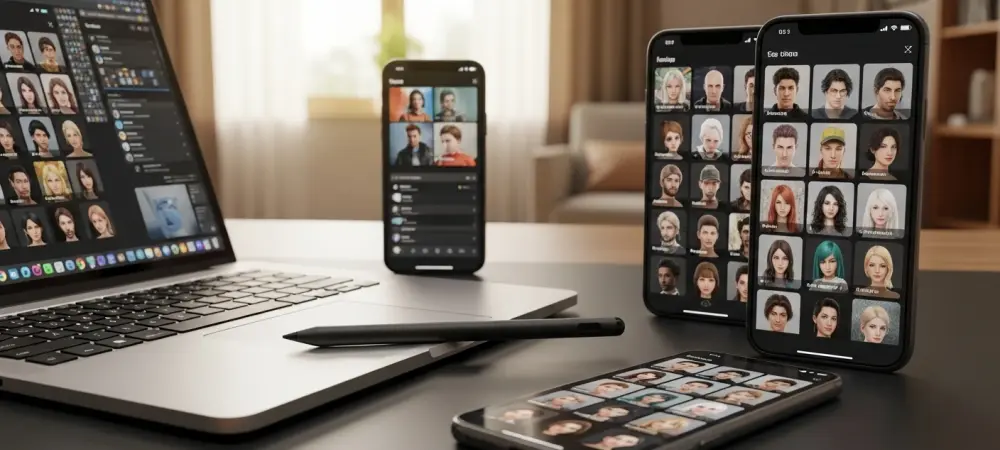
The digital frontier is no longer a human-exclusive domain, as hyper-realistic synthetic personas now compete directly for consumer attention against biological creators in an economy worth billions. This transition from clearly animated virtual stars like Lil Miquela and Shudu Gram to figures like Aitana Lopez represents a tectonic shift in digital identity. Where early pioneers were high-budget experiments by specialized studios, current iterations leverage accessible generative tools such as ChatGPT, Midjourney, and HeyGen to mimic everyday human interactions. This technological leap allows agencies like The Clueless to populate social media with “digital souls” that resonate with the aesthetics and behaviors of the modern user.
Major platforms like Amazon, Spotify, and YouTube have become the primary battlegrounds for these synthetic entities. As the creator economy marches toward a projected valuation of $49 billion by 2030, the demand for scalable alternatives to human talent has surged. These AI personas serve as a strategic response to the logistical and financial bottlenecks of the traditional influencer model. By utilizing generative platforms, brands can now bypass the friction of human coordination, creating a streamlined pipeline of content that functions with industrial efficiency. The purpose of these synthetic personas is to provide a reliable, always-on marketing presence that is unaffected by the complexities of the physical world.
The Evolution of Digital Presence and the Influencer Ecosystem
The shift toward hyper-realism marks a significant departure from the artistic, clearly artificial origins of virtual influencers. Early stars functioned as art projects or high-concept brand mascots, maintaining a visual distance from reality that allowed audiences to compartmentalize them as fiction. However, newer models are designed to blend seamlessly into social media feeds, often appearing in mundane or popular locations like upscale restaurants or major sporting events. This proximity to the “real” makes it increasingly difficult for the average user to distinguish between biological humans and algorithmic constructs, fundamentally altering the nature of digital trust.
Furthermore, the democratization of high-fidelity creation tools has lowered the barrier to entry for synthetic influencer management. Today, a small agency can manage an entire roster of AI creators without the need for photographers, stylists, or makeup artists. Platforms like Midjourney generate the visual assets, while HeyGen provides the video capabilities, allowing for a level of content output that was previously impossible without a massive studio budget. This shift allows the creator economy to scale at an exponential rate, as digital creators can be generated and deployed to fill any niche or market demand within hours.
Comparative Performance: Synthetic Efficiency vs. Human Authenticity
Economic Scalability and Revenue Potential
Revenue models highlight the stark contrast between biological and digital influencers. Aitana Lopez, an AI creation managed by the Barcelona-based agency The Clueless, reportedly generates between $75,000 and $100,000 monthly through brand deals and software endorsements. This level of profitability is achieved without the overhead costs associated with human travel, catering, or talent management fees. AI influencers do not require rest, nor do they experience the natural aging process that often limits the longevity of a human creator’s career. Agencies maximize profit margins by owning the entire lifecycle of the avatar, ensuring that the digital soul remains a permanent, appreciating asset.
Moreover, the removal of biological constraints allows for a volume of production that a human simply cannot match. A synthetic creator can appear in multiple locations virtually or promote dozens of products simultaneously across global markets without experiencing fatigue. This efficiency makes them particularly attractive to high-volume retailers who prioritize constant visibility over the nuances of lived experience. While a human influencer might take weeks to deliver a single campaign, a team using automated tools can produce high-quality video content in minutes, drastically reducing the time-to-market for promotional materials.
Creative Control and Brand Safety
Brand safety represents one of the most compelling arguments for the adoption of AI avatars. Human influencers are inherently unpredictable; their personal lives, past behaviors, or current controversies can instantly tarnish a partner brand. In contrast, programmable personas offer total creative oversight. Tools like Midjourney ensure that every visual detail—from the lighting to the background—aligns perfectly with a brand’s aesthetic guidelines. This level of technical control eliminates the risk of reputation-damaging behavior, providing a sterile but highly reliable environment for corporate messaging.
The precision of AI allows for a level of brand integration that feels intentional rather than forced. This ensures consistent aesthetic output across different social media platforms, maintaining a cohesive brand identity that is difficult to replicate with human creators. This level of technical control eliminates the risk of reputation-damaging behavior, providing a sterile but highly reliable environment for corporate messaging. The partnership becomes a controlled experiment in marketing rather than a collaborative gamble, providing a level of certainty that is highly valued by risk-averse corporate sponsors.
Audience Engagement and Content Realism
The “uncanny valley” that once plagued virtual identity has largely been bridged by advancements in hyper-realism. Modern AI influencers are no longer restricted to futuristic or surreal settings; they are frequently depicted in mundane locations to mimic human relatability. This shift is substantiated by data showing that 87 percent of creators who integrate AI tools report improved content quality. By blending into the everyday digital feed, these avatars achieve engagement levels that rival their biological counterparts, effectively monetizing the illusion of a shared reality.
However, the raw emotional appeal provided by human creators like Gracie Nielson remains a significant hurdle for synthetic entities. While AI can simulate a smile or a trendy pose, it lacks the lived experience and genuine endorsement that many consumers still value. Humans offer a form of accountability and “imperfect” charm that serves as a counterbalance to the polished perfection of algorithmic constructs. The struggle for AI influencers is to move beyond visual simulation and tap into the deep-seated psychological trust that humans naturally extend to other humans who share their physical vulnerabilities.
Critical Challenges and Ethical Considerations in the Digital Space
Ethical dilemmas arise when the lines between biological reality and synthetic replication are blurred. The practice of identity cloning, where AI accounts replicate the specific aesthetic and poses of human creators like Nielson, presents a predatory challenge to the industry. This unauthorized replication of a person’s likeness threatens the livelihood of human influencers and raises complex legal questions regarding the right of publicity. As digital clones become more indistinguishable from the real thing, the psychological toll on human creators who see their unique identities appropriated becomes a significant industry concern.
Platforms like YouTube are increasingly under pressure to regulate “slop,” or low-quality automated content that threatens to saturate the user experience. Chief Product Officer Neil Mohan has signaled a commitment to deepfake detection and disclosure mandates to maintain platform integrity and protect viewers from deception. Despite these efforts, the democratization of tools makes regulation a difficult task, as the velocity of AI generation often outpaces the development of detection software. The lack of uniform disclosure rules remains a major vulnerability, leaving the integrity of the digital ecosystem at risk as synthetic and human content collide.
The financial and political risks are also tangible, as seen in the case of Khaby Lame and a Hong Kong printing firm. A deal involving an AI twin of the TikTok star led to extreme stock volatility and subsequent trading restrictions. These incidents underscore the danger of tying real-world assets to synthetic identities that may be used for financial manipulation. Furthermore, the use of AI avatars in political discourse presents a severe threat to democratic stability, as generated influencers can push specific agendas while masking the true source of the information.
Strategic Recommendations for Navigating the Influencer Market
Deciding between human and AI talent requires a clear understanding of campaign goals and budget constraints. AI avatars are the superior choice for high-volume, cost-sensitive campaigns where brand safety and creative control are paramount. Conversely, human influencers should be reserved for high-trust scenarios, luxury brands, and niche storytelling where the authenticity of a human voice is the primary value proposition. Consumers are increasingly sensitive to the source of information, making transparency a critical factor in any selection process.
Organizations must establish practical criteria for selecting tools and platforms, emphasizing the disclosure of AI involvement to preserve consumer trust. While the machine offers efficiency, the emerging preference for human idiosyncrasies suggests that perfectly curated content may eventually lead to audience fatigue. The path forward involves a strategic mix of both worlds—using AI to handle the logistical heavy lifting and human creators to provide the emotional core. The ultimate goal is to navigate a digital landscape where the distinction between real and fake matters less than the value and transparency provided to the end user.
The transition toward a hybrid creator economy proved to be a defining moment for digital marketing strategy. Experts analyzed how the preference for human imperfection grew as a response to the saturation of synthetic perfection across social platforms. Ultimately, the industry balanced the high-output efficiency of AI with the irreplaceable trust of human experience, which redefined the boundaries of digital identity and creative labor. This evolution demonstrated that while technology could replicate the appearance of influence, the foundation of true engagement remained rooted in human accountability and shared reality.