

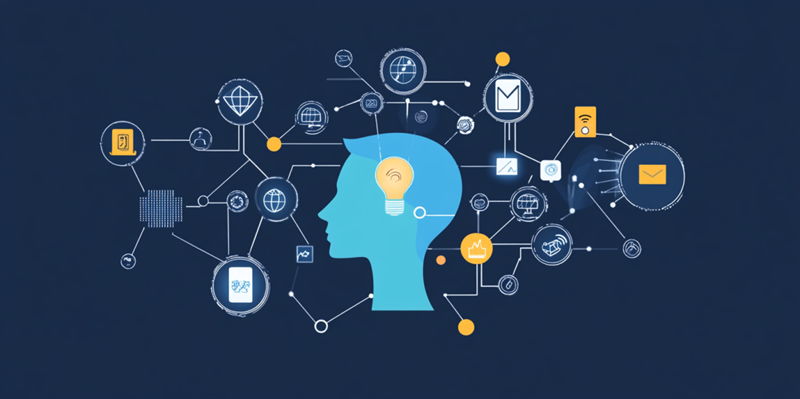
In recent years, the integration of Artificial Intelligence (AI) within Customer Data Platforms (CDPs) has gained significant momentum, reshaping how businesses manage and leverage customer data. This convergence of AI and CDPs is not just a technological evolution but a transformative shift that enhances the capabilities and functionality of these platforms. Industry leaders highlight that the synergy between AI and CDPs facilitates better personalization, predictive analytics, and real-time decision-making, ushering in a new era of customer engagement and operational efficiency.
The Broader Implications of AI in CDPs
Enhancing Personalization and Predictive Analytics
Artificial Intelligence is revolutionizing CDPs by enhancing their ability to provide personalized customer experiences and predictive analytics. With AI-powered algorithms, businesses can segment customers based on behavioral data, allowing for more targeted marketing campaigns. This results in higher engagement rates and improved customer satisfaction. Furthermore, AI-driven predictive analytics enable businesses to anticipate customer needs and preferences, optimizing marketing strategies and resource allocation.
By analyzing vast amounts of customer data, AI facilitates the creation of accurate customer profiles. These profiles enable marketing teams to design customized interactions that resonate with individual customers. Real-time data processing and decision-making are also significantly improved, allowing businesses to respond to customer actions instantaneously. This level of responsiveness is essential in today’s fast-paced digital environment where customer expectations are continually evolving.
Leveraging Large Data Sets for Better Insights
The effectiveness of AI in CDPs largely depends on the availability and quality of customer data. CDPs collect extensive data from various touchpoints, including social media, websites, and customer interactions. AI technologies help in managing and extracting valuable insights from this data, providing businesses with a deeper understanding of their customers. This capability is crucial for creating more effective marketing strategies and improving overall customer experience.
AI also supports the training and fine-tuning of predictive models within CDPs. These models are essential for predicting future customer behavior, allowing for proactive engagement strategies. By leveraging AI, businesses can ensure that their predictive models remain accurate and relevant, thereby maximizing the impact of their marketing efforts. Additionally, AI-driven insights help in identifying emerging trends and opportunities, enabling businesses to stay ahead of the competition.
The Operational Benefits of Integrating AI with CDPs
Advancing Decision-Making with AI-Enhanced CDPs
Integrating AI with CDPs significantly enhances decision-making processes within organizations. AI-driven decision engines utilize comprehensive customer data to provide actionable insights, enabling businesses to make data-driven decisions. This integration leads to the creation of hyper-personalized customer journeys, boosting engagement and loyalty. AI-enhanced decisioning ensures that businesses can dynamically adjust their strategies in real time based on customer interactions and feedback.
The speed at which AI can process and analyze data is a game-changer for businesses looking to deploy customer-centric strategies quickly. CDPs with integrated AI capabilities can create real-time customer profiles, ensuring that marketing and sales teams have access to the most up-to-date information. This accelerated deployment of AI-driven strategies allows businesses to seize market opportunities promptly and address customer concerns swiftly, resulting in a competitive edge.
The Move Towards Integrated Platforms
There is a noticeable trend towards the integration of CDPs with marketing automation and AI into a single cohesive system. This unified approach not only simplifies data management but also enhances operational efficiency. By combining these technologies, businesses can streamline their processes and reduce operational bottlenecks. The result is a more agile and responsive organization capable of delivering exceptional customer experiences.
Enterprises are increasingly adopting integrated platforms that bring together CDPs, AI, and marketing automation. Such platforms enable businesses to leverage advanced analytics and machine learning to refine their marketing campaigns. This holistic approach ensures that all customer touchpoints are consistent and aligned with the overall marketing strategy. By unifying these technologies, businesses can achieve a higher level of marketing precision and effectiveness.
Industry-Specific Applications and Future Trends
AI and CDPs in Retail
In the retail sector, the integration of AI with CDPs has proven to be particularly beneficial. Retailers collect vast amounts of data from various sources, including online and in-store transactions, social media interactions, and customer service engagements. By leveraging AI, retailers can analyze this data to gain actionable insights that drive sales and enhance customer satisfaction. Predictive analytics powered by AI helps retailers forecast demand, manage inventory more efficiently, and create personalized shopping experiences.
AI-driven CDPs enable retailers to segment their customer base effectively, allowing for targeted marketing campaigns that resonate with specific customer groups. This level of personalization increases the likelihood of conversion and boosts customer loyalty. Additionally, AI facilitates automation in retail operations, reducing manual tasks and streamlining workflows. The result is a more efficient and customer-centric retail environment.
The Future of AI-Enhanced CDPs
Artificial Intelligence (AI) integration with Customer Data Platforms (CDPs) has rapidly advanced in recent years, fundamentally altering how businesses handle and utilize customer data. This fusion of AI and CDPs represents more than a mere technological update; it’s a transformative shift that significantly boosts the capabilities and effectiveness of these platforms. Experts in the field note that AI combined with CDPs enables more precise personalization, robust predictive analytics, and quicker real-time decision-making. These improvements herald a new era of customer interaction and operational efficiency. Specifically, businesses can now tailor experiences more accurately to individual customer preferences, anticipate future behaviors, and react swiftly to changing circumstances. This synergy facilitates a deeper understanding of customer needs, resulting in more effective marketing strategies and improved customer satisfaction. Thus, the convergence of AI and CDPs is setting the stage for groundbreaking advancements in how companies engage with their audiences and streamline their operations.