

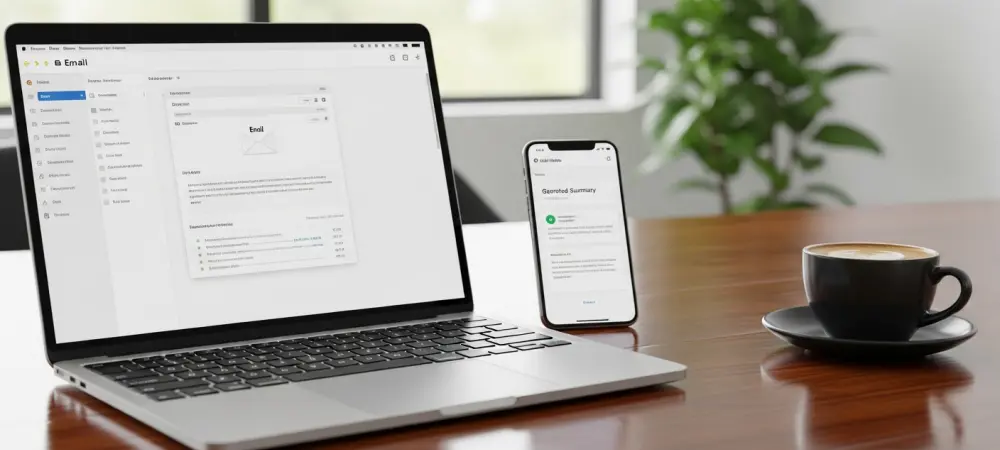
The modern professional landscape has reached a critical juncture where the sheer volume of digital correspondence often outweighs the actual execution of primary job responsibilities. For years, the inbox served as a digital filing cabinet, but it has now transformed into a sophisticated command center powered by autonomous agents that anticipate needs before a user even opens the application. These AI email assistants have evolved from simple automated scripts into highly adaptive environments capable of learning a user’s unique professional voice and handling complex, multi-stage follow-up sequences. By the late 2020s, the vast majority of high-level professionals have transitioned to a model where they no longer read every word of every message, but instead manage the high-level outputs of their digital surrogates. This shift represents more than just a matter of convenience; it is a fundamental reorganization of how human attention is allocated across global corporate networks, allowing for a renewed focus on deep work and strategic decision-making.
Core Functionalities: Technical Mechanisms of Modern Assistants
Contextual Drafting: Adaptive Responses in Professional Tones
These assistants utilize sophisticated Natural Language Processing to analyze years of sent messages, identifying the specific syntactical patterns, professional jargon, and stylistic idiosyncrasies that define an individual’s digital persona. By mapping these linguistic traits, the software can generate responses that are indistinguishable from those written by a human, maintaining consistency across various levels of formality ranging from internal brevity to executive reporting. The technology connects to major email providers through secure API integrations, which allows the AI to reference past interactions and historical data to ensure that every drafted reply is grounded in accurate context. This eliminates the need for users to provide constant prompts or background information, as the system already understands the relationship between the sender and the recipient based on their shared history of communication. Beyond mere drafting, these tools significantly reduce the daily mental load by summarizing long and often convoluted email threads into concise, actionable bullet points. Instead of sifting through dozens of replies to find a specific decision or project update, a professional can review a generated summary that highlights the most critical information and identifies any pending tasks. This capability is particularly useful for those returning to their desks after periods of deep focus or travel, as it provides an immediate overview of what transpired in their absence. By filtering out the noise of “thank you” notes and minor acknowledgments, the AI ensures that only the substantive portions of a conversation remain at the forefront. This adaptive response system essentially serves as a first-tier filter, ensuring that the human user only interacts with content that requires high-level cognitive input or creative problem-solving.
Strategic Inbox Management: Proactive Monitoring and Performance Analytics
Modern AI goes beyond passive organization by identifying missed opportunities and flagging high-priority threads that might have otherwise been overlooked in a cluttered environment. This proactive monitoring acts as a safety net for busy professionals, as the system can recognize the urgency of an unanswered pitch or a high-stakes client request that requires immediate attention. By categorizing messages based on their intent and potential impact rather than just the time of arrival, these assistants allow users to move away from the “last-in, first-out” mentality that often plagues traditional inbox management. This strategic prioritization ensures that critical business goals are supported by timely communication, effectively turning the email account into a tool for active revenue generation and relationship maintenance rather than just a storage space for digital noise. Furthermore, integrated analytics packages help professionals understand the broader trends within their communication habits, turning the email account into a data-driven tool for improving overall performance. These systems can track which subject lines yield the highest open rates or which times of day result in the fastest response times from specific stakeholders. This level of insight allows a user to optimize their outreach strategies based on empirical evidence rather than intuition, ensuring that important messages are delivered when they are most likely to be seen and acted upon. By analyzing response latency and engagement metrics, the AI provides a comprehensive view of a professional’s digital footprint, offering suggestions on how to refine their approach for better clarity and impact. This analytical layer transforms the mundane task of sending messages into a sophisticated exercise in communication science, where every interaction is measured for its effectiveness.
Evaluating Leading Tools: Navigating the Industry Landscape
Design-Forward Solutions: High-Efficiency and Customization
Leading the market are specialized tools like Postcards AI and Superhuman, which cater to different aspects of the professional communication experience by prioritizing either design or speed. Postcards AI focuses on the intersection of content and visual presentation, allowing users to build complex and professional HTML email templates using plain language commands. This removes the barrier of entry for those who lack technical coding skills, enabling a marketing manager or a solo entrepreneur to create high-quality newsletters and updates that look like they were produced by a design agency. By translating descriptive text into clean, responsive code, this tool ensures that professional outreach is not only informative but also visually engaging across all devices. This focus on the “no-code” movement allows for a rapid iteration of communication styles, keeping the brand voice fresh and modern. In contrast, Superhuman prioritizes efficiency and speed for power users who manage extremely high volumes of daily correspondence. Its “Auto Drafts” feature is a standout, as it proactively writes follow-up messages and replies based on a user’s previous habits, effectively doing half the work before the user even starts their morning routine. This speed-centric approach is complemented by a minimalist interface designed to reduce distractions and encourage a state of “inbox zero” through rapid keyboard shortcuts and lightning-fast search capabilities. For professionals in fast-paced industries like venture capital or software development, the time saved by these automated drafts can amount to several hours per week. The ability to quickly navigate through hundreds of messages while maintaining a high standard of quality in every response has made these design-forward tools indispensable for those at the top of their fields.
Native Ecosystem Integration: Scalability and Internal Efficiency
For organizations that are already deeply embedded in major work suites, tools like Google’s Gemini offer native integration that requires no external third-party connections or complex setups. Gemini allows users to summarize internal threads and draft marketing copy directly within the Gmail interface, making it a versatile choice for teams that value consistency and security above all else. This native integration ensures that the AI has access to the full context of a company’s internal documents, calendars, and spreadsheets, allowing it to pull in relevant data points without the user having to switch between different applications. This “generalist” AI agent approach suggests that email management is shifting from a manual chore to a supervised process where the human employee acts as a final editor rather than the primary writer. The scalability of these native tools makes them particularly attractive for large enterprises where security and data privacy are paramount. Because the AI functions within the existing infrastructure of a provider like Google or Microsoft, it adheres to the same corporate compliance standards that govern the rest of the organization’s digital assets. This allows for a seamless rollout across different departments, from HR to sales, ensuring that every employee has access to the same level of productivity enhancement. As these tools become more deeply woven into the fabric of daily work, they also begin to suggest improvements to internal workflows, such as identifying redundant meetings or suggesting more efficient ways to handle recurring team updates. This trend toward a holistic AI work environment means that the inbox is no longer an isolated silo but a connected node in a much larger, automated organizational system.
Implementation Strategies: Managing Economic and Operational Risks
Economic Drivers: Productivity and Infrastructure Compatibility
The move toward widespread AI adoption is largely driven by the undeniable reality that the average worker spends nearly a third of their week simply processing emails, a phenomenon often referred to as the “email tax.” In a competitive global market, this tax has become unsustainable, making AI agents an economic necessity for any firm that wishes to maintain high levels of productivity without increasing headcount. By automating the repetitive tasks associated with communication, companies can redirect their human capital toward more complex projects that require empathy, critical thinking, and creative innovation. The return on investment for these tools is often realized within a few months, as the reduction in time spent on administrative tasks leads to faster project turnaround times and improved client satisfaction through quicker response cycles.
However, the economic benefits must be balanced against the need for rigorous infrastructure compatibility and adherence to strict data privacy regulations. Companies must be diligent in selecting tools that are GDPR-compliant and offer transparent data policies, as these AI assistants require deep access to sensitive corporate information to function effectively. A breach of this data or a failure to comply with international privacy standards could lead to catastrophic legal and financial consequences that would far outweigh any productivity gains. Therefore, the implementation of these tools must be accompanied by a thorough audit of the software’s security protocols and an understanding of where the data is stored and how it is utilized for machine learning. Organizations that prioritize these security considerations will be better positioned to leverage AI as a long-term strategic asset rather than a temporary shortcut.
Risk Mitigation: The Vital Role of Human Oversight
Despite the impressive speed and accuracy of modern AI, human oversight remained a mandatory part of the workflow to prevent issues such as “hallucinations” or factual errors that could damage professional reputations. Over-reliance on automation often led to a generic or robotic tone that might alienate long-term clients, especially in high-stakes situations where nuance and empathy were required to resolve conflicts. The most successful professionals adopted a hybrid approach, allowing the AI to handle the repetitive heavy lifting of drafting and organizing while providing the final creative audit themselves. This ensured that every outgoing message remained authentic and accurate, reflecting the true intent of the sender while still benefiting from the efficiency of an automated system. By maintaining this final layer of human control, users were able to mitigate the risks of automated misunderstandings.
Looking forward, the successful integration of AI assistants into professional life required a proactive stance on digital literacy and ethical communication. The transition toward these automated environments represented a permanent shift in corporate operations, one that favored those who could effectively collaborate with machines. Professionals who mastered the art of supervising their AI surrogates were able to reclaim their time and focus on high-value activities, ensuring their relevance in an increasingly automated economy. As the technology continued to advance, the focus moved from simple automation to the strategic augmentation of human capability, setting a new standard for professional excellence in the digital age.