

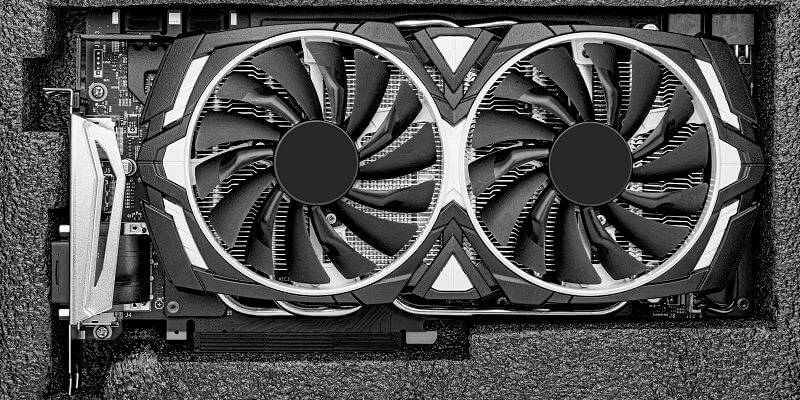
ZOTAC recently launched the most premium variant of its GeForce RTX 40 series graphics card, the ZOTAC GeForce RTX 4090 PGF. This new offering comes with a revamped design language, improved cooling capabilities, and impressive clock speeds, making it a powerhouse among high-end GPUs. The RTX 4090 PGF has been released exclusively for the Chinese market, and it has already made an impact due to its remarkable features. In this article, we will delve deeper into the ZOTAC GeForce RTX 4090 PGF’s design, cooling capabilities, clock speeds, and pricing.
Design of the ZOTAC GeForce RTX 4090 PGF
The ZOTAC GeForce RTX 4090 PGF features a new design language akin to the “AIRO” lineup. The design has minimalism at its core, with a predominantly white color scheme. The card’s shell has a smooth finish, with no additional designs or accents, adding to its minimalist aesthetics.
One of the most notable features of the RTX 4090 PGF is the concentric RGB lighting system that runs along the fans. This lighting system is sure to grab attention in any setup, enhancing the overall look of the card. Additionally, the metal backplate of the card features the PGF diamond logo on the right, which also has an RGB option, contributing to the card’s unique look.
Cooling Capabilities of the RTX 4090 PGF
ZOTAC has pulled out all the stops to ensure that the RTX 4090 PGF’s cooling capabilities are top-notch. The card comes equipped with a vapor chamber cooler that helps spread the heat away from the GPU through metal plates and transfers the heat through seven composite heat pipes. With these features, the RTX 4090 PGF can operate seamlessly for extended periods without any thermal throttling.
The seven composite heat pipes help dissipate heat more efficiently, drawing it away from all areas of the card. Additionally, the metal plates work to spread the heat away from the hotspots of the card. Therefore, the card remains cool even at high temperatures levels.
Clock Speeds and Power Consumption
The ZOTAC GeForce RTX 4090 PGF uses a 24+4-phase VRM design to handle power consumption levels above 500W. This design enables the card to maintain peak performance for extended periods of time.
Moreover, the RTX 4090 PGF comes with an impressive core frequency of up to 2625MHz, which is much higher than the reference RTX 4090. The clock speeds of the card, combined with its improved cooling capabilities, are sure to yield impressive benchmark scores.
Pricing and Availability
The ZOTAC GeForce RTX 4090 PGF is currently priced at around 17,599 RMB (USD 2,500), as one would expect for such a high-tier variant of the RTX 40 series graphics card. This GPU is exclusively available in the Chinese market, which may not be ideal for buyers outside of this region. However, this does not take away from the fact that it is an exceptional GPU.
In conclusion, the ZOTAC GeForce RTX 4090 PGF presents a significant improvement in terms of design and hardware features. Its minimalist white color scheme, concentric RGB lighting, and diamond logo on the backplate provide the card a unique and visually appealing appearance. Additionally, the inclusion of the 24+4-phase VRM design, remarkable clock speeds, and effective cooling capabilities make the RTX 4090 PGF a powerful contender in the high-end graphics card market. Although the card’s availability is currently limited to China, it remains a superb option for any gamer or professional seeking a GPU that can handle their demanding workloads.