

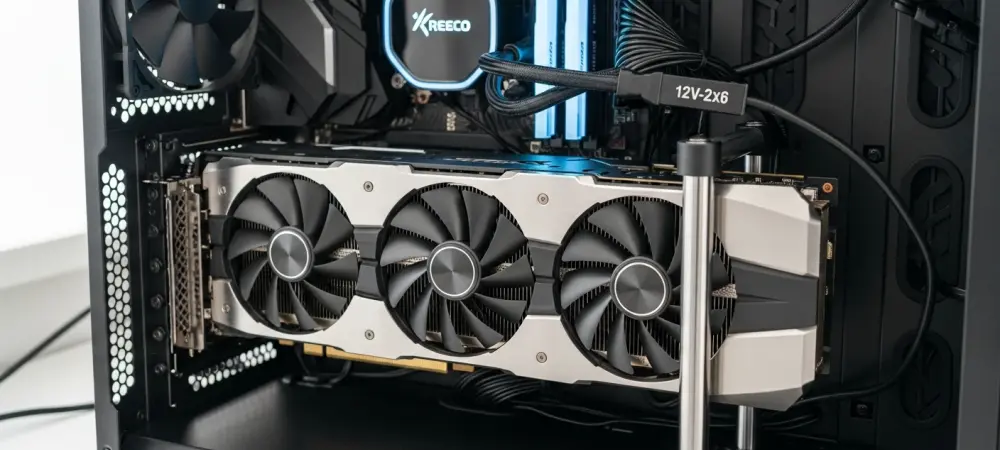
The sheer excitement surrounding the installation of a flagship Blackwell-based graphics card often dissipates into frustration when high-performance engineering meets the harsh reality of physical vulnerability. As the premium NVIDIA GeForce RTX 5090 enters enthusiast systems globally, reports have surfaced regarding structural failures that occur almost immediately after the initial boot sequence. One particularly concerning incident involved a ZOTAC Gaming model that ceased functioning within mere minutes of its first power cycle, revealing a catastrophic crack in the printed circuit board near the PCIe connector area. This failure highlights the immense strain placed on modern hardware as cooling solutions continue to grow in mass and dimensions. With heatsinks now weighing several kilograms, the structural integrity of the multilayered PCB is tested to its absolute limit, especially when cards are mounted horizontally without specialized support brackets.
The Structural Strain: Why Modern Hardware Is Vulnerable
Building on these observations regarding structural integrity, it becomes clear that engineering challenges for 600-watt GPUs extend far beyond thermal management and power delivery. The RTX 5090 utilizes a complex 14-layer or 16-layer PCB designed to handle extreme signaling speeds, yet this high density often results in a more brittle substrate compared to legacy hardware. When a massive triple-slot or quad-slot cooler is bolted onto such a delicate board, it creates a significant lever effect that concentrates stress on the PCIe finger. In the case of the recent ZOTAC failure, the hairline fracture originated near the retention clip, a common failure point where the board is forced to support the bulk of its own weight. Furthermore, the tension from the high-gauge power cables required by the 12V-2×6 standard can exert additional pulling force on the PCB, potentially exacerbating micro-defects. This mechanical tension becomes even more dangerous as the card undergoes rapid thermal cycles.
Mitigation Strategies: Safeguarding High-End Investments
Addressing the risks associated with heavy GPU assemblies required a shift in how enthusiasts and system builders approached hardware installation and long-term maintenance. Experts suggested that using vertical mounting kits or dedicated telescopic support pillars became essential rather than optional for any card exceeding three slots in width. These interventions successfully redistributed the weight across the chassis frame, effectively neutralizing the torque that previously caused PCB warping and fractures. Manufacturers also began investigating more rigid backplate materials, such as reinforced carbon fiber or thicker magnesium alloys, to provide the necessary stiffness for the underlying electronics. Looking forward, the industry moved toward standardizing internal support structures within PC cases to ensure that heavy components remained secure during shipping and daily use. System builders found that they could maintain the longevity of their flagship components while avoiding the heartbreak of immediate failure.