

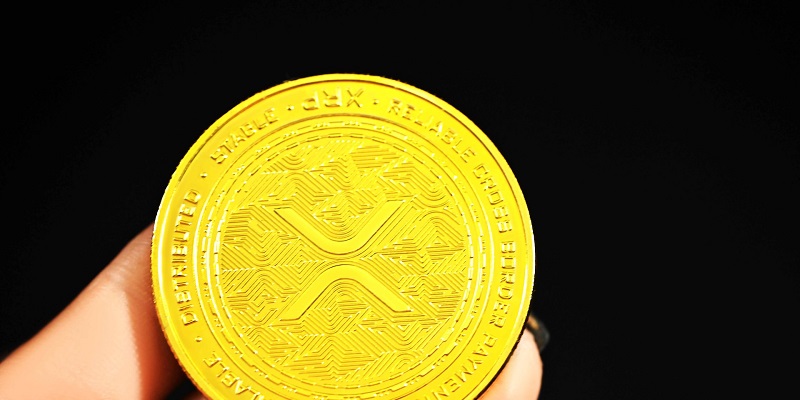
Over the past few years, XRP has been a consistent player in the cryptocurrency market, with its popularity and value often ranking among the top 5 cryptocurrencies by market cap. However, recent news surrounding XRP suggests that the cryptocurrency has experienced a significant influx of capital, amounting to $2 billion. This surge in market cap and trading volume has instilled a bullish sentiment for XRP, driving up its demand and subsequently, its price.
Can XRP reach the $10 mark in 2023? This is the question on the minds of many investors and enthusiasts. While it’s tempting to hope for a surge in price, it’s important to analyze the technical indicators and challenges associated with predicting the exact price movements.
XRP’s price resistance and potential targets
The price of XRP has encountered resistance around the 0.5295 level after a recent surge above the 0.5145 support. This resistance level has become a significant factor to watch for traders and investors as it charts the potential upward momentum of the cryptocurrency.
Looking at potential price targets, if XRP manages to break above the 0.5295 resistance, it could potentially reach the next resistance level at 0.5475 or even climb higher towards 0.5610. However, traders and analysts need to approach these potential targets with caution as market conditions can evolve rapidly.
Technical indicators and increased strength in the market
Analyzing the leading technical indicators, the relative strength index (RSI) and Moving Average Convergence Divergence (MACD) suggest a slightly bullish sentiment. While the RSI indicates that XRP is slightly overbought, the MACD shows a positive divergence. The convergence of these technical indicators indicates that XRP is in a middle ground between bearish and bullish markets.
Furthermore, the 50-day exponential moving average exhibits a bullish crossover around the 0.5295 level, indicating increasing strength in the market. The crossover is a notable technical signal, and traders and investors will closely watch it for potential indications of the cryptocurrency’s future price movements.
Challenges of predicting exact price movements
While the technical indicators suggest a bullish outlook, predicting the exact price movement of XRP, such as reaching $10 in 2023, is challenging. Cryptocurrencies can be volatile, and market conditions can change rapidly. Investors and traders will need to monitor market conditions closely and determine the best time to buy or sell XRP based on their individual goals and risk tolerance.
Ecoterra and Opportunities for Investors
As investors and traders monitor XRP’s price movements, another exciting development is taking place. EcoTerra is a blockchain startup that focuses on sustainability and environmentally-friendly solutions. They are on a mission to raise $5 million in their initial coin offering (ICO), and they have already raised an impressive $3.7 million.
This is an exciting opportunity for investors who want to support blockchain startups that prioritize sustainability and environmentalism. As the cryptocurrency market shifts and evolves, investors will need to consider not only the potential for financial profit, but also the social and environmental impact of their investments.
In conclusion, the recent influx of capital and price movements have instilled a bullish sentiment in the cryptocurrency market regarding XRP. While predicting the exact price movements of XRP is challenging, investors and traders can use technical analysis to monitor the market’s strength and potential upward momentum. Additionally, blockchain startups like Ecoterra provide opportunities for investors to support sustainability-focused initiatives while earning potential financial returns. As always, it’s essential to approach investments with caution and do your own research before making any decisions.