

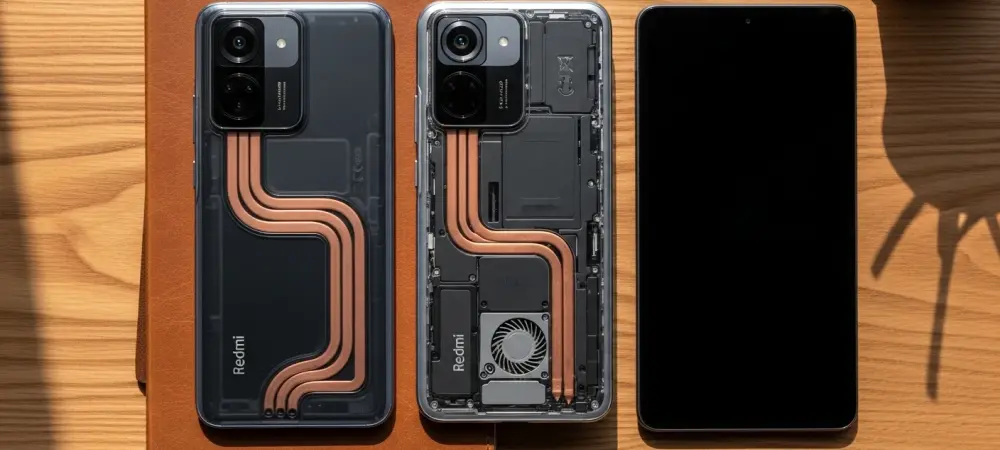
The evolution of handheld gaming technology reached a significant turning point this year as Xiaomi introduced a flagship device designed to shatter traditional thermal limitations through an integrated mechanical fan system. Xiaomi has officially pulled back the curtain on the Redmi K90 Max, a device that signals a bold new direction for the brand’s gaming-centric portfolio. By integrating an active cooling fan directly into the chassis, Xiaomi is addressing one of the most persistent bottlenecks in mobile technology: thermal throttling during sustained high-performance tasks. This move is particularly significant as mobile games become increasingly demanding, pushing hardware to limits that traditional passive cooling systems struggle to manage. The unveiling of this device highlights a shift in consumer expectations, where “gaming phones” are no longer just about flashy lights, but about sustained peak performance and sophisticated thermal engineering. This article explores the timeline of this announcement and the technological leaps that define Xiaomi’s latest flagship.
Pioneering Active Cooling in the Mobile Gaming Landscape
Xiaomi’s decision to move beyond passive cooling marks a fundamental change in the mobile landscape. For years, manufacturers relied on vapor chambers and graphite sheets, but these methods often hit a ceiling during extended play. By introducing an internal fan, the Redmi K90 Max establishes a new precedent for how mobile devices handle heat dissipation under heavy loads. This engineering choice reflects a commitment to maintaining high frame rates without the performance drops typically seen in thinner devices. As high-fidelity titles become more common, the industry is watching closely to see if this active cooling approach becomes the new standard for the enthusiast market.
The Roadmap to the Redmi K90 Max Launch
Early 2026: The First Whispers of Active Thermal Innovation
Months before the official renders appeared, industry insiders began reporting on Xiaomi’s experimentation with miniaturized mechanical fans for the Redmi line. This period was marked by rumors suggesting that the company was looking for a way to outperform the cooling solutions found in niche competitors without adding the bulk typically associated with rugged gaming handsets. These early reports set the stage for a device that would prioritize heat dissipation as its core identity, leading to intense speculation regarding the ergonomics of such a design and how the internal airflow would impact the overall durability of the handset.
Mid-April 2026: Official Design Reveal and Space Silver Renders
Xiaomi broke the silence by releasing high-quality promotional renders of the Redmi K90 Max in its signature “Space Silver” colorway. This event provided the first clear look at the device’s aluminum alloy frame and surprisingly slim profile, which defied expectations for a fan-equipped phone. The most discussed element of the reveal was the integrated fan located within a streamlined camera island. While the design was praised for its aesthetic elegance, it immediately sparked a global conversation among gamers about the placement of the vents, which sit near the natural finger placement for landscape-oriented gaming sessions.
Late April 2026: The Global Debut and Ecosystem Expansion
The final milestone in this timeline is the official market debut, where the Redmi K90 Max is launched alongside the Redmi K Pad 2. This synchronized release serves to solidify Xiaomi’s gaming ecosystem, offering a dual-threat approach for enthusiasts. By pairing the smartphone with a new tablet, Xiaomi demonstrated that the K90 Max is not a standalone experiment but a central component of a broader strategy to dominate the high-performance mobile market. This expansion highlighted the superior hardware synergy and advanced chipset integration that the company aims to provide for its most demanding users across multiple form factors.
Analyzing the Strategic Shift in Mobile Hardware
The most significant turning point in this timeline is the transition from passive vapor chambers to active mechanical cooling. This shift represents a broader industry pattern where hardware manufacturers are forced to adopt “desktop-class” solutions to keep up with the processing power of modern silicon. By choosing the MediaTek Dimensity 9500 and a D2 discrete graphics chip, Xiaomi has created a hardware stack that requires this level of thermal management. A recurring theme in this evolution is the delicate balance between form and function; the Redmi K90 Max manages to maintain a thin profile and narrow bezels while housing a fan, a feat that sets a new standard for internal space optimization in smartphones. Moreover, this transition suggests that future flagships may need to prioritize airflow over traditional thinness to unlock the full potential of next-generation processors.
Nuances of Engineering and Competitive Positioning
Beyond the raw specifications, the Redmi K90 Max introduces several nuanced engineering choices that distinguish it from the competition. While rival gaming phones often opt for a bulky, aggressive look, Xiaomi’s use of an aluminum alloy frame suggests an attempt to appeal to a more mainstream audience that values premium build quality alongside performance. A common misconception is that internal fans are inherently noisy or prone to failure; however, Xiaomi has indicated that their fan tech is more advanced than previous iterations, likely utilizing specialized bearings to minimize vibration and audible hum. Expert opinions suggest that while the vent placement may require a slight adjustment in grip, the trade-off in sustained 165 Hz gaming performance makes it a necessary evolution for the hardcore mobile gaming demographic. This positioning allows Xiaomi to bridge the gap between niche gaming rigs and flagship daily drivers. The launch of the Redmi K90 Max solidified the transition toward active cooling as a viable solution for premium mobile performance. By successfully integrating a mechanical fan into a sleek frame, the company proved that thermal efficiency did not have to come at the expense of industrial design. Future developments in this space likely focused on enhancing dust resistance for the air intake and optimizing fan speed algorithms based on real-time game telemetry. This milestone established a foundation for more ambitious hardware integrations in the years that followed.