
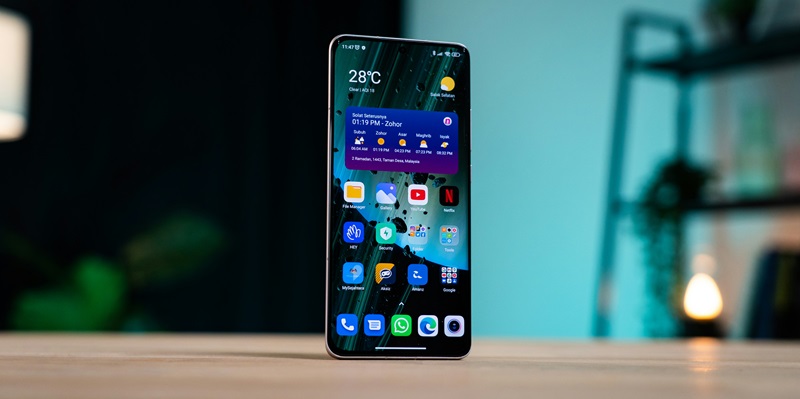
Xiaomi 15 Ultra to Feature 200 MP Camera and Massive 6,000 mAh Battery

Speculation about the Xiaomi 15 Ultra has ramped up as leaks suggest that the much-awaited smartphone will offer an array of premium features set to debut in early 2025. This new device is likely to be a successor to the Xiaomi 14 Ultra, which is currently priced at around $1,085 on Amazon. According to industry insiders, the Xiaomi 15 Ultra will boast a massive 6,000 mAh battery, supporting 80 W wireless and 90 W wired charging speeds. This represents a significant upgrade in battery technology, promising extended usage times and rapid charging capabilities that should cater to power users.

Cutting-Edge Camera and Advanced Features

Speculation is heating up about the Xiaomi 15 Ultra, with recent leaks indicating that the highly anticipated smartphone will be loaded with top-of-the-line features, set to launch in early 2025. This new model is expected to be a follow-up to the Xiaomi 14 Ultra, which presently sells for roughly $1,085 on Amazon. According to reliable industry sources, the Xiaomi 15 Ultra is set to feature an impressive 6,000 mAh battery. This substantial battery will support 80 W wireless charging and 90 W wired charging, marking a notable advancement in battery technology. These enhancements are designed to provide significantly longer usage times and quicker recharge periods, making it particularly appealing to power users who demand high performance and fast recharging. The Xiaomi 15 Ultra is poised to redefine expectations in the premium smartphone market with these upgrades, setting a new standard for competitors. As the release date approaches, excitement continues to build, and many are eager to see how this smartphone compares to other high-end devices.

Explore more

Trend Analysis: NVIDIA RTX Spark Platform

The traditional reliance on massive cloud data centers for artificial intelligence is currently being dismantled by a new breed of specialized silicon that places supercomputing capabilities directly onto a local desktop. This localized AI revolution signifies a departure from cloud-dependent processing, favoring high-performance workstations that offer immediate feedback and heightened security. NVIDIA is formally entering the AI PC segment with

Can NVIDIA Dominate the AI CPU Market With Vera?

The historical dominance of general-purpose x86 processors in the enterprise data center has begun to erode as the demand for specialized silicon accelerates at an unprecedented pace. While NVIDIA has long been the leader in graphics and tensor processing units, the introduction of the Vera CPU signifies a bold attempt to capture the foundational compute layer that manages data orchestration.

Developer Runs NVIDIA RTX 4060 Desktop GPU on Windows 11 Arm

The Evolving Landscape of Windows on Arm and the Discrete GPU Divide The long-standing barrier between energy-efficient Arm processors and high-performance desktop graphics cards has finally been breached by an independent technical experiment. Historically, the Arm-based PC sector relied on integrated graphics, leaving a gap between mobile efficiency and desktop power. Testing on the Huawei Qingyun W510 with its 24-core

Trend Analysis: Ransomware Targeting AI Infrastructure

Digital extortionists have transitioned from broad-spectrum attacks toward the surgical encryption of specialized weights and foundational architectures that define modern enterprise artificial intelligence. The advent of artificial intelligence has introduced a high-value target for cybercriminals who have identified the foundational models and datasets that power modern enterprise as the ultimate leverage for extortion. As organizations invest millions of dollars into

How Is AI Redefining the Future of Job Security?

The long-standing assumption that a pair of capable hands or a specialized university degree serves as an impenetrable barrier against automation has vanished as artificial intelligence permeates the global economy. Modern economic landscapes are witnessing a fundamental departure from traditional views on automation, where physical labor was once considered a safe haven for the average worker. This evolution is significant