

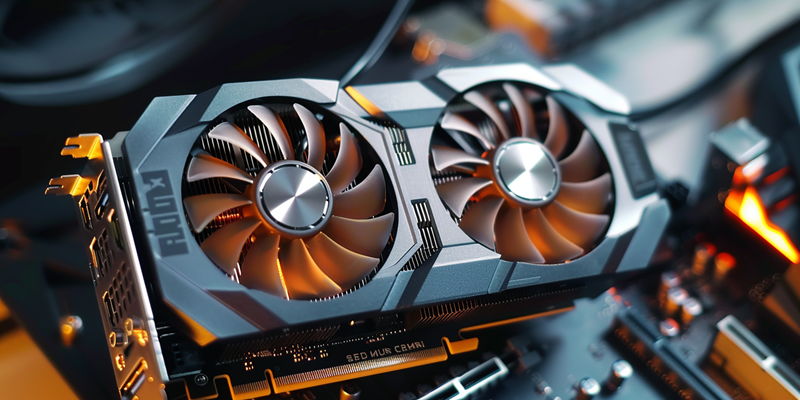
XFX is gearing up to make waves in the high-end graphics card market with their latest behemoth, the Phoenix Nirvana RX 7900 XTX. This card doesn’t just push the envelope—it practically reinvents it with its colossal 3.5-slot design, stretching 13 inches in length, 5.1 inches in width, and 2.8 inches in height. The Radeon RX 7900 XTX is already a powerhouse GPU, yet XFX has ambitiously surpassed AMD’s reference model in terms of size and cooling capability. The Phoenix Nirvana isn’t just about size, however; it’s an overclocking dream with a robust thermal solution that includes eight 6mm heat pipes and a vapor chamber engineered to effectively dissipate heat from both the GPU and the memory modules.
Taking Cooling to the Extreme
The Phoenix Nirvana showcases premium thermal pads designed by XFX to achieve superior heat conductivity, a vital feature for users seeking to maximize performance through overclocking. Although the card’s clock speed is pegged to mirror that of XFX’s Speedster Merc 319 model at 2615 MHz, the thermal headroom provided by its substantial cooling apparatus might allow enthusiasts to push the card’s performance boundaries further than out-of-the-box specifications. The emphasis on thermal management is further underscored by the card’s requirement for three PCIe power connectors, a jump from the usual two, highlighting its substantial power draw and the resulting heat output that needs to be managed. This indicates a necessity for at least an 850W power supply to ensure stability under load, reflecting XFX’s non-compromising approach to hardcore overclocking.
A Price Tag to Match the Performance
XFX is set to revolutionize the premium graphics card segment with their Phoenix Nirvana RX 7900 XTX. Far exceeding the dimensions of AMD’s reference model, the card boasts an imposing 3.5-slot, 13-inch length, and over 5 inches of width. It’s not just big for the sake of size; the Phoenix Nirvana is engineered for extreme overclocking, backed by a sophisticated cooling system. This system is comprised of eight hefty 6mm heat pipes along with a vapor chamber, all tailored to maintain optimal temperatures for the GPU and memory. The combination of raw size and advanced thermal management positions the Phoenix Nirvana as more than just a graphics card. It’s a testament to XFX’s commitment to pushing the boundaries of what gamers and professional users can expect in terms of performance and reliability. This card’s design reflects a meticulous approach towards satisfying the demands of the most intense computing tasks.