

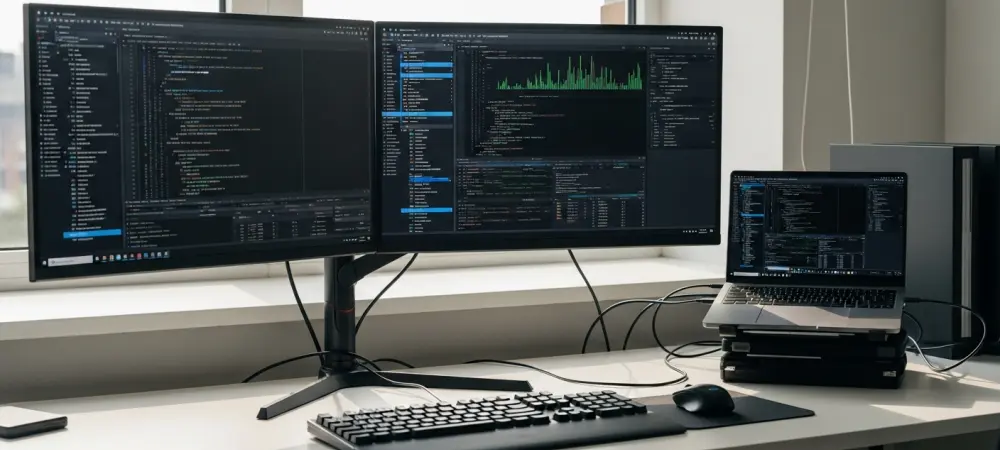
The prevalence of Microsoft Windows 11 within modern enterprise environments masks a persistent and deepening dissatisfaction among the high-level developers who maintain our digital infrastructure. While industry data shows that nearly half of the global developer population utilizes Windows as their primary operating system, this statistical dominance is frequently a byproduct of corporate necessity rather than a reflection of genuine user preference. For many software engineers, the operating system is viewed as a mandatory framework provided by IT departments rather than a carefully chosen instrument for creative output. This “sentiment gap” is increasingly evident as engineers gravitate toward alternative environments like macOS or various Linux distributions the moment they are granted the autonomy to select their own hardware. The institutional momentum that currently sustains Windows in the workplace relies heavily on legacy support and complex security policies, yet these very factors often create a friction-filled experience for the individuals who must navigate them daily. This divide between market share and user satisfaction indicates that Microsoft faces a significant challenge in rehabilitating its reputation among the power-user demographic. Many developers feel that the platform has shifted its focus away from being a streamlined workstation and toward being a consumer-oriented service hub. As long as the operating system is perceived as a compromise dictated by organizational mandates, the risk of a mass exodus to more developer-centric platforms remains high. Bridging this gap requires more than just incremental updates; it necessitates a fundamental reassessment of how a modern operating system should serve the needs of those who build software. The current environment is characterized by a tug-of-war between the rigid requirements of enterprise management and the flexible, high-performance needs of a modern coding workflow, leaving many professionals caught in the middle of a platform that often feels at odds with their objectives.
The Architectural Divide: Navigating POSIX and NT Differences
A fundamental source of frustration for modern developers stems from the lack of native Unix-based foundations within the Windows architecture. Most contemporary software development workflows, ranging from cloud-native applications to complex data science pipelines, are fundamentally built around POSIX standards, which macOS and Linux support with native efficiency. Because Windows 11 operates on the NT kernel, essential command-line tools, shell scripts, and package managers often require awkward translation layers or third-party ports to function correctly. This structural difference creates a constant layer of technical friction, as developers are frequently forced to troubleshoot environment-specific bugs that simply do not exist on Unix-like systems. Even with advanced emulators, the underlying file system behavior and process management models often lead to performance bottlenecks that hinder the rapid iteration cycles required in a fast-paced engineering environment. The sheer configuration overhead associated with Windows 11 remains a significant point of contention for those seeking a lean coding environment. Unlike streamlined Linux distributions where a developer has total authority over every installed package and service, Windows often arrives with a heavy payload of background processes and pre-installed consumer tools. These non-essential components not only consume valuable system resources but also introduce unpredictable variables that can interfere with sensitive development tasks. For a professional who requires a stable and reproducible environment, the lack of granular control over the core system services feels like a limitation rather than a feature. Developers value the ability to replicate a production environment on their local machine with minimal deviation, and the complex, often opaque nature of the Windows registry and system configurations makes achieving this level of parity a needlessly complicated endeavor.
Enterprise Control: The Conflict Between Security and Productivity
The very features that make Windows 11 an attractive choice for corporate IT departments often act as the primary obstacles for the engineers working within those organizations. Because the operating system is designed to be easily managed at scale, it is frequently subjected to aggressive security lockdowns and restrictive group policies that prevent developers from accessing the file system at a granular level or running unverified scripts. This “managed” experience is often perceived as a hindrance to the “tinkering” mindset that is essential for innovation and rapid problem-solving. When an engineer must wait for IT approval to install a library or modify a system path, the resulting delays can disrupt the flow of work and lead to a sense of professional stifling. In contrast, other platforms are often seen as offering a more permissive workspace that respects the expertise of the user, allowing for a deeper level of system interaction without constant bureaucratic interference.
Furthermore, the aesthetic and ergonomic evolution of Windows 11 has introduced a variety of distractions that detract from its utility as a professional workstation. The increasing integration of marketing-driven elements, such as persistent prompts to utilize Microsoft Edge or the frequent insertion of Bing-related content into the search interface, makes the system feel more like a consumer-grade product than a high-end tool. For individuals who spend eight to ten hours a day staring at a screen, a cohesive and distraction-free interface is not a luxury but a requirement for maintaining deep focus. The perceived “clutter” within the operating system creates a sense that the user is no longer in control of their own workspace, but is instead being funneled toward Microsoft’s own ecosystem of services. This lack of a professional, “quiet” environment drives many to seek the minimalist and predictable interfaces found in competing operating systems, where the focus remains strictly on the tasks at hand rather than on ecosystem upsells.
Strategic Evolution: Bridging the Divide with WSL and Specialization
The introduction and continued refinement of the Windows Subsystem for Linux (WSL) represents the most significant olive branch Microsoft has extended to the developer community in years. By allowing a full, native Linux environment to run directly alongside traditional Windows applications, the company has addressed many of the architectural compatibility issues that previously drove users toward other platforms. Paradoxically, the most praised aspect of Windows 11 among programmers is often the feature that allows them to bypass the Windows environment almost entirely. This success highlights a lingering truth: while the core operating system may still struggle to earn genuine loyalty, the ability to access Linux tools with near-native performance is keeping many developers on the platform. WSL has become a critical lifeline for Microsoft, providing a bridge that enables engineers to maintain enterprise compliance while still utilizing the POSIX-compliant tools necessary for modern cloud and web development.
Microsoft eventually recognized that the survival of its flagship platform depended on transforming it from a general-purpose consumer product into a high-performance workstation for specialists. By adopting a more modular approach during the transition into late 2026 and beyond, the development teams prioritized the removal of non-essential services that previously plagued system performance and stability. The company focused on streamlining the core kernel to better accommodate modern containerization and virtualization needs without the traditional overhead that once frustrated power users. Decision-makers also shifted their philosophy toward transparency, allowing for more granular user control over system updates and telemetry settings that had long been a major source of community contention. These tactical adjustments provided a roadmap for ensuring the platform remained relevant by treating the operating system as a focused tool rather than an advertising delivery vehicle. Looking ahead, the focus moved toward deeper integration with high-performance graphics and the .NET ecosystem, reinforcing the platform’s role as the premier choice for game development and enterprise-grade application building.