

Dominic Jainy is a seasoned IT professional with a deep mastery of artificial intelligence, machine learning, and the intricate hardware architectures that drive modern mobile technology. His work often bridges the gap between raw silicon performance and consumer-facing applications, making him a sought-after voice on the future of mobile imaging. In this conversation, we explore the shifting landscape of smartphone photography, focusing on how manufacturers are pushing the limits of sensor size, dynamic range, and focal length to redefine what a handheld camera can achieve.
The discussion delves into the technical evolution of dual-sensor systems, the implementation of cutting-edge HDR technologies, and the logistical shifts in the global supply chain. We also examine the trade-offs engineers face when balancing optical reach against image quality, as well as the specialized engineering required to bring advanced light-processing capabilities to telephoto lenses.
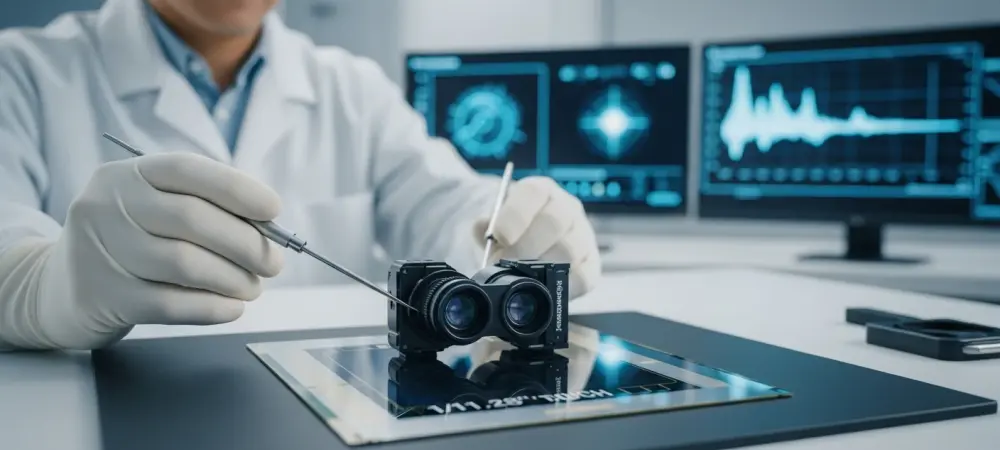
Dual 200-megapixel sensor systems with 1/1.28-inch dimensions are becoming more common in high-end mobile prototypes. How does this hardware shift impact internal cooling and processing speed, and what specific image quality metrics improve most significantly when moving away from traditional, smaller sensors?
Integrating dual 200-megapixel sensors with substantial 1/1.28-inch dimensions creates a massive data pipeline that puts immense pressure on the Image Signal Processor (ISP) and the device’s thermal management. When you capture a shot, the system must process hundreds of millions of pixels near-simultaneously, which generates significant heat in a very confined space, often requiring advanced vapor chambers or graphite cooling sheets to prevent throttling. Beyond the raw resolution, the most dramatic improvement is seen in the signal-to-noise ratio and light gathering capability, which far exceeds what smaller, traditional sensors could manage. You will notice a visible reduction in “mushy” textures in low light and a much more natural, film-like fall-off in highlights that gives photos a professional, high-fidelity aesthetic.
Third-generation LOFIC HDR technology is being integrated into mobile sensors to provide exceptional dynamic range. Could you explain the technical workflow for managing this data in real-time and how this hardware-level implementation differs from the software-heavy processing found in older flagship models?
Lateral Over-Flow Integration Capacitor, or LOFIC, is a game-changer because it addresses highlight clipping at the hardware level before the data even reaches the software stage. In traditional flagship models, HDR is often achieved by stitching multiple exposures together, which can lead to ghosting or a synthetic, “flat” look if the subject moves. With this third-generation technology, the sensor essentially has a “safety valve” for bright light, allowing it to store excess charge that would otherwise saturate the pixel. This means the real-time workflow is much more efficient, as the ISP receives a single, high-information frame with a massive dynamic range already baked in, resulting in shots where a bright sunset and a dark foreground coexist perfectly without the need for aggressive, artificial-looking software intervention.
Some manufacturers are shifting from a 115mm (5x) focal length toward an 85mm telephoto setup. What are the practical trade-offs for portrait photography versus long-range zoom, and how do engineers compensate for the loss of reach when choosing a slightly wider telephoto lens?
The move from a 115mm focal length down to an 85mm setup represents a strategic pivot toward the “golden” focal length for portraiture, which offers a more flattering perspective on human faces without the extreme compression of a 5x lens. While you do lose that extreme long-range reach for subjects very far away, the 85mm lens is much more versatile for everyday scenarios and usually features a wider aperture to let in more light. To compensate for the loss of physical reach, engineers are relying on those massive 200-megapixel sensors to provide high-quality digital cropping. By using the center of a high-resolution sensor, they can effectively recreate a 5x or even 10x zoom through “in-sensor” cropping that maintains more detail than traditional digital magnification.
Specialized optical components are increasingly sourced from regional makers like SmartSens rather than traditional global suppliers. What are the logistical benefits of this localized supply chain, and how do these partnerships help accelerate the development and testing of experimental camera prototypes?
The shift toward regional suppliers like SmartSens allows manufacturers to move much faster through the R&D cycle because the physical proximity facilitates tighter collaboration between the engineers designing the phone and those building the sensor. Instead of waiting weeks for international shipments or dealing with rigid global roadmaps, local teams can iterate on experimental prototypes in a matter of days, fine-tuning how the 1/1.28-inch sensors interact with custom optics. This localized ecosystem also creates a feedback loop where component makers can customize hardware specifically for one brand’s software requirements, which is why we see features like LOFIC appearing so rapidly in specific regional flagships. It essentially turns the supply chain into a laboratory where specialized hardware can be road-tested and refined before a global rollout.
Bringing advanced light-overflow integration technology to telephoto sensors presents unique engineering hurdles. What steps must be taken to fit these complex electronics into the cramped housing of a periscope lens, and how will this change the way users capture low-light distance shots?
Fitting high-end LOFIC circuitry into a periscope module is a massive headache because periscope lenses already use mirrors and prisms to fold light, leaving almost no room for the extra capacitors required for light-overflow management. Engineers have to move toward more vertically stacked sensor designs, where the logic board is layered directly beneath the pixels to save every possible millimeter of space within the 85mm or 115mm housing. Once perfected, this will fundamentally change low-light telephoto photography; currently, zooming in at night often results in grainy, dark images with blown-out streetlights. With this integration, you’ll be able to snap a distant building at night and see both the glowing neon signs and the textures of the dark brickwork with a clarity that was previously impossible for a zoom lens.
What is your forecast for the evolution of Leica-branded mobile photography?
I believe the future of the Leica partnership lies in the seamless blending of “calculated” photography and “authentic” optics, where the hardware increasingly mimics the physical characteristics of professional M-series lenses. We are moving away from the era where “Leica-branded” just meant a color filter; soon, the combination of dual 200MP sensors and localized hardware like SmartSens will allow these phones to replicate the specific bokeh and micro-contrast of high-end glass. By late 2026, we will likely see these advanced HDR and telephoto technologies move from experimental prototypes into every “Pro” and “Ultra” model, making the mobile camera indistinguishable from a dedicated professional tool for most enthusiasts. The goal is no longer just to take a clear photo, but to capture a specific “soul” or atmosphere that matches the heritage of the Leica name.