

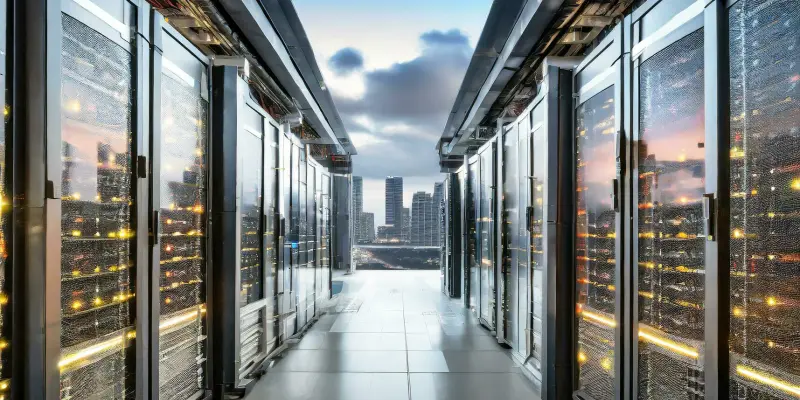
As the artificial intelligence industry continues to rise, there is growing concern over the future impact of President Trump’s tariffs on the expansion and sustainability of AI data centers. These facilities are the backbone of services such as ChatGPT and Gemini, requiring substantial infrastructure investment. The initial exemption of semiconductors from tariffs provided some relief to the industry. However, the AI data centers still rely heavily on various other components that are subject to tariffs, raising questions about how these additional costs will affect the industry’s growth.
The Complexity of Data Center Components
The Vital Non-Semiconductor Components
Data centers are far more complex than just their semiconductor chips. They require an extensive array of electronic and metal hardware, from server hardware to cooling infrastructure and power equipment. Networking devices, construction materials, and battery systems also play critical roles and often come from countries affected by tariffs. According to Gil Luria of D.A. Davidson & Co., these non-semiconductor elements represent a significant portion of data center costs—estimated to be between one-quarter and one-third. This complexity means that tariffs on these components can lead to considerable increases in project costs, potentially stalling developments and expansions of AI data centers.
The impact of tariffs extends beyond the direct costs of components; it also injects uncertainty into the financial planning of data center projects. Companies involved in constructing and expanding data centers must now factor in unpredictable cost fluctuations, complicating budgeting and financing efforts. This difficulty is particularly acute for large-scale projects that require long-term investments and substantial capital outlays. As these costs rise, so does the financial strain on companies, possibly leading to delays or cancellations of planned projects. This uncertainty is a significant concern for the AI industry’s future, as reliable data center infrastructure is crucial for its continued innovation.
The Stargate Mega-Data Center Example
Scott Bickley from Info-Tech Research Group highlights how ongoing tariff uncertainties could freeze AI data center investments. He references the ambitious Stargate mega-data center project, which had seen substantial initial investment but faces potential stalling due to increased construction costs driven by tariffs. This example underscores the broader industry-wide challenges posed by tariffs. Projects like Stargate require significant financial commitments and precise cost estimations, both of which are jeopardized by the unpredictability of tariff policies. Furthermore, the ripple effects of these challenges are not limited to any one project. The entire sector could see slowed growth and reduced innovation if developers and investors become cautious due to tariff-induced financial risks. These potential stalls could have a cascading effect, impacting the supply chain and delaying technological advancements. This situation ultimately affects the AI services and applications that depend on robust data center infrastructure. Hence, Bickley’s insights underline the pressing need for stable and predictable economic policies to foster continued growth in AI data centers.
The Role of Major Tech Companies
Insulation Through Strategic Importance
Despite concerns, some industry experts argue that the unique importance of AI data centers may shield them somewhat from the full impact of tariffs. Daniel Newman from The Futurum Group suggests that AI data centers might remain somewhat insulated due to their critical role in the strategies of tech giants. Major companies like Google, Microsoft, and Amazon rely heavily on these data centers to support their AI initiatives and maintain their competitive edge in the market. This strategic significance could encourage these firms to continue investing in AI infrastructure, even in the face of higher costs. Newman also notes that these tech giants might even increase their investment in AI data centers to leverage AI’s potential deflationary impact on their overall operations. The efficiencies gained through advanced AI technologies could offset some of the increased costs associated with tariffs. This perspective provides a more optimistic look at the potential resilience of the AI data center industry. However, it remains a cautious optimism, as sustained investment hinges on these companies’ ability to absorb and mitigate the additional costs imposed by tariffs.
Balancing Caution with Strategic Goals
While some optimism exists, the broader sentiment in the industry leans towards caution. The unpredictability of tariff policies and their implications on cost structure compel companies to balance caution with their long-term strategic goals carefully. This balancing act involves analyzing the risk-reward ratio of continued investment in AI infrastructure amidst an uncertain economic environment. Major tech companies may adjust their investment timelines or seek alternative solutions, such as diversifying their supply chains or investing in domestic manufacturing capacities to mitigate risks.
Additionally, there is a potential for increased pressure on policymakers to provide clearer guidance and more stable tariff policies. The tech industry, given its significant contribution to the economy, might influence policy discussions, advocating for a more predictable regulatory environment that supports sustained innovation and growth. Such advocacy could result in policy adjustments that alleviate the financial burdens on AI data centers, fostering a more conducive environment for their expansion.
Strategic Outlook for AI Infrastructure Investment
Navigating Uncertainty and Financial Strain
The landscape for AI data center investment is marked by both opportunities and challenges. While semiconductors currently enjoy tariff exemptions, the broader ecosystem of AI infrastructure faces substantial risks due to tariffs on various other critical components. This intricate web of dependencies underscores the importance of navigating uncertainty and financial strain effectively. Companies that can adapt to these challenges might continue thriving, whereas those unable to manage the financial intricacies could face significant hurdles. Organizations must develop robust strategies to navigate this uncertain terrain. These strategies could include diversifying suppliers, renegotiating contracts, or investing in innovative technologies to reduce dependence on tariff-impacted components. By fostering a flexible and adaptive approach, AI companies can better manage the risks associated with tariffs while continuing to pursue their growth objectives. The role of effective leadership and strategic planning becomes paramount in steering AI data center projects through these rocky economic conditions.
Cautious Optimism Amidst Policy Unpredictability
As the artificial intelligence industry continues its upward trajectory, concerns are mounting about how President Trump’s tariffs will impact the expansion and sustainability of AI data centers. These facilities are essential for providing services like ChatGPT and Gemini and require significant investments in infrastructure. Initially, the industry benefited from an exemption of semiconductors from these tariffs, offering some respite. However, the AI data centers depend on a variety of other components still subject to tariffs. This situation raises critical questions about the financial strain these added costs will impose on the industry’s growth. With AI’s increasing role in various sectors, any hindrance in its development could have widespread effects, potentially slowing down technological advancements and innovation. The industry faces a strategic dilemmhow to balance the burgeoning costs with the need for continuous growth and innovation in a competitive global landscape.