

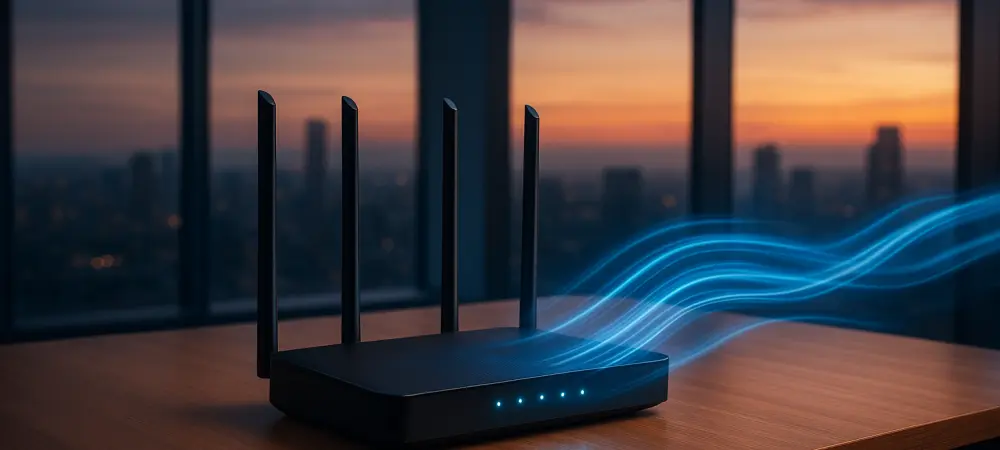
By focusing on distributed resource allocation, the Archer 8 Ultra maintains a steady flow of data even when multiple high-bandwidth devices are active at the same time. This shift signals a fundamental change in how networking giants approach the new IEEE 802.11bn standard, known as Wi-Fi 8. While previous generations like Wi-Fi 7 emphasized massive 320 MHz channels to push speed boundaries, the current focus is on Ultra-High Reliability. This means the hardware is designed to mitigate the interference that typically plagues dense urban environments. TP-Link is positioning its latest models to act as intelligent coordinators, ensuring that every connected unit receives a predictable and jitter-free signal regardless of the surrounding network noise.
Refined Coordination: The Core of Wireless Reliability
At the heart of this transition lies Coordinated Spatial Reuse (CoSR), a sophisticated technology that allows neighboring access points to communicate and synchronize their transmissions. In the past, overlapping signals from a neighbor’s router would create packet loss and latency, forcing devices to wait for a clear airwave before sending data. With the implementation of these new protocols, TP-Link systems can now adjust their power levels and transmission timings in real-time to work around nearby networks. This level of synchronization effectively turns chaotic interference into a manageable environment where data packets are less likely to collide. The result is a substantial improvement in the “worst-case scenario” performance, which is often where users notice the most frustration. By prioritizing this coordinated approach, the network maintains high efficiency in high-density areas where traditional speed metrics usually collapse under heavy traffic.
Complementing spatial reuse is the advancement of coordinated beamforming, which allows the router to shape its signal with precision toward specific active clients. Unlike older methods that often sprayed wireless energy in broad directions, the Archer 8 series utilizes dense antenna arrays to focus energy precisely where it is needed most. This minimizes the signal leakage that typically causes interference for other devices in the same home or in adjacent apartments. Furthermore, the integration of advanced sub-channel selective transmission ensures that even if a portion of the frequency band is blocked by noise, the router can instantly re-route traffic through cleaner slices of the spectrum. This internal logic operates within milliseconds, creating a seamless experience where the end-user never perceives the complex recalculations happening behind the scenes. This focus on surgical signal delivery ensures that the available bandwidth is utilized to its maximum potential without sacrificing link stability.
Strategic Implementation: Adapting to Modern Connectivity Demands
The evolution of smart home ecosystems has necessitated a move away from simple speed toward a more robust management of diverse device types. Modern households now balance high-demand hardware like virtual reality headsets alongside low-power sensors that require constant, low-latency check-ins. TP-Link has addressed this by enhancing the Multi-Link Operation (MLO) features, refining how data is split across the 2.4 GHz, 5 GHz, and 6 GHz bands. By treating these bands as a single, unified resource, the system can dynamically shift a streaming 8K video feed to a different frequency if it detects a momentary dip in signal quality on the primary path. This prevents the “buffering” circles that have long been the bane of wireless networking. Additionally, the new hardware incorporates dedicated AI processors specifically tasked with predicting traffic patterns and pre-allocating airtime. This proactive management style ensures that high-priority packets are never stuck in a queue.
In terms of moving forward, the transition toward Wi-Fi 8 standards offered a clear path for users to audit their existing infrastructure and plan for more resilient environments. It was recommended that early adopters prioritize the placement of nodes in a mesh configuration to fully leverage the coordinated features inherent in the new protocol. Organizations and power users found success by transitioning legacy devices to isolated guest networks, thereby allowing the primary Wi-Fi 8 channels to operate without the overhead of older, less efficient communication methods. The focus eventually shifted from chasing higher theoretical speeds to achieving a “wire-like” experience where the wireless medium was no longer considered a point of failure. By investing in hardware that emphasized reliability, users secured a networking foundation that remained robust even as the number of signals grew. This strategic shift in technology facilitated a more predictable digital landscape where the quality of the wireless connection matched the speed.