

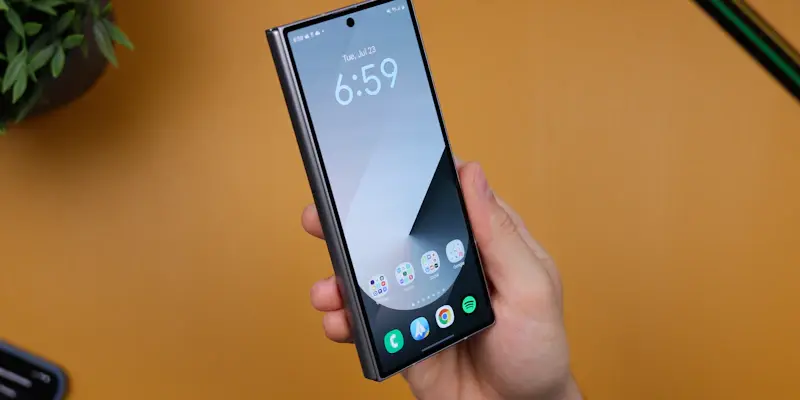
Anticipation around the Samsung Galaxy Z Fold7 is swirling as tech enthusiasts speculate if it will truly outperform its competitors, the Oppo Find N5 and the OnePlus Open 2. The stage is set for a showdown between these foldable devices, with Samsung making bold moves with its latest addition. Rumors indicate that the Galaxy Z Fold7 will leverage a more powerful Snapdragon 8 Elite for Galaxy chipset (SM8750-AC), setting a high bar for performance. This particular chip, boasting higher clock speeds and an additional performance CPU core, is expected to outshine the slower SM8750-3-AB variant used by Oppo and OnePlus.
According to PandaFlashPro, the Galaxy Z Fold7’s enhanced chipset is poised to provide substantial power gains over the Galaxy Z Fold6 and its competitors. Qualcomm’s strategy of offering a slower Snapdragon 8 Elite variant to some OEMs for their next-gen foldables has allowed Oppo and OnePlus to utilize this less potent chip in their forthcoming devices. The SM8750-3-AB variant, while still powerful, lacks one Oryon Gen 2 Performance CPU core found in the SM8750-AB and SM8750-AC chipsets, suggesting a deliberate tier of performance differentiation.
Samsung’s strategic decision to incorporate the full-power Snapdragon 8 Elite for Galaxy in the Z Fold7, with overclocked CPU and GPU cores, promises to deliver a notable performance edge. While early benchmarks have not shown the Galaxy Z Fold7 showcasing significant outperformance in terms of raw computational power, the introduction of an enhanced vapor chamber cooling system is likely to play a crucial role in managing heat dissipation efficiently. This cooling solution could be a game-changer, ensuring that the device maintains optimal performance during intensive tasks without succumbing to thermal throttling.
Beyond the technical prowess, the Galaxy Z Fold7 is expected to adopt design cues from the Galaxy Z Fold Special Edition, combining these elements with additional features such as pen support. This amalgamation of design and functionality underscores Samsung’s commitment to refining the user experience and reinforcing the appeal of its foldable smartphone lineup. The competition remains fierce, however, with Oppo and OnePlus set to launch their devices later this month, putting their own innovations to the test.
The stakes are high as consumers eagerly await these release dates, and the overarching question remains: Will the Galaxy Z Fold7’s upgraded performance and cooling capabilities be substantial enough to make it the superior option? The answer lies in real-world usage and how these devices perform under various conditions. As the technology landscape continually evolves, foldable devices are becoming a crucial battleground for brands vying for market dominance.
In conclusion, the Samsung Galaxy Z Fold7 holds promise with its powerful Snapdragon 8 Elite for Galaxy chipset and advanced cooling system. It has the potential to outperform the Oppo Find N5 and OnePlus Open 2 in specific scenarios. However, the true test will be in the hands of users, as they push these devices to their limits and determine which one truly stands out in everyday performance and usability.