

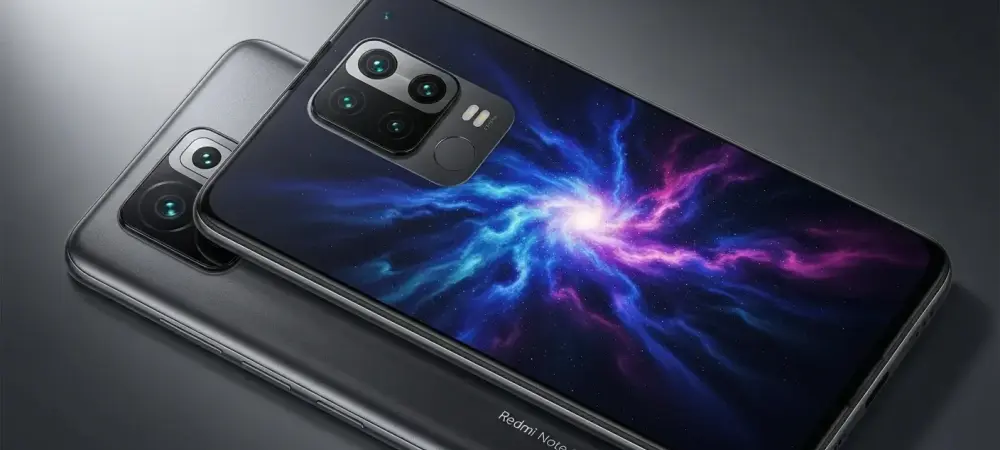
The smartphone industry has long been stagnant around the 5,000mAh battery standard, with incremental improvements often overshadowed by power-hungry processors and high-refresh-rate screens. This roundup examines how recent engineering breakthroughs are finally addressing the persistent battery anxiety felt by power users. Industry analysts suggest that a shift toward nearly double the standard capacity signals a transition from phones as mere tools to primary energy hubs. By gathering insights from hardware experts and market researchers, the following sections explore the feasibility and impact of this massive power leap.
Breaking the 5,000mAh Ceiling: Why the Note 17 Pro’s Massive Power Leap Matters Now
Market observers note that the arrival of a 9,000mAh capacity shatters the long-standing hardware ceiling that has limited mobile endurance for years. This evolution is seen as a necessary response to the increasing power demands of high-performance chips and always-on connectivity.
Technological researchers suggest that such a significant capacity increase forces a conversation about the utility of modern handsets. Instead of just surviving a single day, devices are now expected to provide multi-day reliability for users who are moving away from traditional office environments.
The Engineering Feat of High-Density Cells and the 67W Charging Equilibrium
Technical experts often debate whether high-density battery chemistry can maintain a slim profile without sacrificing thermal safety. The use of advanced materials allows for a massive reservoir of power while keeping the chassis manageable for daily ergonomic use.
While some enthusiasts demand triple-digit charging speeds, engineers argue that a 67W equilibrium is safer for a 9,000mAh cell. This approach prioritizes chemical stability and heat mitigation, ensuring that the battery remains efficient over hundreds of cycles without degrading prematurely.
Turning Smartphones into Mobile Power Stations: The Utility of 22.5W Reverse Charging
Reviewers highlight the inclusion of 22.5W wired reverse charging as a transformative feature that effectively turns the smartphone into a dedicated power bank. This capability allows the primary device to support an entire ecosystem of accessories, such as wireless earbuds and secondary handsets.
Gadget enthusiasts recognize that this shift reflects a broader trend where the smartphone acts as a central energy source. Competitors are now forced to reconsider whether battery capacity should be treated as a private resource or a shared utility within a user’s tech kit.
Beyond Capacity: How a Five-Year Health Guarantee Disrupts the Planned Obsolescence Narrative
Environmental advocates have praised the introduction of a five-year battery health guarantee as a direct strike against planned obsolescence. By offering free replacements if capacity drops below eighty percent, the manufacturer shifts the industry focus toward long-term value.
Financial analysts suggest that this policy sets a global precedent for hardware durability and after-sales support. It highlights a growing consumer demand for sustainable performance, marking a pivot away from flashy, short-lived gimmicks toward devices that retain their utility for half a decade.
Balancing Extreme Visuals with Power Efficiency: The 3,500-Nit OLED Symbiosis
Display specialists point out that a 9,000mAh foundation is the only way to sustain a flagship-level OLED screen reaching 3,500 nits. Usually, such high luminance would drain a standard battery within hours, but the massive capacity bridges the gap between performance and endurance.
Optometrists also appreciate the integration of specialized low-light modes that drop to a mere 1 nit for night-time viewing. These advancements prove that extreme battery life allows for better eye protection technology without compromising the user’s ability to stay away from a wall outlet.
Navigating the Era of Hyper-Endurance: Strategic Takeaways for Consumers and the Industry
Tech consultants advise buyers to prioritize devices that offer a balance of capacity and health guarantees over raw charging speed. This shift in priority ensures that the hardware remains functional and reliable for years, rather than just offering a quick burst of energy.
Industry strategists emphasize that software optimization must now evolve to manage these massive energy reserves more efficiently. Ensuring a seamless user experience requires more than just a large number on a spec sheet; it requires intelligent power distribution across all background tasks.
Setting a New Benchmark: The Global Implications of Xiaomi’s Battery Revolution
Industry reports concluded that the successful integration of a 9,000mAh battery redefined consumer expectations for mobile hardware. Analysts observed that the market shifted its focus from minor performance gains to significant improvements in real-world longevity and hardware durability.
Future considerations suggested that this breakthrough triggered a hardware arms race centered on multi-day endurance and sustainable power management. Ultimately, these developments prompted a broader abandonment of the 5,000mAh standard in favor of a more reliable mobile future.