

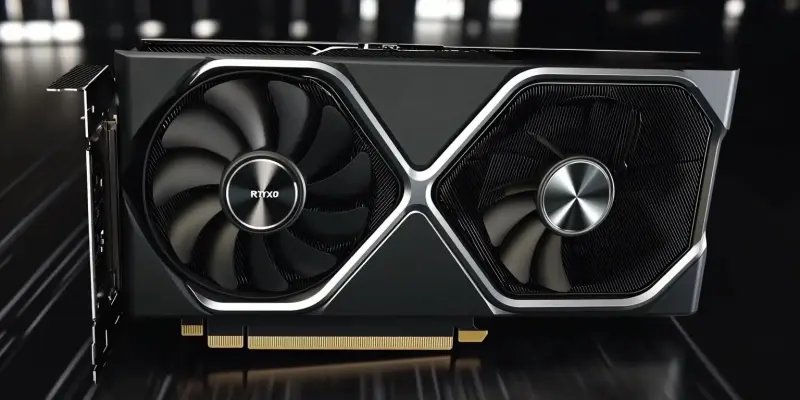
The gaming community and tech enthusiasts alike have found themselves eagerly anticipating the release of NVIDIA’s latest offering in the budget GPU market: the GeForce RTX 5060. With NVIDIA’s history of pushing the envelope in graphics card innovations, this upcoming addition to the GeForce RTX 50 series is poised to make waves. Leaked specifications have painted a picture of what could be the next landmark in affordable, high-performance graphics solutions designed to entice gamers who crave powerful hardware without the premium price tag.
A Closer Look at the GeForce RTX 5060
The Core Specifications Revealed
According to recent leaks, the NVIDIA GeForce RTX 5060 will be equipped with the GB206-250-A1 GPU die, which significantly boosts performance metrics compared to previous generations. The card boasts 3840 CUDA cores—an increase of 25% compared to its predecessor, the RTX 4060. This substantial bump in processing power is complemented by 8GB of GDDR7 VRAM, enhanced by a 128-bit bus. Although the VRAM capacity remains consistent with the RTX 4060, the increased memory speed and bandwidth promise to deliver a smoother and more efficient gaming experience. However, as with all upgrades, there are trade-offs to consider.
The power draw of the RTX 5060 stands at 150W, which is 35W higher than the RTX 4060. This increase in power consumption may raise eyebrows among those concerned with energy efficiency but is justified by the advances in core performance and memory enhancements. For gamers looking for a significant boost in their gaming setup without stepping up to higher, more expensive models, the RTX 5060 offers an enticing option. Industry analysts have noted that while 25% more CUDA cores cannot be overlooked, the 8GB VRAM may still present limitations for those engaging in more graphics-intensive activities or future-proofing their systems for upcoming titles.
Pricing and Market Positioning
With a tentative launch date set for April 2025, expectations surrounding the GeForce RTX 5060’s price point remain speculative, but it is widely anticipated to be around the $299 mark. This price positioning keeps in line with previous releases, making the RTX 5060 an attractive option for budget-conscious consumers seeking competitive performance. Historical trends suggest that NVIDIA aims to strike a balance between affordability and cutting-edge technology, thereby maintaining its dominance in the budget gaming GPU segment.
Despite its promising specifications and performance capabilities, some concerns have surfaced within the gaming community. Critics argue that the inclusion of only 8GB VRAM may hinder the card’s longevity in the ever-evolving landscape of gaming requirements. Modern gaming titles continue to demand higher memory capacities, and while the RTX 5060’s enhancements in other areas are substantial, the VRAM constraint could be a potential bottleneck. It remains to be seen if 8GB will suffice as gaming technology progresses, but for now, the RTX 5060 stands to offer remarkable value for most current titles.
The Evolution from RTX 4060 to RTX 5060
Incremental Advancements in Performance
Compared to the previous RTX 4060, the RTX 5060 delivers notable advancements that are instrumental in its appeal to mid-tier gamers. The jump to 3840 CUDA cores signifies a more robust computational capability, promising improved frame rates and overall smoother gameplay. Additionally, the adoption of GDDR7 VRAM over the older GDDR6 ensures that the card can handle higher data transfer rates, translating to better performance in graphically demanding situations.
One of the most significant upgrades comes in the form of memory speed and bandwidth improvements. While the RTX 4060 capped the bandwidth, the RTX 5060’s increased capabilities enable faster access to larger sets of data, thus reducing latency and enhancing game responsiveness. This tweak is crucial for gamers seeking seamless transitions and minimal load times, aspects that can make or break gaming experiences in fast-paced scenarios. These incremental but impactful improvements underscore NVIDIA’s strategy of providing advanced technology without straying away from budget-friendly prices.
Addressing Power Efficiency and Consumption
However, the increase in the number of CUDA cores and memory enhancements comes at the cost of higher power consumption. The RTX 5060’s 150W power draw is noticeably higher than its predecessor, raising questions about energy efficiency. For some, this could translate to the need for an upgraded power supply unit (PSU) to accommodate the new card, adding to the overall cost. Despite this, the promise of enhanced performance might be well worth the investment for many gamers.
Power efficiency remains a critical area of focus for NVIDIA. As gamers increasingly prioritize eco-friendliness alongside performance, the pressure mounts for hardware manufacturers to balance these demands effectively. Although the RTX 5060’s higher power consumption might initially seem like a step back, it serves as a reminder of the intricate balance manufacturers must strike. Delivering high-performance hardware within the constraints of power and cost is no easy task, and the RTX 5060 exemplifies these challenges and achievements.
Future Prospects and Industry Implications
The Long-Term Relevance of the RTX 5060
Looking to the future, the NVIDIA GeForce RTX 5060 must address the ongoing challenge of staying relevant amidst rapidly evolving gaming technologies. The card’s solid foundation sets a promising precedent, but industry experts and gamers alike remain cautious. The VRAM capacity, in particular, will be a topic of continued scrutiny, as newer games and applications are expected to push the boundaries of memory requirements. Continued support in the form of driver updates and software optimizations will be critical in ensuring the RTX 5060 remains viable for as long as possible.
From a market perspective, NVIDIA’s positioning of the RTX 5060 will likely influence competitors’ strategies. With an affordable yet powerful option available in the budget segment, rival companies might need to step up their game to maintain market share. This competitive dynamic benefits consumers, who can expect ongoing innovations and more choices at various price points. The RTX 5060’s entry into the market could therefore stimulate further advancements in technology across the board.
Conclusion and Final Thoughts
The gaming community and tech enthusiasts alike are abuzz with anticipation for NVIDIA’s latest budget GPU: the GeForce RTX 5060. Known for consistently pushing the boundaries of graphics card innovation, NVIDIA is expected to make significant waves with this new addition to the GeForce RTX 50 series. Leaked specifications suggest that this GPU will be a game-changer, aiming to deliver high-performance graphics at an affordable price. Gamers who seek powerful hardware without breaking the bank have a lot to look forward to, as the GeForce RTX 5060 promises to balance performance and cost effectively.
NVIDIA has a strong reputation for offering top-notch technology, and many are expecting this GPU to continue that legacy. The RTX 5060 is rumored to feature cutting-edge architecture, enhanced processing power, and advanced cooling solutions, ensuring that it meets the demands of modern gaming. With increasing pressure from competitors, NVIDIA’s GeForce RTX 5060 is anticipated to set new standards in the budget GPU market, making it a highly awaited product for gamers and tech enthusiasts.