

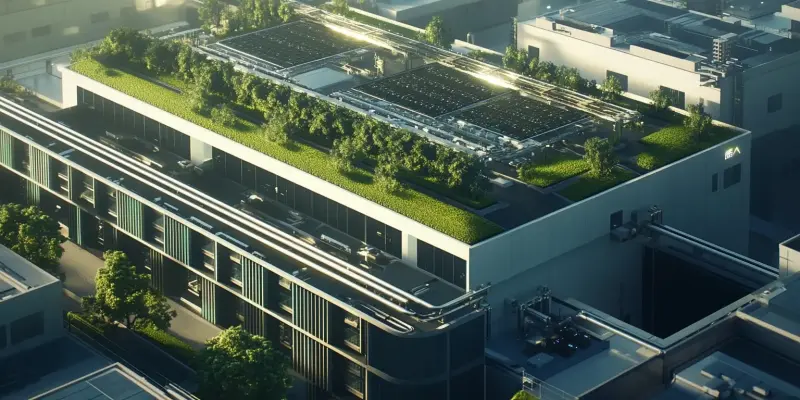
Deep in the heart of Texas, a groundbreaking venture is set to take shape, potentially transforming how data centers operate by merging advanced artificial intelligence with sustainable energy solutions. Sharon AI and New Era Helium have acquired a 200-acre site near Odessa, Texas, aiming to develop a 250MW AI/HPC data center. This ambitious project, which benefits from proximity to fiber optic networks, natural gas transmission lines, and CO2 pipeline infrastructure, represents a bold step toward integrating high-performance computing with eco-friendly practices. The site will utilize natural gas supplied by New Era Helium, and the first phase is expected to go live by late 2026, signaling a significant milestone in sustainable technology infrastructure.
The initiative by Sharon AI and New Era Helium exemplifies the growing trend of tech companies seeking innovative ways to minimize their environmental footprint while maintaining high operational efficiency. The selected site in Ector County offers strategic advantages, including access to critical infrastructure that supports carbon capture utilization and storage (CCUS) through enhanced oil recovery. This behind-the-meter power strategy leverages existing resources, thereby enhancing energy efficiency and aligning with regional development goals. The joint venture, named Texas Critical Data Centers (TCDC), plans to finalize a natural gas supply contract with New Era Helium by Q2 2025, ensuring a reliable energy source for the data center.
The Partnership and Its Vision
Sharon AI, known for its focus on AI cloud GPU compute infrastructure, collaborates with New Era Helium to harness the latter’s expertise in natural gas and helium extraction. This collaboration aims to create a sophisticated data center capable of supporting intensive AI and high-performance computing tasks. Sharon AI’s deployment of Nvidia and AMD GPUs at Equinix and NextDC data centers, along with custom Modular Data Centers (MDCs), underscores its commitment to top-tier computing infrastructure. Initially, the partners had considered New Mexico’s Pecos Slope Field but ultimately chose Texas for its higher capacity and superior infrastructure accessibility.
Russell Tippin, president of Grow Odessa, emphasized the project’s compatibility with Ector County’s net-zero energy ambitions, acknowledging the dual benefits of technological advancement and environmental sustainability. The data center’s operational strategy includes CO2 injection for enhanced oil recovery, a method that captures CO2 underground and aids in oil extraction. Although this technique’s sustainability is sometimes debated due to the CO2 emissions from the extracted oil, it represents a step forward in merging traditional energy practices with modern environmental considerations. These efforts highlight the project’s potential to set new standards for green energy integration in data center operations.
Strategic Implementation and Impact
The data center project by Sharon AI and New Era Helium highlights the advantages of a behind-the-meter power approach, utilizing existing natural gas resources to drive efficiency and reduce environmental impact. As the two companies push forward with their ambitious timeline, which includes launching the first phase by 2026, they plan to redefine the data center industry’s relationship with energy consumption. The integration of carbon capture technologies with advanced computing infrastructure underscores a forward-thinking approach that could serve as a model for future developments. The collaboration has garnered attention for its potential to harmonize regional economic development with environmental stewardship.
Meanwhile, New Era Helium’s dual extraction of helium in conjunction with natural gas adds another layer of innovation to the project. As the company, which went public last year, continues to expand its operations, it brings valuable resources and expertise to the venture. Sharon AI’s recent business combination with Roth CH Acquisition Co. SPAC further solidifies its position as a leading platform in AI and high-performance computing infrastructure. The data center will stand as a testament to the companies’ shared vision of integrating advanced technology with sustainable practices, setting a precedent for similar initiatives in the future.
Pioneering a New Standard in Data Center Operations
In the heart of Texas, a revolutionary project is set to redefine data center operations by combining cutting-edge artificial intelligence with sustainable energy. Sharon AI and New Era Helium have secured a 200-acre site near Odessa, Texas, to build a 250MW AI/HPC data center. This ambitious endeavor will benefit from its proximity to fiber optic networks, natural gas transmission lines, and CO2 pipelines, aiming to seamlessly integrate high-performance computing with eco-friendly initiatives. Using natural gas from New Era Helium, the project’s initial phase is expected to be operational by late 2026, marking a significant leap in sustainable tech infrastructure.
This venture reflects the growing trend among tech companies to reduce their environmental impact while maintaining high efficiency. The chosen site in Ector County offers strategic benefits, such as access to crucial infrastructure supporting carbon capture, utilization, and storage (CCUS) via enhanced oil recovery. This efficient power strategy uses available resources, aligning with regional development goals. Texas Critical Data Centers (TCDC), the joint venture’s name, aims to finalize a natural gas supply agreement with New Era Helium by Q2 2025, securing a dependable energy source for the data center.