

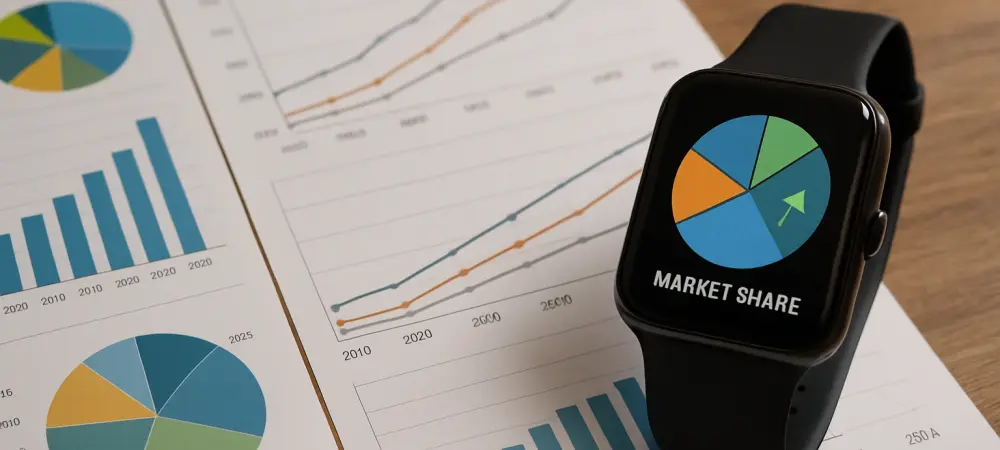
Analyzing the currents shaping the global smartwatch market unveils a fascinating blend of declines and prospective growth. The first quarter experienced its fifth consecutive year-on-year drop in shipments, with Apple and Samsung at the center of attention. Meanwhile, divergent trends emerge across regions, notably significant growth in China. This forecast seeks to unravel these dynamics, exploring the potential pathways to recovery and sustained industry growth amid evolving consumer preferences and technological innovations.
Market Dynamics: Evaluating Declines and Regional Contrasts
The smartwatch market displays a complex landscape in which declining shipments coexist with pockets of growth. For instance, Apple’s shipments continue to dip, yet the company maintains a substantial global market share thanks largely to its loyal iOS user base. Conversely, China recorded a stellar 37 percent growth, attributed to the burgeoning demand for children’s smartwatches from brands like Huawei, Imoo, and Xiaomi. This localized success highlights cost-effective strategies and the nuanced consumer needs driving regional variations in market dynamics.
Shifting Preferences: A Move Toward Premium Offerings
Consumer behavior is revealing an increasing inclination toward higher-priced smartwatches that offer cutting-edge health and fitness features. Models within the $100–$200 range have witnessed a 21 percent uptick in shipments, contrasting sharply with a 17 percent drop in the under-$100 category. This trend signifies a broader shift towards viewing smartwatches as lifestyle-enabling devices rather than simple gadgets, presenting opportunities and risks for industry players looking to enhance their premium offerings to capture sustained consumer interest.
Innovations and Regional Momentum: Defining the Path Forward
The smartwatch landscape is evolving at a brisk pace with innovations like AI integration and medical-grade sensors poised to redefine standards. Another intriguing trend is the global rise of children’s smartwatches, particularly notable in North America and Europe as parents seek alternatives to smartphones for their kids. This increasing acceptance reflects shifting values in technology use, urging brands to adapt their strategies to align with regional demands. Undoubtedly, understanding these nuances is pivotal to unlocking new avenues for growth and market engagement.
Projected Outcomes: Forecasting an Industry Reset
Looking ahead, projections anticipate modest recovery in the global smartwatch market, driven by advancements such as enhanced health sensors and expanded ecosystem integration. These technological strides, coupled with prospective regulatory changes like medical certifications, are set to augment smartwatch utility beyond mere lifestyle devices. This phase of transformation is expected to catalyze a shift in consumer preferences, aiding smartwatches to capture attention as valuable, multifunctional tools and possibly propel the industry toward new growth peaks.
Reflecting on the Findings and Strategic Solutions
Concluding this analysis, the smartwatch industry must embrace emerging trends by crafting innovative products that address evolving user expectations. Companies aware of market demands for advanced features and robust value propositions are positioned to thrive amid recovery. With proactive strategies that incorporate technological advances and cater to regional disparities, industry leaders can navigate challenges effectively, fostering a dynamic market ready to rebound and capitalize on fresh growth opportunities.