

The High-Stakes Frontier of Extraterrestrial Computation
The rapid expansion of artificial intelligence is currently pushing terrestrial power grids to their absolute breaking point, forcing tech giants to look beyond the atmosphere for sustainable solutions. Google’s “Project Suncatcher” represents a radical departure from traditional infrastructure strategy, moving beyond land-based server farms toward the vacuum of space. This initiative explores the feasibility of deploying AI data centers into Earth’s orbit, utilizing solar-powered satellites equipped with proprietary Tensor Processing Units (TPUs). By examining the intersection of aerospace engineering and high-performance computing, this analysis explores how orbital networks could solve the energy crisis facing modern AI. This investigation delves into the economic thresholds, technical hurdles, and the competitive landscape that will determine if the future of intelligence lies among the stars.
From Silicon Valleys to Solar Orbits: The Evolution of Data Infrastructure
Historically, data centers have been tethered to regions with abundant water for cooling and stable power grids. However, the explosive growth of Generative AI has strained these resources, leading to a search for more sustainable and scalable alternatives. In the recent past, the industry shifted toward “hyperscale” facilities and underwater experiments, but the fundamental constraint remained: Earth’s atmosphere and the day-night cycle. The move toward orbital infrastructure is the logical next step in this evolution. It builds upon the success of satellite constellations like Starlink, which proved that global connectivity could be managed from Low Earth Orbit (LEO). Understanding this background is vital because it highlights that the shift to space is a pragmatic response to the looming energy and land-use bottlenecks on the ground.
Navigating the Physical and Economic Frontiers of Space-Based AI
The Energy Advantage: Navigating the Launch Cost Bottleneck
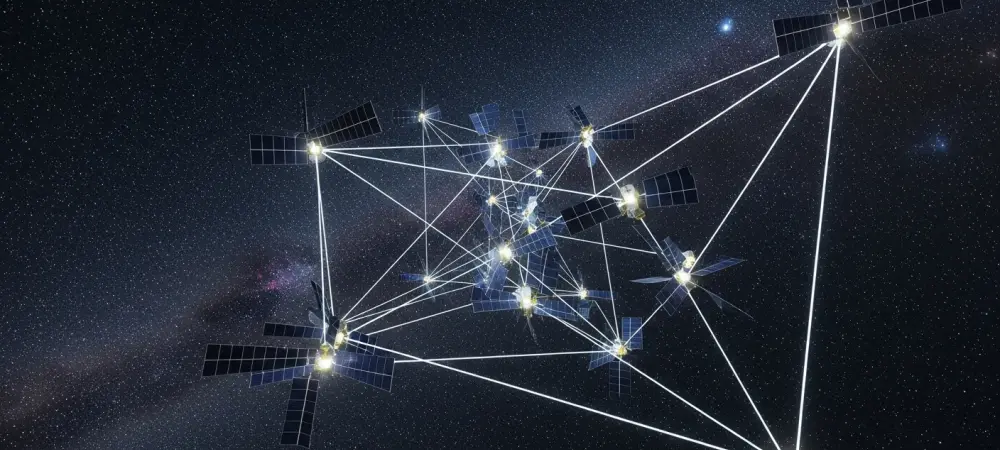
The most compelling argument for orbital data centers is the pursuit of consistent, high-intensity solar energy. Unlike terrestrial facilities, which grapple with weather patterns and atmospheric interference, orbital processors can bask in near-constant sunlight. Google’s research suggests that these satellites, linked by free-space optical lasers, could create a seamless high-speed network. However, the economic viability of this vision is tethered to the cost-per-kilogram of reaching orbit. To compete with the annual power costs of U.S. data centers—ranging from $570 to $3,000 per kilowatt—launch expenses must plummet to roughly $200 per kilogram. This creates a high-stakes race where the success of AI is directly linked to the efficiency of reusable rocket technology.
Engineering Resilience: Overcoming the Vacuum of Space
Transitioning hardware from a climate-controlled room to the harsh environment of LEO introduces unprecedented technical challenges. Without an atmosphere to dissipate heat through convection, thermal management becomes a complex game of radiation and liquid cooling loops. Furthermore, the radiation environment in space can flip bits in a processor, leading to computational errors or hardware failure. To address this, engineers are focusing on radiation-hardened electronics and redundant system architectures. The upcoming 2027 learning mission between Google and Planet Labs will serve as a critical testbed for these technologies, determining if TPUs can maintain their integrity while bombarded by cosmic rays and extreme temperature fluctuations.
Industry Convergence: The Rise of Multi-Gigawatt Ambitions
The move toward space is no longer a solo flight by a single tech giant. Emerging reports suggest that companies like Anthropic are also investigating space-based computing, signaling a growing industry consensus. These players are looking toward multi-gigawatt orbital installations that could dwarf the capacity of today’s largest terrestrial campuses. This trend is sparking a new era of collaboration between Big Tech and New Space companies like SpaceX. The primary challenge here lies in the coordination of massive satellite constellations that must maintain precise alignment to ensure optical data links remain stable. Misconceptions that this is merely a backup solution are fading; instead, it is increasingly viewed as a primary tier of future AI scaling.
Anticipating the Orbital Shift: Emerging Trends and Speculations
Looking ahead from 2026, the next decade will likely see the maturation of space-native hardware. Development of modular data satellites that can be serviced or upgraded by robotic missions will extend operational lifespans significantly. Economically, if heavy-lift launches successfully lower costs through vehicles like Starship, the $200 per kilogram threshold may be reached sooner than expected. Regulatory frameworks will also need to evolve, as the deployment of multi-gigawatt constellations raises questions about space debris and orbital traffic management. Market experts predict that by the mid-2030s, orbital compute could become a standard offering in cloud portfolios, providing a carbon-neutral alternative for the most intensive training runs.
Strategic Imperatives: Key Takeaways for the Next Era
The transition to orbital data centers offers a glimpse into a future where AI is no longer limited by terrestrial geography. Major takeaways include the necessity of drastic launch cost reductions and the critical role of hardware durability in extreme environments. For businesses and stakeholders, monitoring the progress of reusable rocket platforms is essential, as they are the primary gatekeepers of this technology. While full-scale orbital processing remains years away, the prototype missions scheduled for 2027 will provide the first real-world data on whether space-based TPUs can deliver. Investing in radiation-resilient architecture and optical networking today represents the best practice for the infrastructure of tomorrow.
The Dawn of the Celestial Processor
The analysis of orbital data centers demonstrated that while the path was fraught with engineering obstacles, the potential rewards were too great for the industry to ignore. By decoupling intelligence from the constraints of Earth’s power grids, humanity prepared to continue the exponential growth of AI in a sustainable manner. This shift marked a pivotal moment in the technological journey—one where the sky was no longer viewed as a void but as the ultimate engine for innovation. As the 2027 test flights approached, the industry stood on the brink of a new frontier, ready to turn the vacuum of space into the most powerful computing environment ever built. Stakeholders shifted their focus toward establishing orbital traffic protocols to ensure these new celestial hubs operated without interference.