
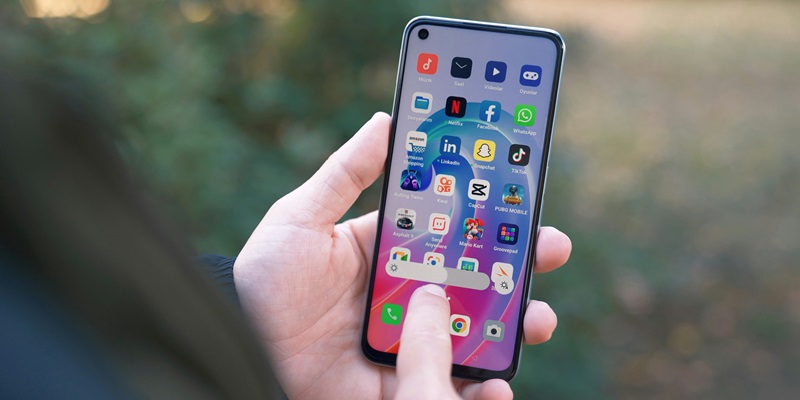
Will Oppo’s Find X8 and X8 Pro Smartphones Take the Global Market by Storm?

Smartphone enthusiasts around the globe are eagerly anticipating the international release of Oppo’s Find X8 and X8 Pro, particularly after the considerable success these models experienced in China. These premium devices exhibit cutting-edge technology, paving the way for fierce competition in the global market. Oppo’s latest flagship models will feature the newly confirmed MediaTek Dimensity 9400 processors, a move that exemplifies the devices’ advanced capabilities. Moreover, with high-end Cortex-X925 prime cores and Immortalis G925 GPUs, these smartphones promise superior performance, making them strong contenders against other high-end smartphones.

Beyond hardware, the Oppo Find X8 and X8 Pro come loaded with an impressive 16GB of RAM, ensuring smooth multitasking and efficient handling of demanding applications. These models also signify the continuation of Oppo’s fruitful collaboration with the renowned camera manufacturer Hasselblad. This partnership aims to enhance the devices’ camera capabilities, offering users an unparalleled photography experience. Google has listed these models in its Play Console database, further signaling their imminent global release. The Find X8 and X8 Pro are expected to be identified under different model numbers, including CPH2651 for the Find X8 and CPH2659 for the X8 Pro, as well as OP5AA5L1 and OP5ABOL1 in various regions.

The expectation of the international availability of these smartphones, potentially including the US market, underscores Oppo’s strategy to expand its footprint and reinforce its competitive position in the global arena. As these devices integrate highly advanced technological features, such as top-tier processors and enhanced camera systems, they stand as promising alternatives for tech-savvy consumers seeking innovation and excellence. As Oppo continues to make strategic advancements and release state-of-the-art products, the tech community will be keenly watching to see how the Find X8 and X8 Pro will perform on the global stage.

Explore more

A Beginner’s Guide to Data Engineering and DataOps for 2026

While the public often celebrates the triumphs of artificial intelligence and predictive modeling, these high-level insights depend entirely on a hidden, gargantuan plumbing system that keeps data flowing, clean, and accessible. In the current landscape, the realization has settled across the corporate world that a data scientist without a data engineer is like a master chef in a kitchen with

Ethereum Adopts ERC-7730 to Replace Risky Blind Signing

For years, the experience of interacting with decentralized applications on the Ethereum blockchain has been fraught with a precarious and dangerous uncertainty known as blind signing. Every time a user attempted to swap tokens or provide liquidity, their hardware or software wallet would present them with a wall of incomprehensible hexadecimal code, essentially asking them to authorize a financial transaction

Germany Funds KDE to Boost Linux as Windows Alternative

The decision by the German government to allocate a 1.3 million euro grant to the KDE community marks a definitive shift in how European nations view the long-standing dominance of proprietary operating systems like Windows and macOS. This financial injection, facilitated by the Sovereign Tech Fund, serves as a high-stakes investment in the concept of digital sovereignty, aiming to provide

Why Is This $20 Windows 11 Pro and Training Bundle a Steal?

Navigating the complexities of modern computing requires more than just high-end hardware; it demands an operating system that integrates seamlessly with artificial intelligence while providing robust security for sensitive personal and professional data. As of 2026, many users still find themselves tethered to aging software environments that struggle to keep pace with the rapid advancements in cloud computing and data

Notion Launches Developer Platform for AI Agent Management

The modern enterprise currently grapples with an overwhelming explosion of disconnected software tools that fragment critical information and stall meaningful productivity across entire departments. While the shift toward artificial intelligence promised to streamline these disparate workflows, the reality has often resulted in a chaotic landscape where specialized agents lack the necessary context to perform high-stakes tasks autonomously. Organizations frequently find