

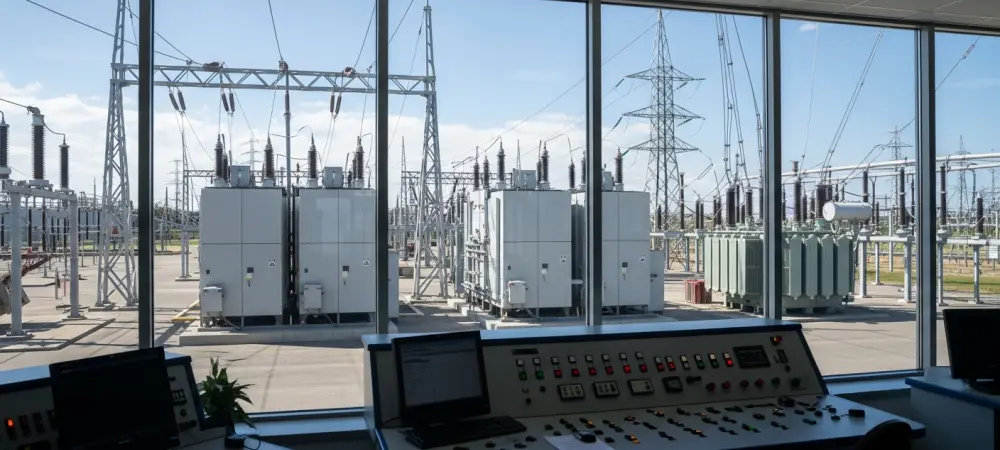
The global race to achieve artificial intelligence dominance has reached a critical juncture where the limiting factor is no longer the complexity of neural networks but the physical availability of electricity. As traditional utility grids across North America struggle to maintain stability under the weight of massive new loads, technology firms are increasingly pivoting toward behind-the-meter natural gas power generation. This movement represents a fundamental transformation in corporate philosophy, fueled by a massive $5 trillion investment in natural gas-fired energy systems. Projections suggest that 40% of all new data center capacity will be off-grid by 2030 to avoid multi-year delays associated with standard utility connections. This shift is driven by the sheer economic potential of generative AI, which can produce millions in revenue per megawatt each year, making the wait for utility upgrades an unacceptable business risk in a rapidly moving market.
Mitigating Grid Congestion and Administrative Obstacles
In regions like Texas and the Northeast, the strain on existing infrastructure has reached unprecedented levels, creating a massive backlog of connection requests that threaten to stall technological progress. In the Lone Star State specifically, the volume of power requested by data center developers is currently five times higher than the historical record for peak demand, leading to wait times that can span up to seven years for a standard grid connection. To circumvent these administrative and physical bottlenecks, companies are deploying on-site gas-fired generation as the primary means of ensuring their facilities can start operations without delay. This trend is not merely a temporary measure but a response to a utility system that was never designed to accommodate the rapid, concentrated growth of the AI era. By creating private power islands, these firms can bypass the queues of local utilities, effectively decoupling their growth from the pace of public work.
The technical implementation of these off-grid strategies involves the use of high-efficiency portable gas turbines and advanced fuel cells that can be rapidly stationed at construction sites to provide immediate power. However, maintaining the high uptime required for modern data processing often necessitates a secondary, or backup, connection to the existing public grid to provide a safety net during maintenance or fuel disruptions. This hybrid approach has ignited a complex policy debate regarding the financial responsibility for maintaining this grid insurance and whether the costs of such backup infrastructure should be borne by the tech companies or the general public. Critics suggest that if these massive industrial users only draw from the grid during emergencies, the resulting financial burden of maintaining a resilient network could shift toward residential consumers. Consequently, regulators are now tasked with balancing the need for rapid expansion with fair pricing.
Analyzing Regional Geology and Regulatory Compliance
Geological diversity across the United States plays a decisive role in determining how these natural gas-powered facilities manage their environmental impact through carbon capture and storage technologies. In the Gulf Coast region, deep rock formations and saline aquifers provide ideal conditions for the permanent underground sequestration of carbon dioxide, allowing firms to mitigate their footprint more effectively. This allows data centers in the South to argue that their reliance on fossil fuels is compatible with a pathway toward net-zero emissions over the coming decades. Conversely, the Appalachian region, covering states like Pennsylvania and Ohio, lacks the specific geological features required for localized, cost-effective carbon storage. This discrepancy creates a geographic divide in the feasibility of sustainable gas power, as companies in the Northeast must find alternative ways to offset their emissions or risk failing their sustainability metrics while still meeting the relentless demand for AI capacity.
The rapid expansion of off-grid gas plants has also drawn significant scrutiny from environmental advocacy groups and legal experts who worry about the long-term impact on global climate goals. There is a growing concern that companies are exploiting regulatory loopholes by securing permits intended for minor pollution sources rather than the major source designations required for traditional power plants. By categorizing these facilities as smaller, distributed assets, developers can often avoid the more rigorous environmental impact reviews and public transparency requirements mandated by federal laws such as the Clean Air Act. If dozens of these projects proceed as planned across the country, their cumulative carbon emissions could potentially match the output of entire nations, complicating international efforts to limit warming. This regulatory friction is likely to lead to increased litigation and calls for more stringent oversight of decentralized power as the scale of production grows.
Refining Strategic Implementation and Energy Security Protocols
As the tech industry moves deeper into this decentralized power model, the focus is shifting toward long-term energy security and the integration of emerging low-carbon technologies into existing gas infrastructure. While natural gas serves as a bridge to overcome immediate grid constraints, the ultimate success of this strategy will depend on the ability to incorporate hydrogen blending or modular nuclear reactors in the future. Forward-thinking organizations are already designing their on-site power plants with modularity in mind, ensuring that internal combustion engines and turbines can be retrofitted to accept cleaner fuels as they become commercially viable. This proactive approach aims to balance the current necessity of fossil fuel reliance with the eventual transition to a more sustainable energy mix. Furthermore, the development of sophisticated microgrid management software is enabling these sites to optimize their consumption patterns and improve overall efficiency.
Decision-makers realized that the path forward required a delicate balance between immediate operational speed and long-term environmental responsibility within the evolving energy landscape. By investing in on-site generation, companies effectively insulated themselves from the volatility and delays of traditional utility grids, ensuring that their computational capabilities remained ahead of the competition. They established new protocols for carbon monitoring and collaborated with regional authorities to minimize the impact on local communities while maintaining critical infrastructure. These actions provided a blueprint for other energy-intensive sectors facing similar infrastructure hurdles, demonstrating that decentralized power could be managed with transparency and technical rigor. Stakeholders ultimately moved toward a more integrated model where private power assets contributed to overall grid resilience. This transition marked the beginning of a more mature phase in industrial energy management.