

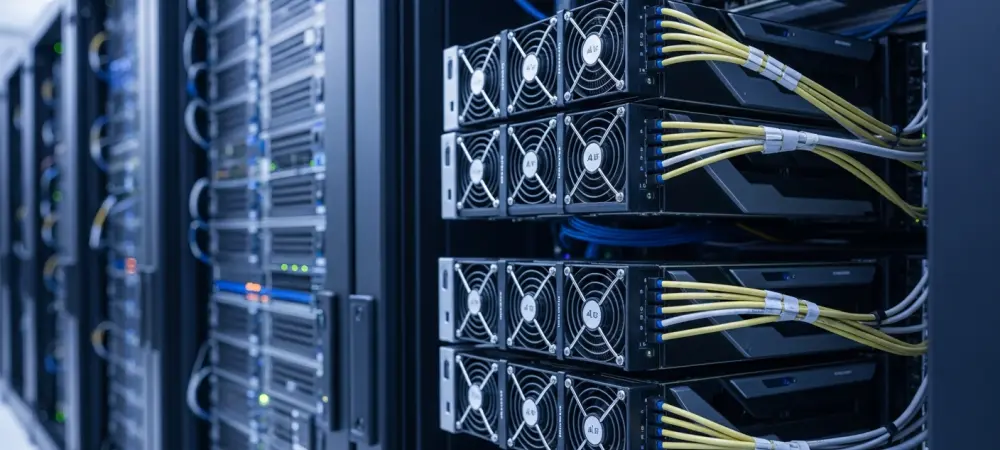
The transformation of Meta Platforms from a social media powerhouse into a formidable contender in the enterprise cloud sector represents one of the most ambitious corporate pivots in the history of the modern technology industry. For over a decade, the organization operated one of the world’s most sophisticated private data center networks, designed exclusively to support the billions of users interacting across its ecosystem of applications. However, the arrival of the generative artificial intelligence era necessitated a massive surge in capital expenditure, leading to a surplus of high-performance computing resources that could no longer be justified as internal-only assets. By opening its infrastructure to third-party developers and enterprise clients, the organization is attempting to transition from a consumer-facing media company into a fundamental utility for the global intelligence economy. This move is not just a tactical expansion but a strategic survival mechanism intended to offset the staggering $145 billion investment in next-generation silicon and energy-efficient cooling systems that now define its balance sheet.
Transforming Infrastructure into a Revenue Stream
Reimagining the Amazon Web Services Success Model
The logic behind the current transition mirrors the strategic evolution observed during the early development of the modern cloud, where internal efficiency was successfully converted into a commercial product. Much like the way Amazon Web Services emerged from the need to manage the massive e-commerce traffic of its parent company, Meta is now leveraging its extensive investments in specialized AI hardware to serve an external market. The core philosophy driving this shift is the realization that idle compute capacity represents a significant financial liability in an era where high-end GPUs depreciate rapidly. By offering these resources to third-party organizations, the company can transform what would otherwise be a sunk cost into a high-margin revenue engine that supports the continuous expansion of its physical infrastructure. This approach allows the organization to maintain its lead in hardware acquisition while ensuring that the cost of these assets is shared by the broader technology ecosystem. As the second quarter of 2026 progresses, the company has positioned itself as more than just a developer of social algorithms, aiming instead to become the essential landlord for the global AI landscape. This pivot toward infrastructure-as-a-service provides a unique opportunity to capture value from the very competitors and startups that are building the next wave of digital innovation. By offering access to its proprietary data center designs and massive GPU clusters, the company is effectively commoditizing the underlying power required for large language model training. This move shifts the company’s fundamental identity toward the “plumbing” of the internet, creating a new layer of business-to-business engagement that is less susceptible to the shifting trends of consumer social media. The long-term goal is to build a reliable, diversified income stream that can withstand fluctuations in advertising demand while cementing the company’s role as a critical pillar of the global computing architecture.
Responding to Inbound Demand and Market Scarcity
The decision to enter the cloud market was significantly influenced by a persistent wave of inbound requests from industry leaders who are struggling to navigate the ongoing compute crunch. For years, AI research labs and large-scale enterprises have faced extreme difficulty in securing the latest Nvidia chips, often encountering multi-month delays when attempting to scale their operations through traditional cloud providers. Because Meta proactively secured one of the largest stockpiles of B200 and #00 hardware in the world, it has become a natural destination for organizations that require immediate and massive scale for their training runs. This external pressure acted as a catalyst, proving that there is a deep and underserved market for raw, high-performance computing power that is optimized specifically for the needs of modern transformer architectures and generative models.
Currently, the organization is implementing a sophisticated dual-track strategy designed to address the diverse needs of the modern AI developer community. One branch of this service focuses on providing “bare metal” GPU rentals, allowing sophisticated engineering teams to have direct, low-level access to the hardware for custom optimization and large-scale distributed training. Simultaneously, the company is rolling out “hosted intelligence” solutions that allow businesses to build and deploy applications directly on top of the Llama model architecture, which is pre-integrated into the cloud environment. This flexibility enables the company to capture a wide spectrum of the market, ranging from capital-intensive research projects to smaller startups that lack the resources to manage their own hardware stacks. By addressing the scarcity of both hardware and specialized hosting environments, the company is carving out a dominant position in a sector that shows no signs of slowing down over the next several years.
Analyzing the $145 Billion Financial Paradox
The Immediate Impact of Explosive Capital Expenditure
The current financial profile of the organization reveals a striking contrast between its traditional advertising success and the unprecedented scale of its current infrastructure investments. Capital expenditure reached an astonishing $31.1 billion in a single quarter, leading to a full-year guidance that approaches the $145 billion mark, a figure that is virtually unrivaled in the history of private sector spending. This level of investment is driven by the necessity of building massive, liquid-cooled data centers that can handle the power density required by the latest generations of AI accelerators. While these expenditures have allowed for the creation of a world-class technology stack, they have also fundamentally altered the company’s risk profile, as the sheer magnitude of the buildout requires a significant and rapid return on investment to satisfy the expectations of the broader financial market.
The scale of this physical expansion is so vast that it exceeds the total annual operating budgets of many established Fortune 500 technology firms combined. This transition from a software-first entity to a capital-intensive hardware giant has created a scenario where the cloud business is no longer a peripheral experiment but a central economic necessity. Every new data center and every million-unit order of custom silicon must be justified through a combination of internal utility and external revenue generation. As the organization continues to push the boundaries of what is possible in silicon design and energy management, it must also navigate the complexities of managing such a massive physical footprint. This includes securing multi-gigawatt power agreements and developing sustainable cooling technologies that can keep up with the intense heat generated by thousands of chips working in parallel to process trillions of parameters.
Investor Volatility and the Free Cash Flow Crisis
The reaction from the investment community to this massive infrastructure pivot has been characterized by a mixture of long-term optimism and immediate “sticker shock” regarding the costs. In the middle of 2026, the company reported a dramatic 91% year-over-year decrease in free cash flow, which plummeted to a mere $784 million as the costs of the AI buildout began to peak. This metric is a clear indicator that nearly every dollar of profit generated by the core social media advertising business is being immediately reinvested into the physical foundations of the new cloud enterprise. For shareholders who have grown accustomed to the high-margin, cash-heavy nature of the social media industry, this sudden shift toward capital intensity has introduced a level of volatility that hasn’t been seen since the company’s initial public offering. Despite the fact that advertising revenue remains robust with a 28% growth rate, the massive spending on data centers has led to earnings-per-share results that frequently miss the more aggressive analyst estimates. This has triggered significant sell-offs and a general disconnect between the company’s long-term strategic vision and the short-term requirements of the public markets. For the “Meta Cloud” narrative to succeed, the organization must convince its backers that the current cash flow crisis is a temporary phase in the creation of a much larger and more defensible business. The challenge lies in maintaining investor confidence while navigating the thin margins associated with the early stages of a massive infrastructure project. Ultimately, the company is betting that the intelligence economy will be so vast that the current expenditures will eventually look like a bargain, though the path to that realization is currently paved with extreme financial strain.
Evaluating the Competitive Arena
Squaring Off Against the Hyperscale Triumvirate
Entering the cloud market places the organization in a direct and public confrontation with the established giants of the industry: Amazon Web Services, Microsoft Azure, and Google Cloud. These incumbents have spent decades building deep relationships with enterprise IT departments, creating thousands of managed services, and establishing global support networks that Meta currently lacks. By optimizing its entire stack for high-performance compute and the specific requirements of large-scale model training, it can offer a level of performance-per-dollar that is difficult for more generalized providers to match. This targeted approach allows the company to compete in the most profitable and fastest-growing segment of the market without needing to immediately build out a full suite of traditional cloud services.
The existing hyperscalers are not standing idly by as a new billionaire-backed competitor enters their territory, responding instead with aggressive pricing adjustments and exclusive hardware partnerships of their own. Despite this fierce competition, the total addressable market for AI computing is expanding at such a rapid pace that there appears to be sufficient room for a fourth major player to thrive. The arrival of a new hyperscaler could fundamentally break the pricing power currently held by the “Big Three,” initiating a new era of competitive innovation that benefits developers and research organizations. The organization’s unique advantage lies in its internal use of its own models, which provides a level of firsthand operational experience that can be translated into better services for external clients.
Squeezing Neocloud Startups and Specialized Providers
The expansion of a trillion-dollar entity into the specialized GPU rental market poses an existential threat to the “neocloud” startups like CoreWeave and Nebius that have thrived during the hardware shortage. These smaller providers built their entire business models on the premise of providing fast access to AI chips that the larger cloud companies were unable to supply in sufficient quantities. However, the organization’s ability to use its massive capital reserves to secure preferential treatment from hardware manufacturers gives it a cost advantage that is nearly impossible for smaller firms to overcome. If Meta begins to rent out its surplus hardware at a price point close to its own internal cost, it could effectively eliminate the margins that these specialized providers rely on for survival. This creates a challenging environment for any firm that lacks the massive scale required to compete in the high-stakes world of semiconductor procurement. This intense competitive pressure is likely to lead to a significant wave of consolidation across the specialized cloud sector as smaller players struggle to maintain their market share. The organization’s ability to perform hardware arbitrage—buying chips in bulk and renting them out during periods of low internal demand—allows it to maintain a level of pricing flexibility that its competitors cannot match. As the company continues to scale its cloud offerings, these specialized vendors may be forced to pivot toward providing unique software layers or niche security features that the larger platform has not yet addressed. The shift toward a more consolidated infrastructure landscape reflects the growing maturity of the AI sector, where scale is increasingly becoming the primary determinant of long-term success.
Operational Hurdles and Long-Term Projections
Overcoming Barriers to Enterprise-Grade Readiness
One of the most significant obstacles to the success of this new venture is the company’s historical lack of experience in the rigorous world of enterprise-grade service delivery. To be viewed as a legitimate competitor to the established cloud giants, the organization must undergo a profound cultural and operational shift, adopting the security certifications and compliance standards that corporate IT departments demand. This includes achieving SOC2, HIPAA, and other international data protection benchmarks, as well as building a dedicated sales and support force that understands the unique needs of enterprise clients. The transition from an “internal-first” engineering culture to a “customer-centric” service provider is a process that will likely take years of consistent effort and investment.
The rumored $10 billion agreement with Anthropic to provide massive amounts of compute capacity serves as a critical proof of concept for the organization’s ability to handle professional workloads. If one of the most prominent AI research labs in the world is willing to trust Meta’s infrastructure for its most sensitive training runs, it provides a powerful endorsement of the platform’s reliability and performance. This partnership acts as a signal to the rest of the industry that the hardware stack is ready for the demands of high-stakes AI development. However, the challenge remains in scaling this capability to support thousands of smaller developers who require a more user-friendly interface and a broader range of self-service tools. Building the necessary “retail” layer for the cloud business will require a sustained commitment to software development that goes beyond the core AI models themselves, highlighting the complexity of becoming a true utility provider.
Charting Meta’s Trajectory in the Global Computing Market
Stakeholders who once doubted the viability of such a significant outlay discovered that the sheer scale of the infrastructure provided a competitive moat that was impossible for smaller entities to bridge. This transition allowed the company to redefine its relationship with the global economy, moving from a role as a social intermediary to a position as a critical infrastructure utility. The focus then shifted toward the optimization of these resources, ensuring that the next generation of developers had the necessary tools to build increasingly complex autonomous agents. This move successfully transformed the company’s massive depreciation costs into a scalable revenue stream that insulated the organization from the volatility of the advertising market.
The path forward was paved with the lessons of this aggressive expansion, highlighting the necessity of long-term vision in the face of short-term financial pressure. While regulatory scrutiny in the United States and the European Union eventually increased due to the vertical integration of hardware and software, the company adapted by providing more transparent pricing and open access to its model architectures. Ultimately, the pivot provided a clear blueprint for how legacy tech giants could reinvent themselves as foundational infrastructure providers in a world increasingly governed by autonomous systems and large-scale synthetic reasoning. This shift not only secured the organization’s future but also fundamentally altered the distribution of computing power across the globe, creating a more competitive and dynamic cloud ecosystem for all participants.