

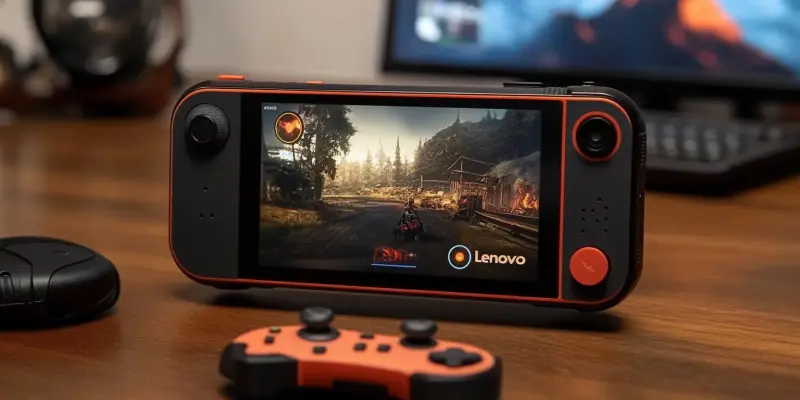
The anticipation around the release of the Lenovo Legion Go 2 gaming handheld is palpable, with leaked details hinting at significant upgrades and innovations. The new model promises to build upon its predecessor’s strengths, introducing cutting-edge hardware and improved performance features. Gamers and tech enthusiasts alike are eagerly awaiting a device that could potentially set new industry standards and redefine what a gaming handheld can offer in 2025. With Lenovo continuously pushing the envelope, the Legion Go 2 seems poised to make a substantial impact on the gaming community.
Upgraded Specifications and Display Options
One of the most exciting aspects of the Lenovo Legion Go 2 is its upgraded specifications, which are set to deliver a genuinely immersive gaming experience. The device is expected to be powered by the Zen 5-based Ryzen Z2 Extreme 8-core/16-thread chip, a significant leap from its predecessor’s hardware. This new chip architecture promises faster performance and improved efficiency, crucial for gaming on the go. Coupled with the Radeon 890M graphics featuring 16 Compute Units, users can expect substantial improvements in visual quality and rendering speed.
Adding to the allure is the introduction of an OLED display, which will offer superior color accuracy and contrast compared to LCD screens. This enhancement is likely to make games look more vibrant and detailed, providing a more engaging user experience. For those looking for a more budget-friendly option, Lenovo may offer an LCD variant, allowing consumers to choose based on their preferences and budget constraints. This strategic move underscores Lenovo’s commitment to catering to diverse market segments without compromising on quality.
Detachable Controllers and Other Features
The Lenovo Legion Go 2 retains its signature detachable controllers, a feature that sets it apart from many other gaming handhelds available today. These controllers offer flexibility and versatility, enabling different gaming styles and enhancing the overall user experience. Furthermore, the device will run on Windows 11 OS, ensuring compatibility with a wide range of games and applications. This choice of operating system aligns with Lenovo’s goal of providing a seamless and intuitive user interface.
Another major improvement is the expected battery life, speculated to be around 80Wh. This enhancement is in line with recent trends among other handheld manufacturers, focusing on longer usage times without frequent recharging. The Legion Go 2’s design also includes a larger form factor, accommodating the new hardware and battery while still ensuring portability. Additionally, there are whispers of a cheaper variant called the Legion Go S, which would forgo detachable controllers to offer a lower price point—making advanced gaming technology accessible to a broader audience.
Competitive Landscape and Market Anticipation
Lenovo is known for its commitment to innovation and consistently pushing the boundaries of what’s possible in tech. The Legion Go 2 appears to embody this spirit, creating a buzz among the gaming community and tech aficionados alike. By offering a blend of advanced technology and improved functionality, this new gaming handheld promises to be more than just an upgrade; it could redefine what portable gaming can achieve. As the release date approaches, the anticipation continues to build, setting the stage for what could be a groundbreaking addition to the gaming market.