

As the digital economy expands, the physical infrastructure required to support it has reached an unprecedented scale. Dominic Jainy, an expert in emerging technologies and infrastructure development, brings a wealth of knowledge to the discussion of massive industrial projects like the proposed Joliet Technology Center. With his background in artificial intelligence and blockchain, he understands the immense processing power these facilities require and the complex logistical webs necessary to bring a $20 billion vision to life in the American Midwest.
Our conversation explores the intricate balance between massive industrial growth and local governance, covering the technical demands of high-capacity power systems, the socioeconomic impact of multi-billion dollar tax revenues, and the strategic importance of Illinois as a burgeoning hub for global data distribution.
A 795-acre campus with 24 two-story buildings and 1.8GW of capacity represents a massive infrastructure undertaking. How do developers manage the logistics of multi-phase builds of this size, and what specific challenges arise when constructing dedicated substations for such high power demands?
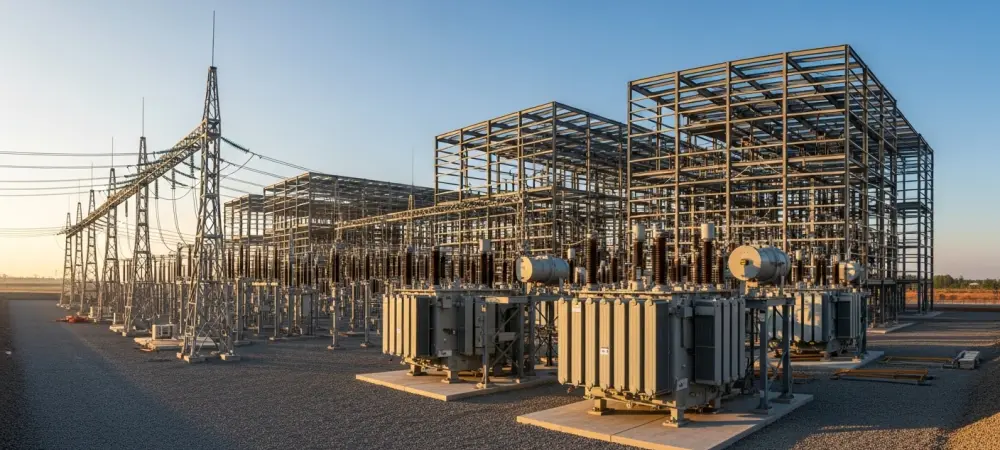
Managing a nearly 800-acre site requires a level of precision that feels more like conducting a symphony than a standard construction project. For the Joliet Technology Center, the developers have smartly divided the work into four distinct phases, which allows them to scale the infrastructure alongside demand while managing the immense physical labor involved in 24 two-story buildings. The real engineering marvel, however, lies in the four six-acre substations that must be integrated into the landscape to handle a staggering 1.8GW of capacity. These substations are not just electrical hubs; they are the heart of the facility, requiring specialized procurement of heavy-duty transformers and cooling systems that often have years-long lead times. Coordinating the arrival of these components while thousands of tons of steel are being raised requires a rigorous “just-in-time” delivery strategy to avoid site congestion and keep the multi-billion dollar timeline on track.
Projected tax revenues can exceed hundreds of millions of dollars over several decades without using local incentives or abatements. When hundreds of residents voice opposition at public meetings, what strategies should officials use to balance these fiscal benefits against community concerns regarding land use?
When you have a project projected to generate $310 million in property taxes and $40 million in utility taxes over 30 years, the fiscal argument is incredibly compelling for any municipality. However, the sight of hundreds of concerned residents packing a commission meeting for hours highlights the deep emotional connection people have to their local environment. Officials must move beyond raw numbers and address the sensory impact—noise, traffic, and the visual footprint of 144,500-square-foot buildings. A successful strategy involves complete transparency regarding how that $2.1 billion in estimated local tax revenue will directly fund schools, parks, or emergency services. By demonstrating that the project requires zero tax abatements, the city can frame this as a rare opportunity where a corporate entity pays its full share to improve the lives of the neighbors who are currently the loudest critics.
Securing independent electricity sources ensures that residential and small-business services remain unaffected by massive industrial loads. What technical hurdles must be cleared to finalize these private power agreements, and how does this impact the project’s timeline for reaching full capacity across several years?
The commitment to secure and pay for electricity independently of the residential grid is a massive technical and financial undertaking that requires direct negotiation with high-voltage transmission providers. Clearing these hurdles involves conducting rigorous load-flow studies to ensure that pulling 1.8GW into a single parcel won’t cause instability or “flicker” for the surrounding community. This independence is likely why the project timeline shifted from a late 2025 proposal to a mid-2026 decision phase, as these complex power purchase agreements and interconnection studies take months of back-and-forth with utility engineers. Because each of the four phases is tied to a specific substation build-out, the project cannot reach its full potential until the high-capacity grid infrastructure is fully hardened and tested. This measured approach protects the city from outages but necessitates a disciplined, multi-year rollout that tests the patience of even the most well-capitalized developers.
Converting nearly 800 acres of land to light industrial use for a technology center often shifts a region’s economic identity. What specific criteria do commissions evaluate during the annexation and rezoning process, and how does this change the long-term urban planning trajectory for cities near major metropolitan hubs?
During the annexation of the land surrounding S. Rowell and Bernhard Roads, the commission had to look far beyond the immediate construction phase to consider how this massive parcel fits into the future of Joliet. They evaluate factors like drainage patterns, the capacity of existing road networks to handle construction traffic, and how “light industrial” zoning serves as a buffer between heavy industry and residential pockets. Transitioning 800 acres into a technology center signals a shift from traditional manufacturing or agriculture toward a high-tech, service-oriented economy. This sets a new precedent for the region, potentially turning a quiet area 40 miles outside of Chicago into a critical node of the global internet. It forces urban planners to rethink everything from fiber optic routing to the type of workforce housing that will be needed for the permanent staff operating these facilities.
Large-scale developers are currently building pipelines totaling over 6GW across several states. In competitive markets like Illinois, what factors differentiate a successful $20 billion proposal from those that stall, and how do firms mitigate the risks associated with multi-year delays in the approval process?
A successful $20 billion proposal is distinguished by the developer’s ability to demonstrate “speed to power” and financial stability, which is why having the backing of an established entity like Hillwood and the Perot family is so significant. In a market like Illinois, where Joliet and Aurora are becoming major data center hubs, a developer must prove they have the capital to survive delays like the one this project faced from October to March. They mitigate risk by diversifying their pipeline—PowerHouse, for example, has projects across Virginia, Texas, and several other states—allowing them to balance a slow-moving approval in one region with progress in another. This geographic diversity provides a safety net, ensuring that if local opposition or regulatory hurdles stall one 1.8GW project, the firm’s total 6GW pipeline remains a viable and attractive investment for cloud providers.
What is your forecast for data center development in the Midwest?
I anticipate a massive surge in “mega-campus” developments across the Midwest as the primary markets on the coasts become saturated and power-constrained. The Joliet Technology Center is a harbinger of things to come, where the availability of vast land parcels and robust existing power corridors makes the Chicago suburbs the most attractive destination for $20 billion investments. We will see a shift toward these self-contained ecosystems that fund their own infrastructure, as the sheer scale of modern AI workloads makes smaller, urban facilities obsolete. While community pushback will remain a constant challenge, the undeniable gravitational pull of billions in tax revenue and the strategic need for low-latency connectivity will ensure that the Midwest becomes the new backbone of the American digital landscape.