

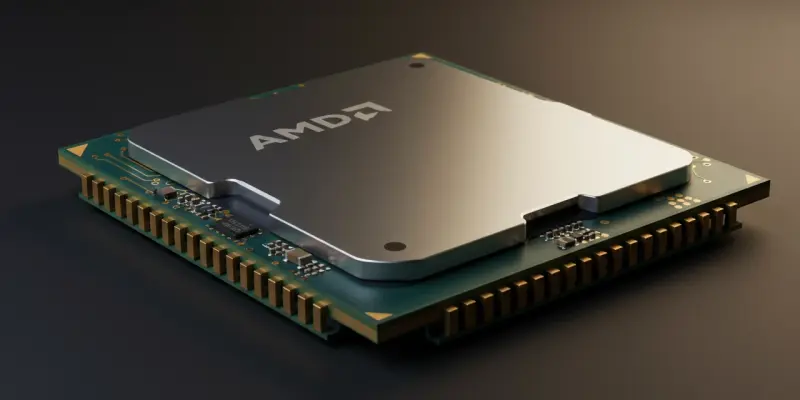
In a significant development this year, AMD has solidified its position in the competitive CPU market by recording groundbreaking achievements in both revenue and unit share. The x86 CPU sector, central to AMD’s strategy, has witnessed notable advancements as the company continues to strengthen its influence. AMD’s substantial growth in server and desktop markets has been meticulously documented, showing a trajectory that suggests a robust future. The strategic deployment of state-of-the-art processors, such as the Zen 4-based Genoa and Bergamo families, has reinforced AMD’s dominance. Meanwhile, the introduction of the Zen 5-based Turin lineup promises to further enhance performance in the data center sphere, evidencing AMD’s commitment to technological innovation and excellence across various segments.
Expanding Presence in Server Markets
Reinforcing Market Position
AMD’s success in the server market is highlighted by its impressive share of 39.4% in server revenue, reflecting a strategic gain of 3.1 points compared to the previous quarter and an overall annual increase of 6.5 points. Such growth underscores AMD’s effective implementation of cutting-edge products that meet the demands of modern data centers. Products like the Zen 4-based Genoa and Bergamo models have played a pivotal role in this, offering enhanced processing capabilities that cater to high-performance computing and data processing needs. The Genoa lineup, in particular, has set benchmarks for efficiency and performance, becoming an industry favorite for enterprises seeking reliable server solutions. Particularly noteworthy is the deployment of the Zen 5-based Turin series, which has introduced new performance standards. This lineup is tailored to facilitate advanced analytics and workloads in expansive data centers, and it offers superior energy efficiency aligned with evolving industry standards. AMD’s comprehensive approach ensures that its products do not merely cater to existing demands but also anticipate and create new market needs. This strategy has enabled AMD to gain a competitive edge over rivals, capturing a substantial share of market opportunities and setting the stage for future innovations that will likely continue to reshape the server landscape.
Product Innovation and Future Outlook
The trajectory of AMD’s success is marked by continual product innovation that aligns with evolving technological trends and industry demands. Alongside its impressive performance metrics, AMD keeps enhancing the Zen architecture to maintain its competitive edge. The introduction of next-generation processors in the form of the Zen 5-based Turin lineup emphasized not only exceptional performance but also energy efficiency, which is becoming an increasingly important criterion for enterprises looking to optimize operating costs. This strategic focus on performance and efficiency places AMD in an advantageous position, especially as the demand for robust server solutions grows in correlation with the rise of cloud computing and AI.
Looking ahead, AMD’s continuous innovation underscores a dedication to capturing emerging opportunities within the server domain. The anticipated Zen 6 architecture further positions AMD to address future market needs with sophisticated solutions designed to tackle complex computing challenges. By continually evolving and expanding its offerings, AMD has deftly positioned itself as an industry leader poised to influence the next wave of technological advancements within the server market. This proactive approach ensures enduring competitiveness and paves the way for sustained growth and market share expansion.
Commanding Influence in Desktop CPU Market
Driving Growth with Ryzen Series
In the desktop CPU sector, AMD has achieved remarkable growth, securing a unit share of 28% alongside a revenue share of 34.4%. This success is primarily attributable to the popularity of its Ryzen gaming CPUs, particularly the Ryzen 7 7800X3D and Ryzen 7 9800X3D models, which have captured the imagination of gaming enthusiasts and professionals alike. These processors offer unparalleled performance capabilities, catering to a diverse spectrum of users ranging from casual gamers to high-end computing professionals. The architecture’s design has channeled superior performance with enhanced graphic processing capabilities, meeting the ever-increasing expectations of tech-savvy consumers.
This success in the desktop market is a clear testament to AMD’s strategic foresight and ability to capitalize on emerging trends within the tech industry. It has developed products that not only fulfill the performance criteria but also offer cost-effective solutions that appeal to a broad range of users. This alignment with consumer needs has solidified AMD’s reputation as a reliable provider of versatile, high-performance desktop processors. The broad acceptance and recognition of the Ryzen series within the tech community reinforce AMD’s standing as a formidable competitor poised to set future trends in the desktop computing landscape.
Strategic Diversification and Market Reach
AMD’s strategy extends beyond just meeting current demands; it includes a focus on diversification to ensure a comprehensive market presence. This is evidenced by the introduction of specialized models, such as the Ryzen AI series and the Ryzen 9000HX, designed to cater to niche markets with specialized computing needs. These offerings augment AMD’s product portfolio, allowing it to address a wide array of market demands while maintaining a stronghold on core markets. AMD’s ability to diversify offers a competitive advantage, differentiating it from other market players who may offer a more limited scope of products.
Furthermore, AMD’s consistent expansion into new segments and markets underscores its commitment to emerging technologies and industry evolution. By engaging different market segments and pioneering new technological solutions, AMD ensures sustained growth and influence across multiple processor categories. This diversified approach not only buffers against market volatility but also positions AMD to capture market share in high-growth sectors driven by digital transformation. Hence, AMD’s strategies and product innovations collectively facilitate its ascent as a dominant force within the broader CPU marketplace.
AMD’s Pathway to Continued Success
Strategic Position and Future Prospects
Looking at the broader landscape, AMD’s consistent momentum in the x86 CPU market reflects a well-thought-out strategic direction that prioritizes innovation, diversification, and market engagement. The company’s relentless pursuit of excellence since the launch of the Zen lineup has resulted in diverse hardware offerings that consistently meet and exceed industry benchmarks. This progress signifies a pathway to continued success, allowing AMD to not only defend its market share but also strategically position itself to capture emerging opportunities.
Significantly, AMD’s strategic initiatives, including a focus on high-performance computing and energy efficiency, have enabled it to navigate market challenges and capitalize on growth areas. The ongoing development of the Zen 6 architecture represents a dedication to fostering long-term innovation. This forward-looking philosophy ensures that AMD remains at the forefront of technological advancement, capable of introducing products that cater to evolving consumer needs and anticipate future market trends.
Navigating Future Challenges
AMD has made remarkable strides in the server industry, commanding a notable 39.4% of server revenue. This is a strategic uplift of 3.1 points quarter-over-quarter and a solid annual improvement of 6.5 points. Such achievements underscore AMD’s successful deployment of cutting-edge solutions tailored for modern data centers. The Zen 4-based Genoa and Bergamo models have been essential, offering enhanced processing power that addresses high-performance computing and complex data tasks. Notably, the Genoa lineup has established new standards in efficiency and performance, favored by enterprises in need of dependable server capabilities.
A standout is AMD’s Zen 5-based Turin series, setting new benchmarks in performance. Tailored for sophisticated analytics and hefty workloads in large-scale data centers, it boasts superior energy efficiency that aligns with current industry norms. AMD’s holistic strategy not only meets existing needs but anticipates future demands, differentiating itself from competitors. This foresight has allowed AMD to capture significant market opportunities, ensuring its role as a key innovator poised to continue reshaping the server sector.