

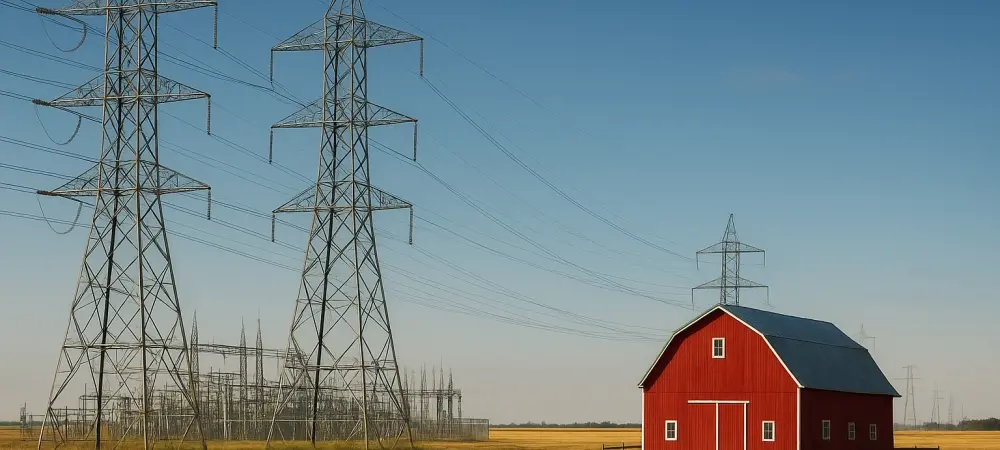
Sturgeon County is currently witnessing the construction of a $13 billion Meta data center capable of generating more electricity than the entire city of Edmonton. This massive undertaking represents the crown jewel in Alberta’s strategic pivot toward becoming North America’s premier destination for high-capacity computing. By capitalizing on an abundance of natural gas and a regulatory landscape designed to attract private investment, the provincial government has sought to corner nearly 90 percent of the Canadian data center market. However, this aggressive expansion into the rural heartland has created a palpable tension between economic diversification and the preservation of traditional agrarian values. While the administration views these facilities as essential infrastructure for the burgeoning artificial intelligence sector, many residents see them as intrusive monoliths that threaten their heritage. The scale of this industrial push is unprecedented, transforming sleepy rural vistas into high-tech corridors almost overnight, and leaving many to wonder if the long-term social costs will eventually outweigh the immediate fiscal rewards.
The Growing Divide: Public Opinion and Policy
Polling data from the start of 2026 suggests that the provincial “gold rush” lacks a broad mandate from the people. Data collected by Janet Brown Opinion Research revealed that only a tiny fraction of the population, roughly seven percent, expressed strong support for the rapid proliferation of artificial intelligence data centers. In contrast, a combined 57 percent of respondents voiced some level of opposition, with many citing the sheer speed of development as a primary concern. This skepticism is not confined to urban centers or specific demographics; rather, it reflects a province-wide hesitation to fully embrace a technology that remains abstract to the average citizen. Political analysts note that this issue is uniquely dangerous because it cuts across traditional party lines, creating a rare instance where environmentalists and conservative rural landowners find themselves aligned in their grievances. The disconnect between government ambition and public sentiment has exposed a vulnerability in the current administration’s strategy.
The political implications for the United Conservative Party are particularly acute given that the majority of these developments are situated within rural constituencies. These areas have historically functioned as the bedrock of the party’s power, yet the influx of hyperscale data centers is testing the limits of that support. Experts suggest that the provincial leadership’s reputation for resilience may face its toughest challenge as local activists mobilize against what they perceive as top-down industrialization. There is a growing sense that the government is catering to Silicon Valley giants at the expense of its most devoted voters, leading to a potential realignment of political priorities in the next election cycle. If the administration fails to address the underlying anxieties of its rural electorate, it risks transforming a perceived economic victory into a significant political liability. The “Teflon” nature of the current leadership is being scrutinized as never before, as the noise of industrial cooling fans begins to drown out the traditional campaign rhetoric.
Environmental and Social Costs: The Rural Reality
Beyond the political sphere, the physical reality of these facilities has sparked intense environmental and land-use debates among agricultural stakeholders. Farmers in regions like Ponoka County have raised alarms regarding the loss of fertile land to sprawling industrial footprints that offer little in the way of direct agricultural benefit. The immense water consumption required to cool thousands of high-performance servers is a particularly sensitive topic in a province that frequently deals with moisture deficits and drought conditions. Furthermore, the construction of dedicated natural gas power plants to support these centers adds a significant carbon footprint to a region already under pressure to meet national emissions targets. Residents have become symbols of this resistance, arguing that the long-term health of the soil and the local watershed should not be sacrificed for the temporary gains of the tech industry. For many in the farming community, the preservation of agricultural capacity is a matter of food security.
The daily life of rural Albertans is also being reshaped by the mechanical realities of these massive operations, which often operate twenty-four hours a day. The constant, low-frequency hum generated by industrial cooling fans and power infrastructure has become a major source of noise pollution, shattering the peace that traditionally defines rural living. This auditory intrusion is more than a mere nuisance; it represents a fundamental change in the character of these communities, leading to decreased property values and heightened stress levels for those living nearby. Additionally, there is a mounting concern regarding the strain these energy-hungry facilities place on the provincial electricity grid. While tech giants often negotiate favorable rates, everyday consumers fear that the increased demand will lead to higher utility bills and potential instability in the power supply. The perception that global corporations are reaping the benefits of Alberta’s resources while locals bear the social costs has fueled a sense of injustice.
Resistance Movements: Addressing the Trust Gap
The scale of the conflict is perhaps most visible in Sturgeon County, where the Meta project has become a lightning rod for community frustration. The sheer size of the data center, which rivals the energy consumption of a major metropolitan area, has forced local officials to navigate a minefield of public anger. Municipal leaders have pointed out that the intensity of the opposition has reached unprecedented levels, with some residents adopting rhetoric that exceeds the tensions seen during past public health crises. This shift in tone suggests that the data center boom has tapped into a deeper well of social and economic anxiety. Long-time residents have begun to express voter remorse, questioning whether the government they helped elect truly understands their concerns about industrial encroachment. For many individuals, the arrival of these facilities has fundamentally altered their relationship with the provincial leadership, creating a rift that may be difficult to mend through traditional economic arguments.
In other regions like Ponoka County, the resistance has focused on the intersection of energy production and niche industries like Bitcoin mining. Proposed projects that aim to use natural gas for crypto-mining while recycling waste heat for agriculture have failed to win over a skeptical public. Despite attempts to frame these projects as innovative solutions, residents remain wary of the industrial infrastructure required to sustain them. This skepticism is often rooted in a trust gap that is exacerbated by the lack of basic amenities in many rural areas. It is difficult to convince a community of the benefits of a multi-billion-dollar high-tech hub when many of its members still lack reliable cell service or high-speed internet access. The successful efforts of residents in other counties to block massive power projects have served as a blueprint for local mobilization. This growing network of activists is becoming more sophisticated, using provincial utility hearings to challenge the government’s narrative.
Strategic Integration: Moving Beyond the Conflict
To address these escalating tensions, the provincial government recently moved to establish comprehensive standards for data center development. These guidelines aimed to balance the need for economic diversification with the protection of rural lifestyles by mandating stricter noise mitigation and land-use protocols. Decision-makers recognized that for the industry to thrive, it had to provide tangible benefits beyond municipal tax revenue, such as investing in local digital infrastructure to bridge the connectivity gap. This approach encouraged developers to prioritize projects that integrated waste heat recovery for local greenhouses or provided direct funding for emergency services. Furthermore, transparent communication became the cornerstone of the updated regulatory framework, ensuring that community voices were heard before projects reached the construction phase. By fostering a more collaborative environment, policymakers sought to demonstrate that technological progress did not have to come at the expense of agricultural heritage. Policymakers also recognized that financial transparency was vital for maintaining the social license required for such large-scale industrial expansions. They implemented a system where a portion of the tax revenue from data centers was directly allocated to rural revitalization projects, ensuring that the wealth generated by global tech giants remained within the host communities. This redistribution of capital allowed for the modernization of local schools and the expansion of healthcare facilities, providing a clear and visible benefit to those living in the shadow of the server farms. Additionally, the government encouraged the development of educational partnerships between tech companies and local colleges to create specialized training programs for rural youth. These initiatives aimed to provide high-paying jobs within the community, reducing the need for young people to migrate to urban centers. By focusing on long-term socio-economic stability, the province worked toward a more sustainable model of industrial development.