

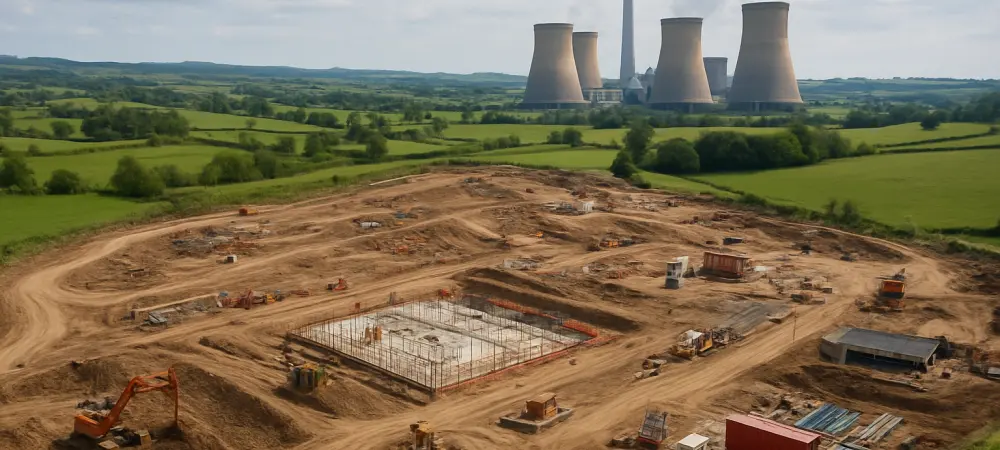
The dream of transforming North Yorkshire into a global powerhouse for synthetic intelligence recently hit a definitive roadblock when government officials struck down plans for a 1.2-gigawatt facility. This massive infrastructure project, envisioned as a direct neighbor to the iconic Drax power station, was meant to catapult the region into the digital vanguard. However, the rejection signals a turning point in how modern states balance technological hunger with environmental integrity.
The High-Stakes Collision: Artificial Intelligence and National Power Grids
The ambition to build a 1.2GW AI data center in North Yorkshire represented a bold attempt to position the UK at the forefront of the global tech race. However, the government’s recent veto of the “AI Growth Zone” proposal serves as a stark reminder that digital expansion cannot bypass rigorous environmental and economic scrutiny. While the project promised to link the nation’s largest power station directly to the infrastructure of the future, the gap between its carbon-negative claims and the realities of biomass emissions proved too wide to bridge.
Strategic Importance: Understanding the Selby Data Center Bid
As AI models grow in complexity, the demand for dedicated, high-capacity computing hubs has reached a fever pitch, forcing developers to seek direct “behind-the-meter” connections to massive energy sources. The proposal led by North Yorkshire Council, the University of York, and Drax aimed to solve the power availability crisis by utilizing the 2.58GW capacity of the Drax power plant.
This bid wasn’t just about local development; it was a test case for whether the UK could successfully integrate legacy energy infrastructure with the requirements of the next industrial revolution. Regulators scrutinized whether such a large-scale project could truly coexist with the existing national grid without causing unforeseen destabilization or resource scarcity for other essential services.
Critical Failures: Factors That Led to the Government’s Rejection
Official findings highlighted several structural flaws, starting with the carbon-negative paradox where the status of the plant as a major CO2 emitter clashed with the project’s green marketing. Government officials cited a lack of credible evidence regarding how such a massive energy draw would be managed without compromising broader sustainability targets.
Furthermore, the bid failed to demonstrate how the “AI Growth Zone” would translate into tangible job creation for the Selby region beyond the immediate construction phase. Environmental oversight also played a role, as the proposal was deemed insufficient in addressing the local ecological impact of the chemical scrubbing processes intended to offset operational emissions.
Expert Perspectives: The Sustainability Gap in Tech Infrastructure
Industry analysts point to a growing skepticism regarding “carbon-neutral” claims in the heavy industry and tech sectors. While the partnership intended to capture eight million tons of CO2 annually, the reality of the plant producing 14.1 million tons of CO2 equivalent created a credibility deficit that regulators could not ignore.
This decision highlights a shift in policy where the “green” label on a data center must be backed by transparent, comprehensive data rather than future-dated technological promises. Regulators now demand verifiable outcomes, marking a new era of accountability in digital infrastructure development.
Future Directions: Navigating the Shift to Scalable Solutions
Learning from the rejection, the regional focus shifted toward a 100MW “front-of-meter” pilot that utilized existing grid connections rather than a direct plant link. This modular approach allowed for phased developments that prioritized environmental impact assessments at every stage of expansion. Developers also recognized that aligning with national grid capacity, rather than demanding unproven infrastructure overhauls, became the necessary standard for viability. This evolution encouraged a transition toward securing long-term energy supplies through traditional market mechanisms like power purchase agreements, ensuring that future technological growth remained both stable and sustainable.