

With a deep background in artificial intelligence and machine learning, IT professional Dominic Jainy has a unique perspective on the consumer tech landscape, analyzing not just the hardware but the strategic decisions that drive a brand’s success. We sat down with him to dissect Honor’s remarkable performance in 2025. Our conversation explores the tactical brilliance behind their market dominance in regions like Malaysia, the complex supply chain and marketing pivots required for their varying international product specs, and the clear division in their design philosophy, which allows them to create both supremely sleek flagships and incredibly durable mid-range devices. We also delve into their foldable strategy, contrasting their all-in approach on book-style devices with their more cautious, region-locked clamshells.
The Honor Pad X9a and MagicPad 3 drove the brand to number one in Malaysia. Beyond competitive specs and promos, what specific market-entry or distribution tactics did Honor employ to achieve this, and how replicable is that success in other competitive regions?
What Honor achieved in Malaysia is a classic example of a perfectly executed pincer movement in marketing. It wasn’t just about offering discounts; it was about precisely targeting two distinct consumer segments simultaneously. With the Pad X9a, they captured the budget-conscious crowd looking for maximum value, while the MagicPad 3 appealed to the high-end user demanding flagship performance. The “regular promos” were the fuel, but the strategy was the engine. This success is replicable, but it’s not a simple copy-paste job. To make this work in a market like Europe or North America, you have to intimately understand the local retail channels, carrier partnerships, and consumer psychology, which are vastly different from those in Southeast Asia.
With the Honor 400 series, battery capacity varied dramatically from 7,200mAh in China to 5,300mAh in Europe. Could you detail the supply chain or regulatory factors behind this decision and explain how Honor’s marketing adapted to justify this significant reduction to European customers?
This kind of regional disparity is almost always a multi-layered issue. On one hand, you have stringent European Union regulations for battery safety and materials, which can force manufacturers to use different, sometimes less dense, cell chemistries. This alone can account for a drop in capacity. On the other hand, there are immense logistical and cost considerations. Sourcing a massive 7,200mAh battery for global distribution is a huge undertaking. It’s far more efficient to use different suppliers for different regions. To sell this to European customers, the marketing team has to perform a bit of magic. They pivot the conversation away from raw numbers. Instead of boasting about the 7,200mAh they don’t have, they emphasize “intelligent power management,” “all-day battery life,” and the speed of their fast charging, effectively reframing the user benefit without mentioning the deficit.
The Magic V5 foldable was a major winner, praised for its thin profile and large 5,820mAh battery. In contrast, the Magic V Flip 2 was a “loser” due to its China-only release and older chipset. What does this tell us about Honor’s global priorities and resource allocation?
The contrast between the Magic V5 and the V Flip 2 paints a crystal-clear picture of Honor’s global ambitions. The Magic V5 is their heavyweight contender, their statement piece for the world stage. They poured resources into making it a category leader—getting it down to just 222 grams and under 9 millimeters thick while packing in a massive 5,820mAh battery is a monumental engineering feat. This is the device they use to fight the biggest names in the industry. The Magic V Flip 2, however, feels like a calculated, lower-risk play. By keeping it exclusive to China and using an older chipset, they’re essentially testing the waters in their home market without committing to a costly global launch and the complex supply chain that would require, especially when facing established rivals like the Galaxy Z Flip series. It shows they’re focusing their main firepower where it will make the biggest global impact.
Honor’s camera strategy heavily featured 200MP sensors in its 400, 500, and Magic8 Pro models. Can you explain the technical differences in how this sensor was implemented across these price points and what software optimizations were key to differentiating the user experience on each device?
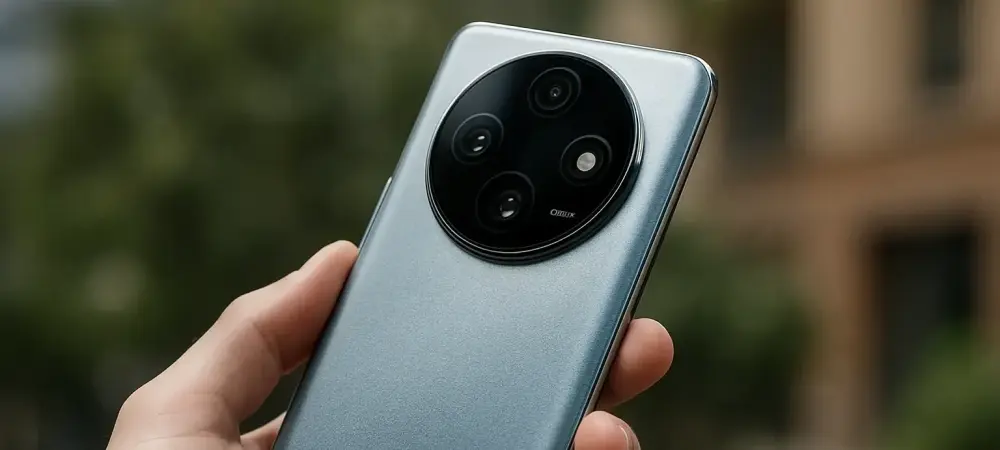
Using a “200MP sensor” across different price tiers is a brilliant marketing strategy, but the technology behind the label is vastly different. On the Honor 400 and 500 series, the 200MP 1/1.4-inch sensor acts as the primary wide camera. Here, the heavy lifting is done by software through pixel binning, where multiple pixels are combined to create one larger, more light-sensitive pixel for better everyday photos. The Magic8 Pro, however, implements a 200MP sensor for its telephoto camera, which is an entirely different league of complexity and cost. The differentiation in user experience comes from the software and the chipset’s Image Signal Processor. The Magic8 Pro’s software would feature far more sophisticated AI algorithms for computational zoom and detail preservation at a distance, something the mid-range phones simply wouldn’t have the processing power to handle effectively.
The Magic8 Pro is praised for being a sleek, lightweight cameraphone, while the Magic8 Lite is noted for its rugged IP68/IP69K durability. How does Honor’s R&D department manage these two very different design philosophies, and what trade-offs are made to achieve both sleekness and toughness?
This is a fantastic illustration of targeted design. You’re essentially looking at two separate projects with completely opposing primary goals. For the Magic8 Pro, the mantra is “elegance and feel.” Engineers are tasked with shaving every possible gram and millimeter, using premium, lightweight materials and minimizing things like the camera island to create a device that feels exquisite in the hand. The inherent trade-off is a certain level of fragility. For the Magic8 Lite, the goal is survival. The design process starts with durability, incorporating reinforced frames, gaskets, and seals to achieve that impressive IP68/IP69K rating. This inevitably adds bulk and weight, sacrificing the sleekness of its Pro sibling. It shows Honor’s R&D is versatile, capable of prioritizing form for its flagships and function for its mid-range workhorses.
What is your forecast for Honor’s global strategy in 2026, particularly concerning its foldable lineup and flagship-tier devices?
Looking ahead to 2026, I expect Honor to double down on its winning formulas. They’ve found a real sweet spot with their book-style foldables, so expect the Magic V line to become even more aggressive globally, pushing the boundaries of thinness and battery life to challenge the market leaders directly. We’ll see their flagship Magic series continue to merge powerful camera hardware with that sleek design philosophy, as it’s clearly resonating with consumers. The big question mark is the clamshell. If the Magic V Flip 2 proves to be a massive hit in China, we might finally see its successor get a global launch in 2026, but only if Honor is confident they can equip it with a cutting-edge chipset and dedicate the marketing resources to make it a true contender, not just a niche player.