

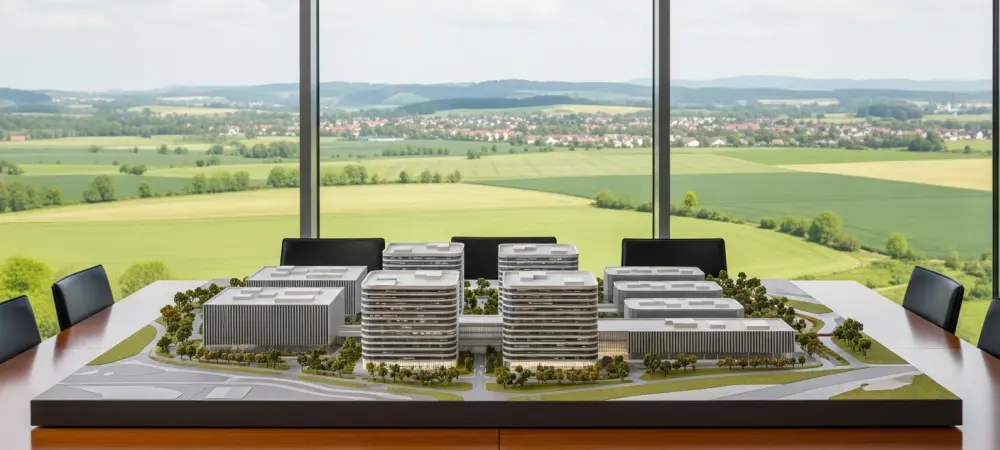
A small German municipality’s decision to turn down a nearly three-billion-dollar investment from a major American technology developer sent a clear message that the era of unquestioned digital infrastructure expansion has come to an end. The city council of Groß-Gerau, located near Frankfurt’s critical data hub, rejected a proposal from Vantage Data Centers, halting a project poised to become a cornerstone of Europe’s digital economy. This move challenges the long-held assumption that massive tech investments are an automatic victory for local communities, revealing a complex new landscape where local concerns can override immense financial incentives.
When a Multi Billion Dollar Deal Simply Isn’t Enough
The sheer scale of the proposal makes the rejection all the more significant. Vantage Data Centers planned to construct a 174MW campus featuring five four-story buildings on a 14-hectare site it had already purchased. Valued at approximately €2.5 billion ($2.97 billion), the project was designed to meet the surging demand for data processing and storage in one of Europe’s most strategic digital corridors. The campus even included plans to make its waste heat available for community reuse, a nod toward sustainable practices.
However, the 18-14 vote by the city council against entering contract negotiations brought the ambitious development to a sudden halt. The decision by a town of just over 25,000 people to refuse such a substantial investment highlights a growing trend of local resistance. It signals that the promise of participating in the digital gold rush is no longer enough to guarantee a project’s approval, forcing developers to confront a more discerning and empowered local populace.
Deconstructing the Case for Rejection
The opposition, a coalition of the SPD, Greens, and FDP parties, built its case on a foundation of tangible local concerns that the project’s economic allure could not overcome. A primary argument was the economic mismatch; opponents contended that the data center would create a minimal number of permanent jobs for local residents once the construction phase was complete. Furthermore, there were significant doubts that the tax revenues generated by the massive facility would actually remain within Groß-Gerau’s municipal budget, undermining a key benefit touted by proponents.
Beyond the financial calculus, the project clashed with the community’s vision for its quality of life and landscape. The Green party vocally criticized the plan, describing the proposed campus as a “noisy, ugly monstrosity” that would permanently scar the local environment. This sentiment resonated with residents concerned about the aesthetic and auditory impact of a large-scale industrial facility. Compounding these issues was a growing security dilemma, with rising fears that the critical digital infrastructure could become a high-profile target for terrorism, transforming a symbol of progress into a potential liability for the town.
A Community Divided by the Vote
The council’s final vote reflected a community deeply fractured over its future. The opposing coalition presented a united front, arguing that the project’s cumulative drawbacks—from a lack of tangible local jobs to environmental impact and security risks—far outweighed any potential advantages. Their shared belief was that the town’s identity and well-being should not be compromised for a development that offered them little in return.
In stark contrast, supporters of the data center expressed profound disappointment. The local CDU party leader, Thomas Hlubek, lamented the outcome as a significant missed opportunity, stating that the city had turned its back on “millions in tax revenue” and a “good investor.” This division illustrates the fundamental conflict at the heart of such proposals: the tension between long-term, abstract economic growth and immediate, concrete community concerns. Following the vote, Vantage Data Centers announced it would conduct an internal review to determine its next course of action.
Lessons for the Future of Data Center Development
The rejection in Groß-Gerau provided a new playbook for how data center developers must approach community engagement. It became clear that simply presenting high-level investment figures was no longer sufficient. Developers needed to demonstrate concrete, direct value for the host community, whether through guaranteed local jobs, specific tax revenue agreements, or direct investments in public infrastructure. The era of assuming a project’s benefits would naturally “trickle down” had ended.
This case also underscored the importance of proactive and transparent planning. Addressing concerns about aesthetics, noise, and environmental footprint in the initial proposal, rather than as an afterthought, proved essential. Furthermore, the episode highlighted the necessity of building trust through open dialogue. By engaging residents directly on all aspects of a project, including sensitive topics like security, developers could build alliances and mitigate the fear and misinformation that often fuel opposition, establishing a foundation of partnership rather than imposition.