

I’m thrilled to sit down with Dominic Jainy, a seasoned IT professional whose deep expertise in artificial intelligence, machine learning, and blockchain has positioned him as a thought leader in technology transformation. With a passion for applying cutting-edge solutions across industries, Dominic brings a unique perspective to the complex world of cloud migration and hybrid cloud strategies. Today, we’ll dive into the critical considerations of moving legacy applications to the cloud, exploring the motivations, challenges, and best practices for ensuring a successful transition. Our conversation touches on everything from understanding the true need for migration to navigating costs, security, and performance in a cloud environment.
How do you see organizations typically deciding to migrate their legacy applications to the cloud, and what drives that decision?
Many organizations feel compelled to migrate to the cloud due to pressures like aging hardware, the need to exit outdated data centers, or simply the buzz around cloud adoption as a modern solution. Often, it’s about staying competitive or scaling operations more effectively. However, I’ve seen that the real driver should be a clear business case—whether it’s about improving agility, reducing costs long-term, or enabling innovation through cloud-native tools. Without that clarity, migrations can become a costly trend-following exercise rather than a strategic move.
What steps can IT leaders take to determine if moving a specific application to the cloud is the right choice for their business?
IT leaders need to start with a thorough assessment of the application’s current state and its role in the business. They should ask: What problem are we solving by moving this to the cloud? Is it about performance, scalability, or cost? Then, they must map out dependencies and evaluate if the app can even function in a cloud environment without major rework. It’s also critical to align this with business goals—does this migration support a broader digital transformation strategy? If the answers aren’t clear or compelling, it might be worth pausing to reconsider.
What are some of the biggest obstacles you’ve encountered or observed when organizations attempt to migrate older applications to the cloud?
One of the biggest hurdles is a lack of preparation. Many organizations underestimate the complexity of their legacy apps—they don’t fully understand the dependencies or how intertwined these systems are with other on-premises components. Security is another massive challenge; older apps often weren’t designed with cloud security models in mind, leaving vulnerabilities exposed during migration. And then there’s the cultural resistance—teams accustomed to traditional setups can struggle to adapt to cloud workflows, which slows down the process significantly.
Can you walk us through why understanding an application’s dependencies is so crucial before starting a migration?
Absolutely. Dependencies are like the hidden wiring of an application—if you don’t know what’s connected, you risk breaking critical functions when you move it. For example, a legacy app might rely on specific on-premises databases or middleware that aren’t easily replicable in the cloud. Without mapping these out, you could face integration issues, performance lags, or even complete outages post-migration. I’ve seen projects stall for months because a seemingly minor dependency wasn’t accounted for, so this step is non-negotiable.
In your experience, what does refactoring mean in the context of cloud migration, and why is it often a necessary step?
Refactoring is essentially modernizing and restructuring an application’s code to make it compatible with and optimized for the cloud. It’s not just a lift-and-shift; it’s about adapting the app to take advantage of cloud benefits like scalability and elasticity. Without refactoring, you might get the app into the cloud, but it won’t perform efficiently or cost-effectively. It’s necessary because most legacy apps were built for static, on-premises environments, and running them as-is in the cloud can lead to bloated costs and underwhelming results.
How can organizations ensure they’re not caught off guard by the costs of running applications in the cloud compared to on-premises setups?
Cost surprises are common because the cloud operates on a pay-as-you-go model, unlike the fixed costs of on-premises. Organizations should start by profiling their current workloads—understand the compute, storage, and network resources the app uses today. Then, use cloud provider cost calculators to simulate expenses, factoring in variables like data transfer and redundancy options. It’s also wise to monitor costs post-migration in real-time because overprovisioning or forgetting to shut down unused resources can lead to nasty bill shocks.
What are some key security concerns that come up when migrating legacy applications to the cloud, and how can they be addressed?
Security is a big worry because legacy apps often lack modern safeguards like encryption or robust access controls, making them vulnerable in a cloud setting where exposure to the internet can be greater. Key concerns include data breaches during transfer and misconfigured cloud settings that leave systems open. To address this, organizations should implement secure communication protocols, ensure proper configuration of cloud security tools, and conduct thorough vulnerability assessments before and after migration. It’s also critical to train teams on cloud-specific security practices.
Why is performance testing so vital before fully committing to a cloud migration, and what can happen if it’s skipped?
Performance testing is essential because the cloud behaves differently from on-premises environments—factors like latency, network bandwidth, and shared resources can impact how an app runs. Testing helps you spot issues like slow response times or bottlenecks before they affect users. If you skip this, you risk rolling out an app that underperforms, frustrates users, or even fails under load. I’ve seen companies have to roll back migrations because they didn’t anticipate how cloud latency would disrupt critical operations, costing time and money.
Looking ahead, what is your forecast for the evolution of cloud migration strategies in the coming years?
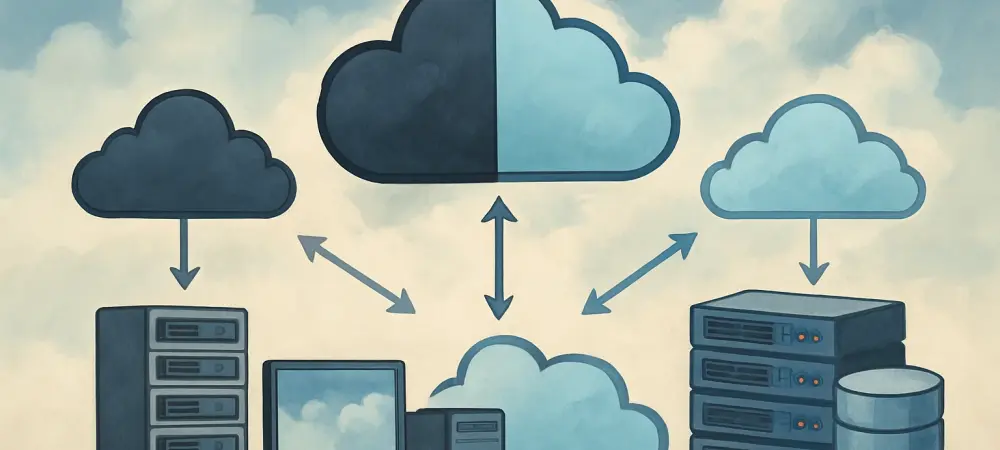
I believe we’ll see a more nuanced approach to cloud migration in the next few years. Organizations will move away from blanket “everything to the cloud” mentalities and adopt more tailored hybrid strategies, keeping sensitive or high-performance workloads on-premises or in private clouds while leveraging public clouds for scalability. AI and automation will play a bigger role in assessing and executing migrations, helping predict costs and performance issues upfront. I also expect security to remain a top focus, with zero-trust models becoming standard to protect migrated apps in increasingly complex environments.