

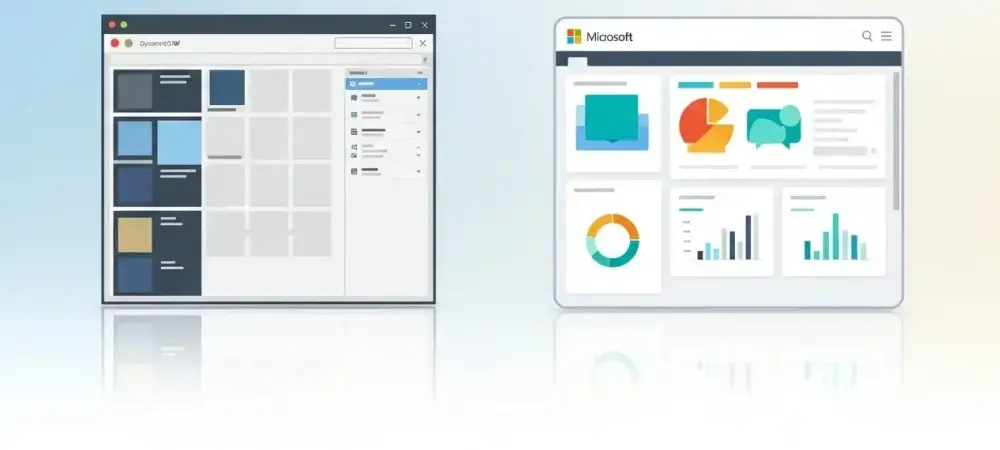
The digital landscape has shifted so fundamentally that the systems once considered the gold standard for enterprise resource planning now often serve as the primary bottleneck for growth. For decades, Microsoft Dynamics NAV, originally known as Navision, stood as the reliable workhorse of the mid-market segment, providing robust financial and supply chain management. However, as organizations navigate the complexities of 2026, the transition to Microsoft Dynamics 365 Business Central has moved from a secondary consideration to a strategic necessity for those seeking to remain competitive in a cloud-first world.
This evolution represents more than a simple rebrand; it is a total reimagining of how a business interacts with its data and the broader Microsoft 365 ecosystem. While Dynamics NAV relied on local server rooms and manual maintenance, Business Central leverages the massive power of Microsoft Azure to provide a native cloud experience. This shift allows companies to move away from managing hardware and toward a model where the ERP serves as a dynamic, intelligent hub for operations, rather than a static repository for accounting entries.
Modern business environments require a level of agility that older, on-premise systems simply cannot provide. By integrating ERP functions directly with productivity tools like Excel, Teams, and Outlook, Business Central breaks down the traditional silos between department data and daily communication. As the industry standard for the mid-market, this cloud-native platform ensures that supply chain visibility and financial reporting are no longer delayed by the physical limitations of local infrastructure or the latency of remote desktop connections.
The Evolution of Microsoft ERP: From Dynamics NAV to Business Central
The journey from Navision to the modern era of Dynamics 365 Business Central reflects a broader industry move away from “software as a product” toward “software as a service.” For years, Dynamics NAV allowed businesses to own their ERP environment entirely, but this ownership came with the heavy burden of managing Windows Server environments and SQL Server databases. As these platforms aged, the gap between the legacy NAV interface and the streamlined, browser-based experience of Business Central became a defining divide in operational efficiency.
Today, Microsoft 365 serves as the connective tissue for modern enterprises, and Business Central is designed to sit at the very center of this ecosystem. Unlike NAV, which often felt like an isolated island of data, Business Central communicates natively with the entire Microsoft stack. This integration means that a sales representative can generate a quote directly within Outlook or a warehouse manager can view real-time inventory levels through a mobile application, all powered by the underlying reliability of Microsoft Azure.
The purpose of these solutions has always been to provide clarity in financial management and precision in the supply chain, yet the definition of “real-time” has changed. In the legacy NAV era, real-time often meant that the data was accurate as of the last manual sync or batch post. In the current environment, Business Central provides an instant, unified view of the business, allowing leaders to make decisions based on what is happening at this exact moment rather than what occurred during the previous week.
Core Technical and Functional Differences
Architecture and Deployment Models
The most immediate distinction between these two platforms lies in their fundamental hosting environments. Dynamics NAV is defined by its traditional on-premise infrastructure, which requires a physical or virtual server, constant cooling, and a dedicated IT staff to manage updates and security patches. In contrast, Business Central utilizes a cloud-first (SaaS) approach where Microsoft manages the entire infrastructure. This removes the “server refresh” cycle entirely, as the hardware layer is no longer the responsibility of the end-user.
Maintenance in a NAV environment is often a reactive process, frequently involving aging hardware and manual intervention to keep the system performant. Business Central changes this dynamic through automated updates, ensuring that every user is always on the most recent version of the software. This transition eliminates the risk of falling multiple versions behind, a common problem for NAV users who found themselves trapped on unsupported releases because the cost and complexity of a manual upgrade were too high to justify.
Development Language and Customization
Technically, the platforms are built on entirely different foundations. Legacy Dynamics NAV utilizes C/AL (Client/server Application Language), a proprietary language where modifications were often baked directly into the base code of the ERP. This led to “Customization Drift,” a phenomenon where every small change made the system more rigid and difficult to upgrade. Over time, these modifications became a form of technical debt, making it nearly impossible to move to a newer version without a complete and costly reimplementation. Business Central solves this through the modern AL language and a sophisticated “Extensions” model. In this architecture, customizations and third-party solutions live in separate layers that sit on top of the core software. Because the base code remains untouched, Microsoft can push updates without breaking the unique modifications a business has built. This app-based model allows for a much cleaner system state, enabling organizations to integrate specialized third-party tools with the same ease as installing an app on a smartphone.
Automation and Modern Tool Integration
When comparing feature sets, the disparity in automation and business intelligence is stark. Dynamics NAV typically relies on manual reporting or third-party add-ons that require complex data warehousing to function. Business Central, however, features native integration with Power BI, offering AI-driven insights that are accessible directly from the role-based home screen. This provides a level of predictive analytics, such as cash flow forecasting and inventory stock-outs, that was simply unavailable in the legacy NAV environment.
Furthermore, the manual labor required to sustain a NAV environment—such as manual bank reconciliations and the use of “shadow systems” like disconnected spreadsheets—is replaced by modern automation in Business Central. Automated reconciliations and seamless data flow across the Microsoft 365 suite reduce the operational drag that plagues older systems. By utilizing AI to suggest account movements or flag anomalies, Business Central transforms the ERP from a passive record-keeper into an active participant in business growth.
Challenges and Considerations for Legacy System Users
Organizations still relying on Dynamics NAV face an increasingly difficult landscape, particularly regarding the shrinking pool of expertise. We have reached a point where a “Support Brain Drain” is actively impacting the market; fewer developers are learning C/AL, and the veteran consultants who understand legacy code are retiring or moving exclusively to cloud projects. This scarcity makes maintaining an old system significantly more expensive, as the hourly rates for qualified legacy experts continue to climb while their availability plummets.
Beyond the personnel challenges, there is the “Downtime Multiplier Effect” to consider. As the underlying Windows and SQL servers approach their end-of-life cycles, the risk of a catastrophic system failure increases. When these systems go down, it is rarely a minor inconvenience. Because the hardware is often no longer under warranty and the software is unsupported, a crash can lead to days of operational paralysis. This often results in “Surprise Spend,” where companies are forced into high-cost emergency consulting to perform a rushed migration under duress.
Financial risks also extend to the technical difficulty of moving decades of customized code. Every year a company waits to migrate, they accumulate more technical debt in the form of tangled integrations and manual workarounds. The complexity of unweaving these legacy customizations into a modern cloud framework grows over time, making the eventual transition more expensive and labor-intensive than it would have been had the project been initiated as a proactive strategic move.
Strategic Roadmap for ERP Transition
The comparative evidence clearly indicates that the advantages of Business Central—ranging from superior scalability and security to lower long-term maintenance costs—outweigh the perceived stability of staying on a legacy system. For organizations currently navigating the limitations of Dynamics NAV, the path forward begins with a comprehensive “Readiness Assessment.” This process involves taking a rigorous inventory of current business processes and identifying which customizations are still adding value and which can be replaced by the native features found in the modern cloud environment.
Choosing the right timing for this upgrade is essential to maximizing the return on investment. Ideally, a transition should be scheduled to coincide with upcoming hardware refresh cycles or during a period where the business can afford to focus on process optimization. If staff members are spending a significant portion of their week on manual data entry or if leadership lacks real-time visibility into the supply chain, the breaking point has already been reached. Proactive movement allows the organization to maintain leverage over the implementation process rather than reacting to a technical emergency.
In the end, the transition was about shifting from a defensive IT posture to an offensive business strategy. Organizations that moved away from the aging infrastructure of NAV successfully reduced their operational drag and eliminated the recurring costs of server maintenance. By embracing the AL language and the extension-based architecture of Business Central, these companies secured a path for continuous improvement. The move proved that the most significant risk was not the change itself, but the decision to remain tethered to a system that could no longer keep pace with the speed of modern commerce.